
Golden Retrievers are among the most beloved dog breeds worldwide, known for their friendly temperament, intelligence, and eagerness to please. These wonderful traits make them excellent candidates for training, but like any dog, they thrive best when their owners understand the most effective approaches. Whether you're welcoming a bouncing puppy into your home or working with an adult Golden, understanding the fundamentals of golden retriever training will help you build a strong, joyful relationship with your four-legged companion. Let's explore the proven methods, timelines, and techniques that will set both you and your Golden up for success.
Understanding Your Golden Retriever's Learning Style
Golden Retrievers possess a unique combination of traits that influence how they learn. Their high intelligence ranks them among the top breeds for trainability, but their sensitive nature means harsh methods can actually hinder progress rather than help.
These dogs are incredibly food-motivated, which makes positive reinforcement training particularly effective. They also have a strong desire to please their humans, a characteristic that we can harness beautifully during training sessions. Understanding these natural inclinations helps us choose methods that work with their personality rather than against it.
The Science Behind Positive Reinforcement
Research consistently shows that reward-based training produces better long-term results than punishment-based methods. The American Veterinary Society of Animal Behavior’s position statements emphasize that positive reinforcement creates confident, well-adjusted dogs while aversive techniques can lead to fear and anxiety.
When you reward desired behaviors immediately, your Golden Retriever forms positive associations. This creates a dog who actively wants to work with you, making every training session enjoyable for both of you.
Essential Training Supplies You'll Need
Before diving into specific commands, let's gather the right tools. Having quality supplies makes golden retriever training smoother and more enjoyable.
Basic Training Kit:
- High-value treats (small, soft pieces)
- Standard 6-foot leash
- Flat collar or harness
- Clicker (optional but helpful)
- Treat pouch for easy access
- Long training lead (15-30 feet) for recall practice
Advanced Training Additions:
- Agility equipment or toys
- Puzzle feeders for mental stimulation
- Scent training materials
- Specific sport equipment if pursuing activities
The RSPCA provides excellent guidance on using these tools effectively, including detailed clicker training instructions that work wonderfully with Golden Retrievers.
The Critical Puppy Socialization Window
For Golden Retriever puppies, the period between 3 and 14 weeks represents a critical socialization window. During this time, puppies are most receptive to new experiences, and proper exposure shapes their adult temperament.
The AVSAB’s puppy socialization position statement provides evidence-based recommendations for safely socializing puppies even before their vaccination series is complete. This guidance is crucial because waiting too long can result in missed opportunities for optimal development.
Safe Socialization Activities
| Activity | Benefits | Safety Considerations |
|---|---|---|
| Puppy classes | Controlled play with vaccinated dogs | Verify all attendees are healthy |
| Home visits | Meeting new people in safe space | Ask visitors to remove shoes |
| Car rides | Preventing motion sickness, building confidence | Keep sessions short initially |
| Novel surfaces | Building physical confidence | Supervise to prevent injury |
| Various sounds | Preventing noise phobias | Keep volume appropriate |
Expose your Golden puppy to different people, including children, elderly individuals, and people wearing hats, uniforms, or using mobility aids. Each positive experience builds confidence and prevents future fear-based behaviors.
Month-by-Month Training Timeline
The AKC’s Golden Retriever puppy training timeline offers breed-specific guidance that aligns perfectly with developmental stages. Let's break down what to focus on during each phase.
8-10 Weeks: Foundation Building
At this age, your puppy is just settling into their new home. Focus on:
Name recognition comes first. Say your puppy's name followed immediately by a treat when they look at you. Practice this 10-15 times daily in short sessions.
House training requires consistency. Take your puppy outside every 1-2 hours, immediately after waking, eating, or playing. The ASPCA’s general dog care resources include detailed house training protocols that address common challenges.
Crate training establishes a safe den. Never use the crate as punishment. Instead, make it cozy with treats and toys, building positive associations gradually.
10-12 Weeks: Basic Commands
Now your Golden is ready for fundamental obedience. Their attention span is still short, so keep sessions to 5-10 minutes.
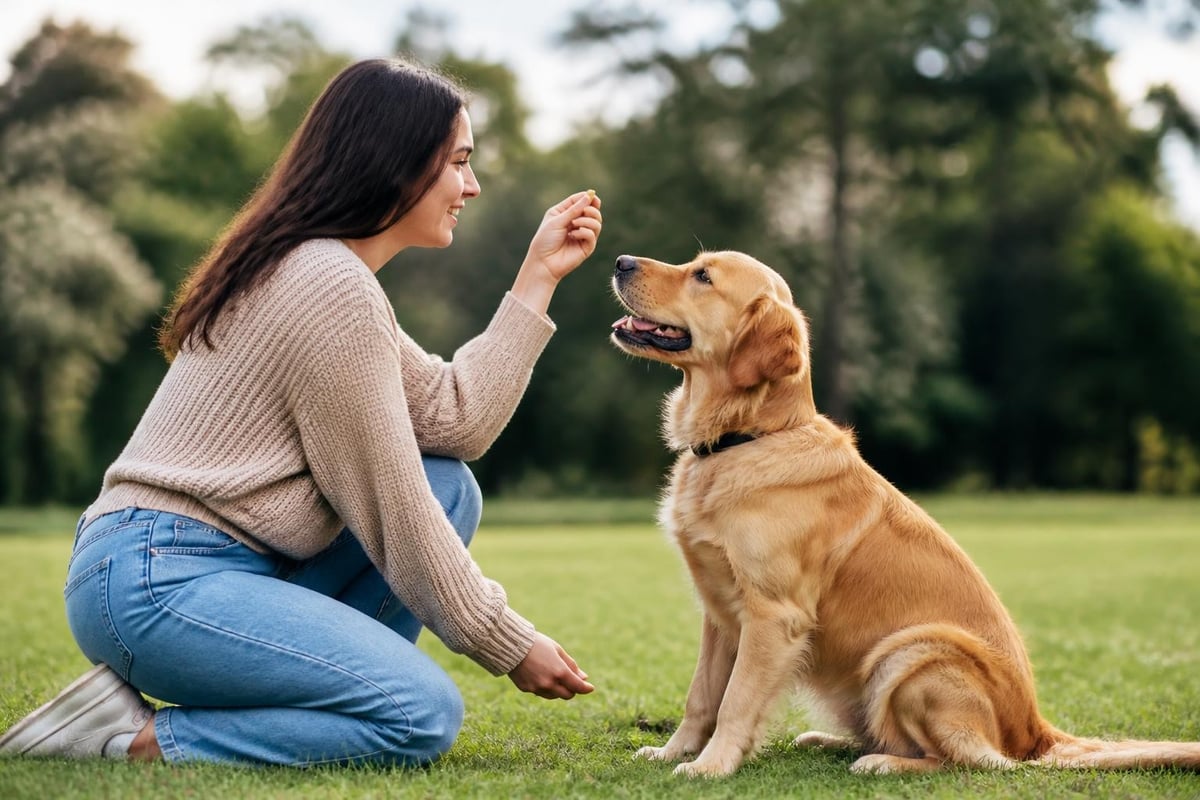
- Sit: Hold a treat at your puppy's nose, move it slowly up and back over their head, and mark the moment their bottom touches the ground with "yes" and a treat
- Come: Start in a hallway or small room, crouch down, say "come" enthusiastically, and reward generously when they reach you
- Down: From a sit position, lower a treat slowly to the ground between their paws, rewarding when they lie down
- Stay: Ask for a sit, hold your palm up, take one step back, return immediately, and reward
3-6 Months: Building Duration and Distance
Your adolescent Golden Retriever can now handle longer training sessions and more challenging concepts. This is when golden retriever training really accelerates.
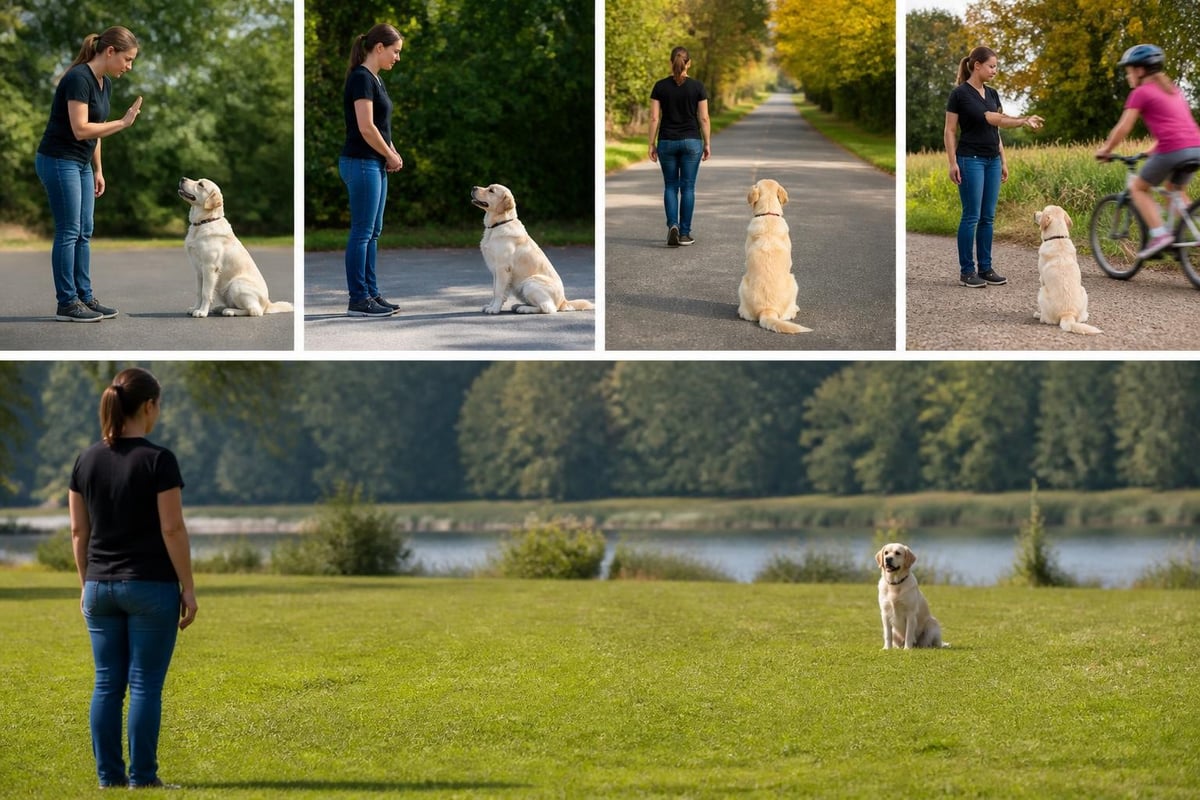
Gradually increase the difficulty of commands by adding the "three Ds":
- Duration: How long they hold the behavior
- Distance: How far away you can be
- Distraction: Environmental challenges
6-12 Months: Addressing Adolescent Challenges
Golden Retrievers hit adolescence around six months, and you might notice some regression in previously mastered skills. Don't worry-this is completely normal! Their brains are reorganizing, much like human teenagers.
Common adolescent behaviors include:
- Selective hearing during recall
- Increased jumping on people
- Mouthing and play biting
- Leash pulling
- Increased distractibility
Remain patient and consistent. Continue rewarding good behaviors while redirecting unwanted ones. This phase passes, and your training foundation will carry you through.
Mastering Loose-Leash Walking
Leash pulling is one of the most common complaints among Golden Retriever owners. These energetic dogs love exploring, but walking nicely on leash makes outings enjoyable for everyone.
The Stop-and-Go Method
When your Golden pulls, immediately stop moving. Stand still like a tree. The instant the leash loosens, mark with "yes" and move forward again. Your movement becomes the reward.
Key principles:
- Consistency is everything-never move forward when the leash is tight
- Keep treats at your side to reward check-ins
- Practice in low-distraction areas first
- Gradually increase challenge level
This method teaches your Golden that pulling gets them nowhere, while walking beside you gets them where they want to go.
Teaching Reliable Recall
A solid recall command is essential for your Golden Retriever's safety and freedom. These dogs love to run and explore, making recall training one of the most important skills to master.
Building Bombproof Recall
Start indoors with zero distractions. Call your dog's name followed by your recall word ("come" or "here"), then celebrate enthusiastically when they arrive. Use high-value treats initially.
Progressive recall training steps:
- Practice in different rooms of your house
- Move to a fenced yard with mild distractions
- Use a long training lead in open areas
- Practice with controlled distractions (another person, toys)
- Gradually increase freedom as reliability improves
Never call your dog for something unpleasant. If you need to end playtime or give medication, go to your dog rather than calling them. This keeps your recall word purely positive.
Addressing Common Behavior Challenges
Even with excellent golden retriever training, challenges arise. Let's address the most common issues Golden Retriever owners face.
Separation Anxiety
Golden Retrievers form deep bonds with their families, sometimes leading to distress when left alone. Separation anxiety affects many dogs and requires a systematic approach.
Signs of separation anxiety:
- Destructive behavior only when alone
- Excessive barking or howling
- House soiling despite being house-trained
- Escape attempts
- Pacing and restlessness before departure
Treatment involves gradual desensitization:
| Week | Goal | Activities |
|---|---|---|
| 1-2 | Reduce departure anxiety | Practice picking up keys without leaving |
| 3-4 | Build tolerance | Leave for 30 seconds, return calmly |
| 5-6 | Extend duration | Gradually increase to 5 minutes |
| 7-8 | Real-world practice | Short actual departures |
For severe cases, consult a veterinary behaviorist who can develop a comprehensive treatment plan that may include behavioral modification and medication if appropriate.
Excessive Jumping
Golden Retrievers express excitement through jumping, but this behavior becomes problematic as they grow. A 70-pound Golden launching at guests isn't welcome!
The four-paws rule: Your Golden only receives attention (petting, talking, eye contact) when all four paws are on the floor. When they jump, turn away and ignore them completely. The moment they sit or stand calmly, give enthusiastic praise and attention.
Teach guests this same protocol. Consistency across all humans is crucial for success.
Mouthing and Play Biting
Puppy mouthing is normal exploratory behavior, but it needs redirection before it becomes a habit.
When your Golden mouths you, immediately say "ouch" in a high-pitched voice and withdraw your attention for 30 seconds. This mimics how littermates communicate that play has become too rough. Provide appropriate chew toys as alternatives, praising when they choose toys over hands.
Advanced Training and Canine Sports
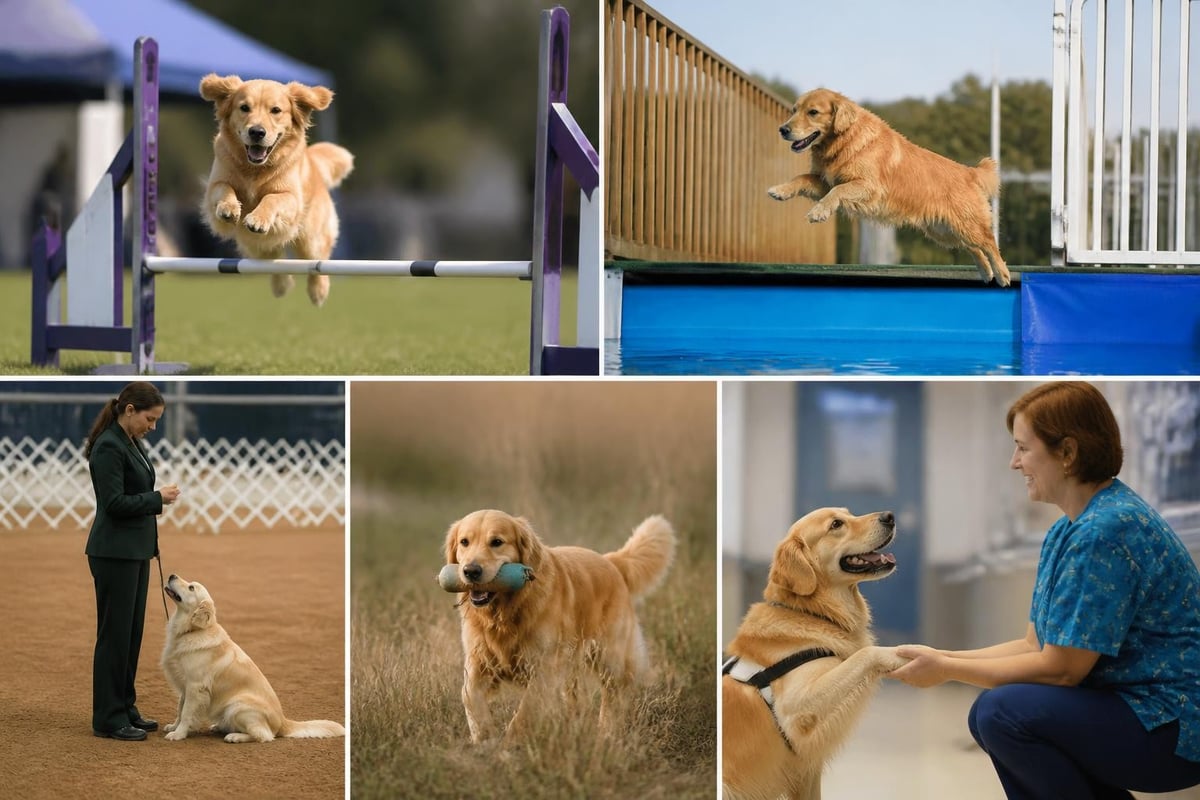
Golden Retrievers excel in advanced training and sports activities. Their athletic build, intelligence, and eagerness make them naturals for various canine activities.
Agility Training
The AKC’s guide to getting started in dog agility provides comprehensive information for beginners. Agility combines physical exercise with mental stimulation-perfect for Golden Retrievers.
Benefits of agility training:
- Builds confidence and focus
- Provides excellent physical conditioning
- Strengthens your bond through teamwork
- Offers positive outlets for energy
- Creates opportunities for socialization
Start with basic obstacle introductions around 12-14 months when growth plates have closed. Focus on foundation skills like body awareness and handler focus before tackling full courses.
Therapy and Service Dog Training
Golden Retrievers' gentle, intuitive nature makes them exceptional therapy and service dogs. If you're interested in these paths, start with rock-solid basic obedience and extensive socialization.
Therapy dog certification requires:
- Passing a basic obedience test
- Demonstrating calm behavior around medical equipment
- Remaining gentle with unpredictable movements
- Showing comfort in various environments
Service dog training is substantially more intensive, typically requiring professional trainers who specialize in specific tasks.
Maintaining Training Throughout Adulthood
Golden retriever training doesn't stop when your dog reaches maturity. Ongoing practice keeps skills sharp and your relationship strong.
Lifelong training strategies:
- Practice commands daily in brief sessions
- Rotate through different skills to prevent boredom
- Continue socialization with new experiences
- Adjust training intensity as your dog ages
- Introduce new tricks or activities periodically
Adult Golden Retrievers can learn new behaviors at any age. The saying "you can't teach an old dog new tricks" is absolutely false! Older dogs often have better focus and impulse control than puppies, making them excellent students.
Nutrition's Role in Training Success
Your Golden Retriever's diet directly impacts their ability to focus and learn. A well-nourished dog has the energy and cognitive function needed for effective training sessions.
Choose high-quality proteins and avoid excessive fillers. If you're using lots of treats during training, reduce meal portions slightly to prevent weight gain. Golden Retrievers are prone to obesity, which can cause health problems and reduce energy for training.
Keep training treats small-pea-sized pieces are sufficient. The reward is the taste and attention, not the quantity. Visit Dog Care Guide for detailed nutritional guidance tailored to active dogs.
The Importance of Mental Stimulation
Physical exercise alone isn't enough for intelligent Golden Retrievers. Mental stimulation through training, puzzle toys, and scent work prevents boredom-related behaviors.
Mental enrichment activities:
- Hide-and-seek with toys or treats
- Puzzle feeders during meal times
- Learning new tricks regularly
- Scent discrimination games
- Interactive toys that dispense treats
A mentally tired Golden is a well-behaved Golden. Fifteen minutes of focused training can be as tiring as a 30-minute walk.
Choosing Professional Help When Needed
Sometimes professional guidance accelerates progress or addresses specific challenges. Choosing the right trainer ensures you're investing in methods that align with modern, humane practices.
Look for trainers who:
- Use positive reinforcement primarily
- Hold certifications (CPDT-KA, KPA-CTP, CBCC-KA)
- Can explain the science behind their methods
- Welcome owner participation in sessions
- Avoid choke chains, prong collars, or shock collars
The behavioral science is clear: reward-based methods create lasting behavior change without the risks associated with aversive techniques.
Frequently Asked Questions
When should I start training my Golden Retriever puppy?
Begin training the day your puppy comes home, typically around 8 weeks old. Focus on name recognition, house training, and gentle socialization during the first few weeks. Formal obedience can start around 10-12 weeks when attention span develops.
How long should Golden Retriever training sessions last?
For puppies under 6 months, keep sessions to 5-10 minutes, practicing 2-3 times daily. Adult Golden Retrievers can handle 15-20 minute sessions. Always end on a positive note before your dog loses focus.
Why is my Golden Retriever not responding to training?
Common causes include inconsistent practice, sessions that are too long, distractions that are too challenging, or insufficient motivation (low-value rewards). Evaluate your timing, reward quality, and environment difficulty. If problems persist, consult a certified trainer.
Can I train an older Golden Retriever who has never had formal training?
Absolutely! Adult Golden Retrievers learn enthusiastically at any age. They often progress faster than puppies because they have better focus and impulse control. Use the same positive reinforcement methods, adjusting expectations for any physical limitations.
How do I stop my Golden Retriever from pulling on the leash?
Use the stop-and-go method: freeze when the leash tightens, only move forward when it loosens. Reward your dog for checking in with you during walks. Practice daily in low-distraction areas first, gradually increasing difficulty as skills improve.
What's the best age to start advanced training or dog sports?
Wait until 12-14 months for high-impact activities like agility to protect developing joints. However, you can introduce foundation skills, tricks, and basic obstacle familiarization much earlier. Swimming and gentle field work can begin around 6-8 months.
How often should I practice recall with my Golden Retriever?
Practice recall daily in various locations with increasing distractions. Never punish your dog for coming when called, even if they took their time. Make every recall experience positive, using high-value rewards and enthusiastic praise.
Should I use a clicker for Golden Retriever training?
Clickers provide precise timing for marking desired behaviors, which can accelerate learning. They're particularly helpful for complex behaviors or trick training. However, they're optional-a verbal marker like "yes" works well too. Choose whatever feels most natural for you.
Golden retriever training built on positive reinforcement, consistency, and patience creates well-mannered, confident dogs who are a joy to live with. By understanding your Golden's unique learning style and following science-based methods throughout their life, you'll develop an incredible partnership. Whether you're working on basic manners or advanced sports, Dog Care Guide offers the cheerful, practical resources you need to give your Golden Retriever the best possible care and training. Start your training journey today, and watch your furry friend blossom into the amazing companion you've always dreamed of having!