Bringing home a new puppy is one of life’s greatest joys, but those first few weeks can quickly turn into an exhausting blur of whining, midnight potty breaks, and guilt-ridden nights on the couch. If you’ve found yourself googling “how to crate train a puppy” at 3 a.m. while your little one screams like the crate is on fire, you’re not alone. The good news is that crate training doesn’t have to be a battle of wills or a recipe for sleepless nights. When done with patience, consistency, and the right approach, the crate can become your puppy’s favorite den—a safe, comforting space that helps with housebreaking, reduces separation anxiety, and gives everyone in the house much-needed rest. This guide walks you through a gentle, positive method that focuses on making the crate a place of comfort rather than punishment, so you can skip the tears (yours and your puppy’s) and actually enjoy those early months together.
Pick the Perfect Crate Size and Cozy Setup
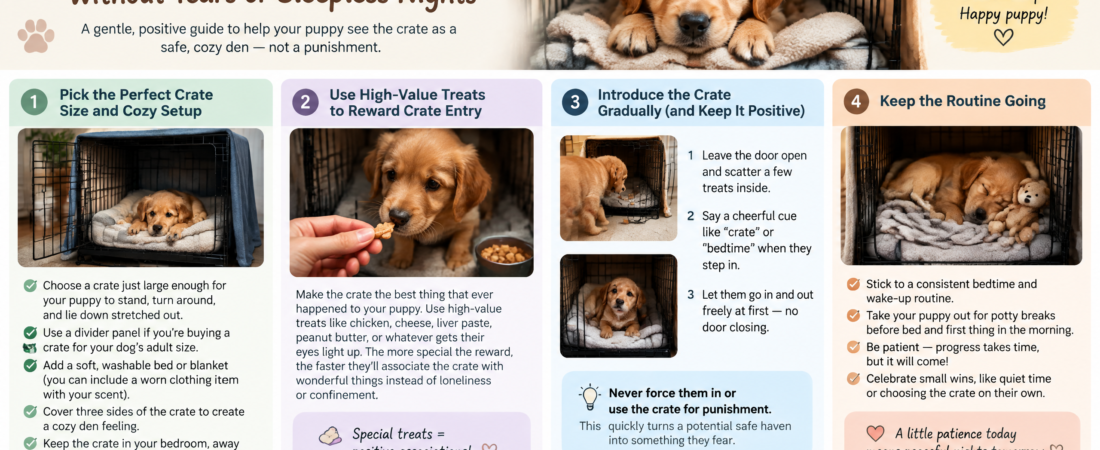
Choosing the right crate is the foundation of successful crate training, yet it’s where many new owners go wrong from day one. A crate that’s too large gives the puppy enough room to use one corner as a bathroom and another as a bedroom, defeating the entire purpose of house training. Conversely, a crate that’s too small will make your puppy feel trapped and anxious, leading to more whining and stress. The sweet spot is a crate just large enough for your pup to stand up, turn around comfortably, and lie down stretched out. For most breeds, this means buying a crate sized for your dog’s adult weight but using a divider panel to shrink the space while they’re young. This adjustable approach saves money and prevents the common mistake of constantly upgrading crates every few months.
Making the crate feel like a cozy den rather than a cold metal box is equally important for preventing tears and frustration. Line the bottom with a soft, washable bed or a thick blanket that smells like you—your scent is incredibly comforting to a new puppy. Some owners add a piece of clothing you’ve recently worn (safe, without strings or buttons) to help ease the transition from littermates to solo sleeping. Avoid fluffy beds or stuffed toys until you’re confident your puppy won’t chew and ingest them, as that creates a choking hazard. Instead, opt for durable chew-proof bedding and consider covering three sides of the crate with a blanket to create that natural “den” feeling puppies instinctively crave. The goal is to make the crate the most appealing nap spot in the house, not a sterile timeout corner.
Location matters more than most people realize when setting up the crate for nighttime success. Place it in your bedroom during the first few months so your puppy can see you, hear your breathing, and feel less isolated. Puppies are pack animals by nature, and being completely alone in another room can trigger intense separation anxiety that manifests as nonstop barking. Keep the crate away from direct air vents, heaters, or sunny windows that could make the temperature uncomfortable. A consistent spot helps your puppy understand this is their special place, not a random punishment that moves around the house. Many owners find that elevating the crate slightly on a sturdy platform or using a crate with a shelf-like top gives a better view of the room, which can dramatically reduce anxiety.
Finally, introduce the crate gradually during the day before expecting perfect nighttime behavior. Leave the door open and scatter a few high-value treats inside so your puppy discovers it on their own terms. Never force them in or use the crate for punishment, as that quickly turns a potential safe haven into something they fear. With the right size, cozy bedding, thoughtful location, and positive first impressions, your puppy will begin to choose the crate voluntarily within days. This careful setup is what separates the horror stories from the success stories and sets the stage for peaceful nights ahead.
Use High-Value Treats to Reward Crate Entry
The secret to crate training without drama lies in making the crate the best thing that ever happened to your puppy. High-value treats are your most powerful tool here. We’re not talking about boring kibble or generic dog biscuits. Think chicken, cheese, liver paste, peanut butter, or whatever makes your puppy’s eyes light up with pure greed. The more special the reward, the faster they’ll associate the crate with wonderful things instead of loneliness or confinement. This positive association is what prevents the tears and reduces nighttime protesting before it even starts.
Start by simply tossing treats into the crate and letting your puppy go in and out freely without closing the door. Say a cheerful cue like “crate” or “bedtime” every time they step inside. The moment all four paws are in, praise them enthusiastically and offer another treat. This game should feel like the best treasure hunt ever. Repeat this dozens of times throughout the day in short, fun sessions. Most puppies catch on within a day or two that entering the crate voluntarily equals amazing rewards. The key is never to rush the process or close the door until your puppy is happily racing in on their own.
Once your puppy is confidently entering the crate, begin closing the door for very short periods while you sit right next to them. Start with just three to five seconds, then gradually increase the time. Feed treats through the bars or offer a long-lasting chew like a stuffed Kong while the door is closed. The combination of delicious food and your calm presence teaches them that the crate is a place where good things continue to happen. If they whine or paw at the door, wait for a single moment of quiet before opening it. This timing is crucial—opening the crate while they’re crying teaches them that noise gets results, which is exactly how sleepless nights begin.
Progress to leaving the room for brief moments once your puppy is comfortable with the closed door. Always return before they become anxious and reward calm behavior when you come back. This step-by-step approach builds confidence rather than testing it. Many new owners make the mistake of rushing to longer periods too quickly, which creates setbacks and more whining. By using truly irresistible treats and respecting your puppy’s emotional limits, you create a rock-solid positive association that makes nighttime crate training significantly easier. The investment of time during the day pays huge dividends when bedtime arrives and your puppy settles without protest.
Simple Night Routines to Calm Whining Puppies
Establishing a calm, predictable bedtime routine is one of the most effective ways to prevent nighttime whining and those dreaded 2 a.m. zoomies. Puppies thrive on consistency, so create a sequence of events that always happens in the same order: last potty trip outside, short play session to tire them out, final drink of water (cut off about an hour before bed), then crate time with a special nighttime treat. This routine signals to your puppy’s brain that the day is ending and it’s time to sleep. The more boring and soothing the routine, the better. Avoid high-energy play right before bed as it can wind them up instead of calming them down.
When your puppy whines in the crate at night, the hardest but most important rule is to only respond when they’re quiet. This is where many owners crumble and accidentally teach their puppy that barking brings company. If you rush in at the first whimper, you reinforce the behavior. Instead, wait for even a few seconds of silence, then calmly praise in a soft voice without taking them out. Some puppies respond well to the sound of a ticking clock or a white noise machine that mimics their mother’s heartbeat. Others settle faster with a Snuggle Puppy—a stuffed toy with a removable heartbeat device that can be incredibly comforting for the first few weeks.
Taking your puppy out for potty breaks during the night is often necessary for young pups, but how you do it matters tremendously. Keep interactions extremely boring and business-like. No talking, no playing, no cuddles. Carry them straight outside, wait for them to potty, then immediately return them to the crate. This teaches them that nighttime is for sleeping, not socializing. Most puppies can hold their bladder for roughly one hour per month of age, so a 10-week-old might need a 3 a.m. potty break while a 16-week-old might sleep through until morning. Track their patterns for a few days to create a realistic schedule instead of guessing.
Don’t be afraid to move the crate right beside your bed during the first month. Many puppies settle much faster when they can see you and hear you breathing. You can gradually move the crate further away over several weeks as they gain confidence. Some owners even start with the crate on a chair or table level with the bed so they can reach down and offer a reassuring hand through the bars if needed. The combination of a solid daytime routine, smart nighttime management, and realistic expectations about how long a puppy can realistically hold it creates the conditions for genuinely peaceful nights. Most puppies show dramatic improvement within two weeks when these techniques are applied consistently.
Set Realistic Limits for Peaceful Puppy Nights
Understanding what is reasonable to expect from a puppy is perhaps the most important factor in avoiding tears and frustration for everyone involved. A eight-week-old puppy cannot sleep through the night without a potty break, and expecting them to do so will only lead to accidents, stress, and broken trust. Setting realistic time limits based on age, breed size, and individual development prevents both housebreaking setbacks and unnecessary suffering. The general rule of one hour per month of age is a helpful guideline, but some puppies need more frequent breaks while others surprise their owners by holding it longer. Pay close attention to your individual dog rather than strict rules.
Crate time during the day should also be kept reasonable, especially in the beginning. Puppies under four months generally shouldn’t be crated for more than two to three hours at a time during the day. Longer periods increase the likelihood of whining, anxiety, and bathroom accidents. Instead of using the crate as all-day daycare while you’re at work, consider a puppy playpen setup with the crate inside, access to water, and an area for elimination if you must be gone longer. This more flexible approach prevents the crate from becoming associated with long-term isolation, which can create the very problems you’re trying to avoid.
As your puppy grows and becomes more reliable, gradually increase both daytime and nighttime crate duration. The goal isn’t to keep them crated as much as possible but to use the crate as a helpful management tool while they learn household rules and bladder control. Many owners find that by six months, with consistent training, their puppy can sleep through the night and handle four to five hours during the workday comfortably. The key is slow, steady progress rather than sudden big jumps that overwhelm the puppy. Celebrate small victories and don’t hesitate to back up a step if your puppy seems stressed.
Remember that the ultimate goal of crate training is to create a dog who is comfortable and relaxed in their crate but doesn’t need to live in one permanently. Some dogs will always prefer their crate as a quiet retreat, while others eventually phase out of using it much at all. Both outcomes are perfectly fine. By focusing on positive experiences, respecting developmental limits, and maintaining realistic expectations about how long a puppy can reasonably be expected to hold it together, you set everyone up for success. The nights that once felt endless slowly transform into peaceful, predictable sleep for the whole family.
Crate training a puppy doesn’t have to be stressful or heartbreaking. By choosing the right size crate, creating a cozy environment, using high-value rewards, establishing calming nighttime routines, and setting age-appropriate limits, you can help your new puppy see their crate as a safe haven rather than a prison. The process takes patience and consistency, but the payoff is enormous: a house-trained dog, reduced separation anxiety, and finally—blessed, uninterrupted sleep. Every puppy is different, so adjust these techniques to suit your individual dog’s personality and needs. The early weeks may test your resolve, but with the right approach, those tearful nights will soon be a distant memory. Your future self (and your well-rested neighbors) will thank you for doing the work now. Sweet dreams to both you and your puppy.