
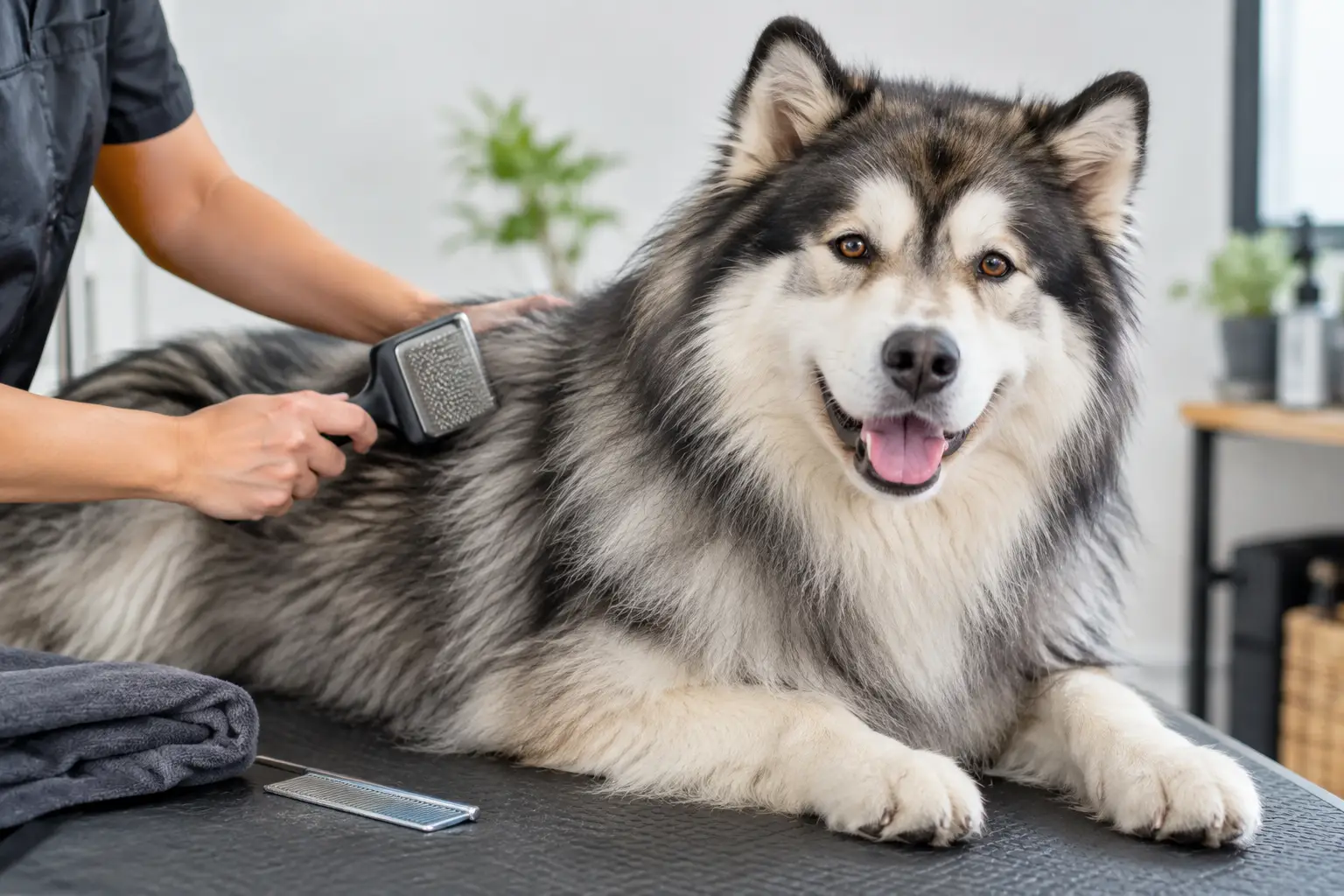
A double-coated dog can leave enough fur around the house to build a second pup, especially during spring and fall. But learning how to groom a double coated dog is about much more than keeping tumbleweeds off the sofa. Gentle, regular grooming protects the skin beneath that fluffy coat, prevents painful mats, and gives you a calm moment of connection with your furry best friend.
The big rule is simple: brush out loose undercoat, but do not shave or aggressively strip the coat. That dense fur is part of your dog’s natural temperature-control system, helping insulate them in cold weather and protect their skin from sun and heat. With the right tools, patience, and a few tasty rewards, at-home grooming can become a routine your dog feels safe with.
Understand Your Dog’s Double Coat
Double-coated breeds have two distinct layers of fur. The outer layer, often called guard hairs, is made of longer, coarser hairs that repel dirt and moisture. Underneath is a soft, dense undercoat that traps air close to the body for insulation.
Many beloved breeds have double coats, including Huskies, Golden Retrievers, German Shepherds, Australian Shepherds, Pomeranians, Corgis, Samoyeds, and many mixed-breed dogs. Coat length and thickness vary, so a fluffy Samoyed needs a different schedule than a short-coated Labrador. The goal, though, stays the same: remove dead hair without damaging healthy guard hairs or irritating the skin.
Seasonal shedding can look dramatic. During a coat blow, your dog may shed large tufts of undercoat for several weeks. This is normal for many dogs, provided their skin looks healthy and they are not scratching, losing fur in bald patches, or seeming uncomfortable.
Gather Gentle Grooming Tools
A few quality tools are more helpful than a drawer full of harsh gadgets. Start with a slicker brush suited to your dog’s size and coat length, plus a wide-tooth metal comb. A pin brush can be especially useful for long, flowing coats, while a rubber curry brush works nicely on many short-coated double-coated dogs.
An undercoat rake can help during heavy shedding, but choose one with rounded teeth and use it lightly. It should glide through loose undercoat, not scrape the skin or pull at healthy hair. Avoid blades or aggressive de-shedding tools unless a trusted professional groomer has shown you how to use them correctly. Overuse can cut guard hairs and leave the coat uneven or thin.
Keep dog-safe shampoo, absorbent towels, treats, and a nonslip bath mat nearby. If you use a high-velocity dryer, introduce it gradually and keep the airflow moving. A cool or low-warm setting is safest. Never use a hot human hair dryer close to your dog’s skin.
How to Groom a Double Coated Dog Step by Step
Choose a quiet time when your dog has had a walk, a potty break, and a chance to settle. For a dog new to grooming, the first session might last only a few minutes. Offer praise and small treats for calm behavior, then end before your pup becomes restless. Building trust matters more than finishing every inch of coat in one sitting.
Start With a Nose-to-Tail Check
Before brushing, run your hands gently over your dog. Feel behind the ears, under the collar or harness area, in the armpits, around the tail, and along the back legs. These spots are common hiding places for tangles, burrs, and compacted undercoat.
Look for redness, scabs, fleas, unusual lumps, odor, or areas that seem painful. Grooming is a wonderful chance to notice changes early, but it is not a substitute for veterinary care. Call your veterinarian if you find broken skin, a persistent rash, sudden hair loss, or a lump that concerns you.
Brush in Small Sections
Begin where your dog is most comfortable being touched, often along the shoulders or back. Brush in the direction the coat grows, using short, gentle strokes. For longer coats, use line brushing: lift a small layer of hair, brush from the skin outward, then move gradually across the body. This method reaches the undercoat rather than only smoothing the top.
Follow with the comb. If it moves easily from the skin through the ends of the hair, that section is clear. If it catches, do not tug. Hold the hair near the skin to reduce pulling, then carefully work from the outer edge of the tangle inward with your fingers and comb.
Mats that are tight, large, close to the skin, or located near sensitive areas should be handled by a professional groomer. Trying to cut them out with scissors can lead to painful skin injuries in seconds.
Be Extra Gentle Around Sensitive Areas
Use lighter pressure behind the ears, under the legs, around the tail, and on the feathering of long-haired dogs. Brush the belly only if your dog is relaxed and comfortable with handling there. If your pup turns away, stiffens, lip-licks repeatedly, or tries to leave, pause and give them a break. Those are useful messages, not bad behavior.
You can trim fur between paw pads if it is causing slipping or collecting ice and debris, but use pet clippers carefully or ask a groomer for help. Nails, ears, and teeth are also part of routine care, though they do not need to happen in the same grooming session. Splitting tasks into short, positive moments can make them easier for both of you.
Bathing Without Packing Down the Coat
Most double-coated dogs do not need frequent baths. For many, bathing every four to eight weeks is plenty, unless they have rolled in something messy or have a veterinary-directed skin-care plan. Too much bathing can dry the skin and make the coat harder to manage.
Brush thoroughly before the bath whenever possible. Water can tighten existing tangles, turning a small knot into a stubborn mat. Use lukewarm water and a dog shampoo chosen for your pup’s skin needs. Work the shampoo down through the coat with your fingers, rather than piling it on top, and rinse longer than you think you need to. Shampoo left in a dense coat can cause itching and flakes.
Towel-dry by pressing and squeezing instead of vigorous rubbing. Then use a pet dryer on a cool or low setting, keeping it in motion. Drying the coat fully is especially important for thick-coated dogs because trapped moisture against the skin can create irritation and odor. As the coat dries, brush in sections to loosen the undercoat and prevent clumps.
Never Shave a Double Coat for Summer
It is understandable to look at all that fur and worry your dog is too warm. Still, shaving a healthy double coat is usually not the answer. The coat can help shield the skin from direct sun, and shaving raises the risk of sunburn. It may also grow back patchy, thinner, or with a changed texture, especially in older dogs.
Instead, keep your dog cool with shade, fresh water, air conditioning or fans indoors, and walks during cooler morning or evening hours. Stay alert for heat stress signs such as heavy panting, drooling, weakness, vomiting, confusion, or collapse. Heat stress needs immediate attention from a veterinarian.
There are exceptions. A veterinarian may recommend clipping due to severe matting, surgery, a skin condition, or another medical concern. In those cases, follow your veterinary team’s guidance and work with a groomer who understands double coats.
Set a Schedule That Fits Your Dog
For most double-coated dogs, a thorough brushing once or twice a week keeps the coat in good shape. During seasonal shedding, increase that to brief daily sessions or every other day. Frequent light brushing is kinder on the coat and far less overwhelming than a marathon de-shedding session.
Dogs that swim often, wear harnesses daily, or love hiking through brush may need more attention in friction-prone spots. On the other hand, a short-coated dog with little shedding may do beautifully with a quick weekly brush. Watch your own dog’s coat, skin, and comfort level rather than following a rigid calendar.
If home grooming starts to feel stressful, professional grooming can be a caring part of your routine, not a failure. A skilled groomer can safely remove compacted undercoat, handle difficult mats, and help you choose tools for your pup’s particular coat. Bring your dog in before mats become severe, and tell the groomer about any skin sensitivities or handling worries.
A few patient minutes with the brush can become one of your dog’s favorite forms of care: calm hands, kind words, and the reassuring feeling that their person is paying attention. Keep sessions gentle and consistent, and your pup can head into every season cleaner, more comfortable, and ready for another happy adventure.