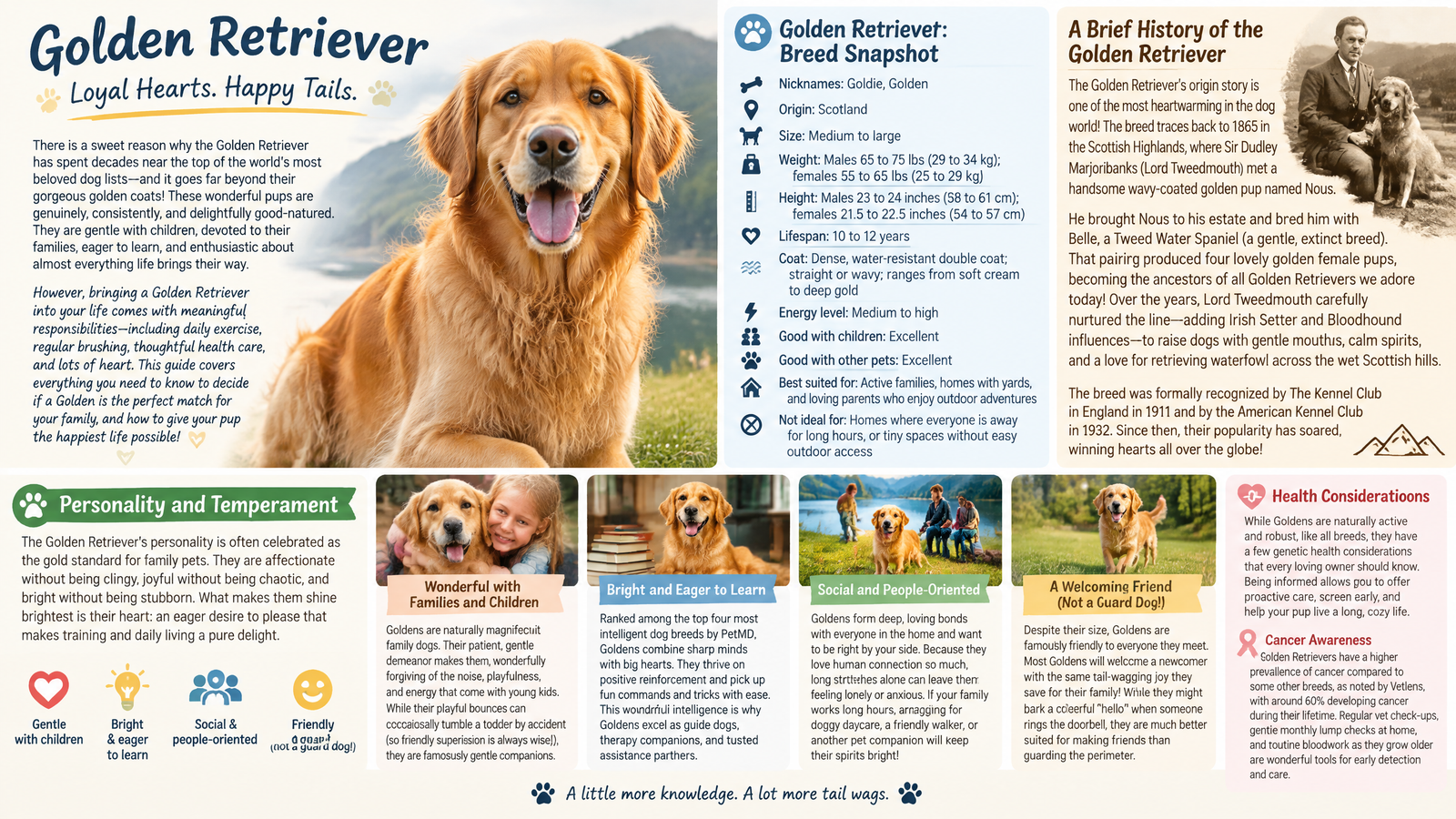
There is a sweet reason why the Golden Retriever has spent decades near the top of the world’s most beloved dog lists—and it goes far beyond their gorgeous golden coats! These wonderful pups are genuinely, consistently, and delightfully good-natured. They are gentle with children, devoted to their families, eager to learn, and enthusiastic about almost everything life brings their way.
However, bringing a Golden Retriever into your life comes with meaningful responsibilities—including daily exercise, regular brushing, thoughtful health care, and lots of heart. This guide covers everything you need to know to decide if a Golden is the perfect match for your family, and how to give your pup the happiest life possible!
Golden Retriever: Breed Snapshot
- Nicknames: Goldie, Golden
- Origin: Scotland
- Size: Medium to large
- Weight: Males 65 to 75 lbs (29 to 34 kg); females 55 to 65 lbs (25 to 29 kg)
- Height: Males 23 to 24 inches (58 to 61 cm); females 21.5 to 22.5 inches (54 to 57 cm)
- Lifespan: 10 to 12 years
- Coat: Dense, water-resistant double coat; straight or wavy; ranges from soft cream to deep gold
- Energy level: Medium to high
- Good with children: Excellent
- Good with other pets: Excellent
- Best suited for: Active families, homes with yards, and loving parents who enjoy outdoor adventures
- Not ideal for: Homes where everyone is away for long hours, or tiny spaces without easy outdoor access
A Brief History of the Golden Retriever
The Golden Retriever’s origin story is one of the most heartwarming in the dog world! The breed traces back to 1865 in the Scottish Highlands, where Sir Dudley Marjoribanks (Lord Tweedmouth) met a handsome wavy-coated golden pup named Nous. At a time when dark-coated sporting dogs were most popular, Lord Tweedmouth saw something truly special in Nous.
He brought Nous to his estate and bred him with Belle, a Tweed Water Spaniel (a gentle, extinct breed). That pairing produced four lovely golden female pups, becoming the ancestors of all Golden Retrievers we adore today! Over the years, Lord Tweedmouth carefully nurtured the line—adding Irish Setter and Bloodhound influences—to raise dogs with gentle mouths, calm spirits, and a love for retrieving waterfowl across the wet Scottish hills.
The breed was formally recognized by The Kennel Club in England in 1911 and by the American Kennel Club in 1932. Since then, their popularity has soared, winning hearts all over the globe!
Personality and Temperament
The Golden Retriever’s personality is often celebrated as the gold standard for family pets. They are affectionate without being clingy, joyful without being chaotic, and bright without being stubborn. What makes them shine brightest is their heart: an eager desire to please that makes training and daily living a pure delight.
Wonderful with Families and Children
Goldens are naturally magnificent family dogs. Their patient, gentle demeanor makes them wonderfully forgiving of the noise, playfulness, and energy that come with young kids. While their playful bounces can occasionally tumble a toddler by accident (so friendly supervision is always wise!), they are famously gentle companions.
Bright and Eager to Learn
Ranked among the top four most intelligent dog breeds by PetMD, Goldens combine sharp minds with big hearts. They thrive on positive reinforcement and pick up fun commands and tricks with ease. This wonderful intelligence is why Goldens excel as guide dogs, therapy companions, and trusted assistance partners.
Social and People-Oriented
Goldens form deep, loving bonds with everyone in the home and want to be right by your side. Because they love human connection so much, long stretches alone can leave them feeling lonely or anxious. If your family works long hours, arranging for doggy daycare, a friendly walker, or another pet companion will keep their spirits bright!
A Welcoming Friend (Not a Guard Dog!)
Despite their size, Goldens are famously friendly to everyone they meet. Most Goldens will welcome a newcomer with the same tail-wagging joy they save for their family! While they might bark a cheerful “hello” when someone rings the doorbell, they are much better suited for making friends than guarding the perimeter.
Health Considerations
While Goldens are naturally active and robust, like all breeds, they have a few genetic health considerations that every loving owner should know. Being informed allows you to offer proactive care, screen early, and help your pup live a long, cozy life.
- Cancer Awareness: Golden Retrievers have a higher prevalence of cancer compared to some other breeds, as noted by Vetlens, with around 60% developing cancer during their lifetime. Regular vet check-ups, gentle monthly lump checks at home, and routine bloodwork as they grow older are wonderful tools for early detection and care.
- Hip and Elbow Joints: Joint conditions like hip dysplasia are common in Goldens. As PetNexa highlights from OFA screening data, keeping your Golden at a healthy weight, feeding balanced large-breed puppy food, and keeping exercise low-impact for growing pups under 18 months are great preventive habits.
- Hypothyroidism: Goldens can develop an underactive thyroid (affecting roughly 25% of Goldens). If you notice unexplained weight gain or low energy, a simple blood test from your vet can confirm it, and daily medication restores their happy balance smoothly!
- Skin, Coat, and Ear Care: Their dense coat and love of swimming mean their floppy ears need a little extra TLC. Drying their ears thoroughly after baths or swims dramatically lowers the risk of ear infections. Feeding a high-quality diet that supports skin health is also a fantastic way to keep their coat glowing!
- Planning Ahead: Getting pet insurance early in your Golden’s puppyhood is a wonderfully reassuring way to ensure they are covered for any health needs that arise down the road.
Exercise and Activity Needs
Goldens are athletic pups who love to play! Most adult Goldens thrive on about one to two hours of daily fun, which can include game sessions, walks, or running around off-leash in safe areas.
Swimming is a huge favorite for most Goldens—it offers fantastic, low-impact fun that is gentle on joints! Fetch, hiking, and scent games are also fantastic ways to keep their minds and bodies happy. For puppies under 18 months, stick to shorter, gentle play sessions on soft grass to protect growing joints. As your pup matures into their golden years, slower exploratory strolls become deeply satisfying—check out our guide on Sniff Walks & Decompression Walks: What They Are and Why Your Pups Will Love Them for gentle exercise ideas!
Grooming and Care
That iconic double coat is gorgeous, but it does require regular love and maintenance! Goldens shed consistently, especially during seasonal shifts in spring and autumn.
- Brushing: 3 to 5 times a week (and daily during heavy shedding seasons) using a slicker brush and undercoat rake to keep mats away.
- Bathing: Every 4 to 6 weeks, or after outdoor adventures—always make sure their coat and ears are dried thoroughly!
- Ears: Weekly checks and gentle cleanings after water play.
- Nails & Teeth: Trim nails every 3 to 4 weeks, and brush their teeth a few times a week for a fresh, healthy smile.
- Trimming: Gently trim the longer feathering on their legs, chest, and tail to reduce tangles.
Taking time for grooming is also a sweet opportunity to check in on your pup’s body language. If you’d like to learn more about what their movements mean during care, read What Your Dog’s Body Language Is Really Telling You.
Is the Golden Retriever Right for You?
Bringing a Golden Retriever home is one of the most rewarding decisions you can make. They thrive best with active owners who have time for daily play, grooming sessions, and lots of togetherness.
In return for your care, you gain a companion of boundless warmth—loyal, joyful, endlessly forgiving, and deeply devoted to your family’s happiness.
Quick Facts at a Glance
- Breed group: Sporting (AKC)
- Origin: Scottish Highlands
- AKC recognition: 1932
- Temperament: Friendly, intelligent, devoted, gentle, eager to please
- Exercise needs: High (1 to 2 hours daily)
- Grooming needs: High (frequent brushing, active shedder)
- Good for first-time owners: Yes! Highly trainable and forgiving
- Health considerations: Cancer risk awareness, joint health, hypothyroidism, ear care
- Apartment friendly: Possible with plenty of outdoor exercise, but homes with yards are ideal
- Watchdog ability: Low—too friendly to be a guard dog!
- Therapy & service work: Excellent—among the top therapy breeds worldwide!