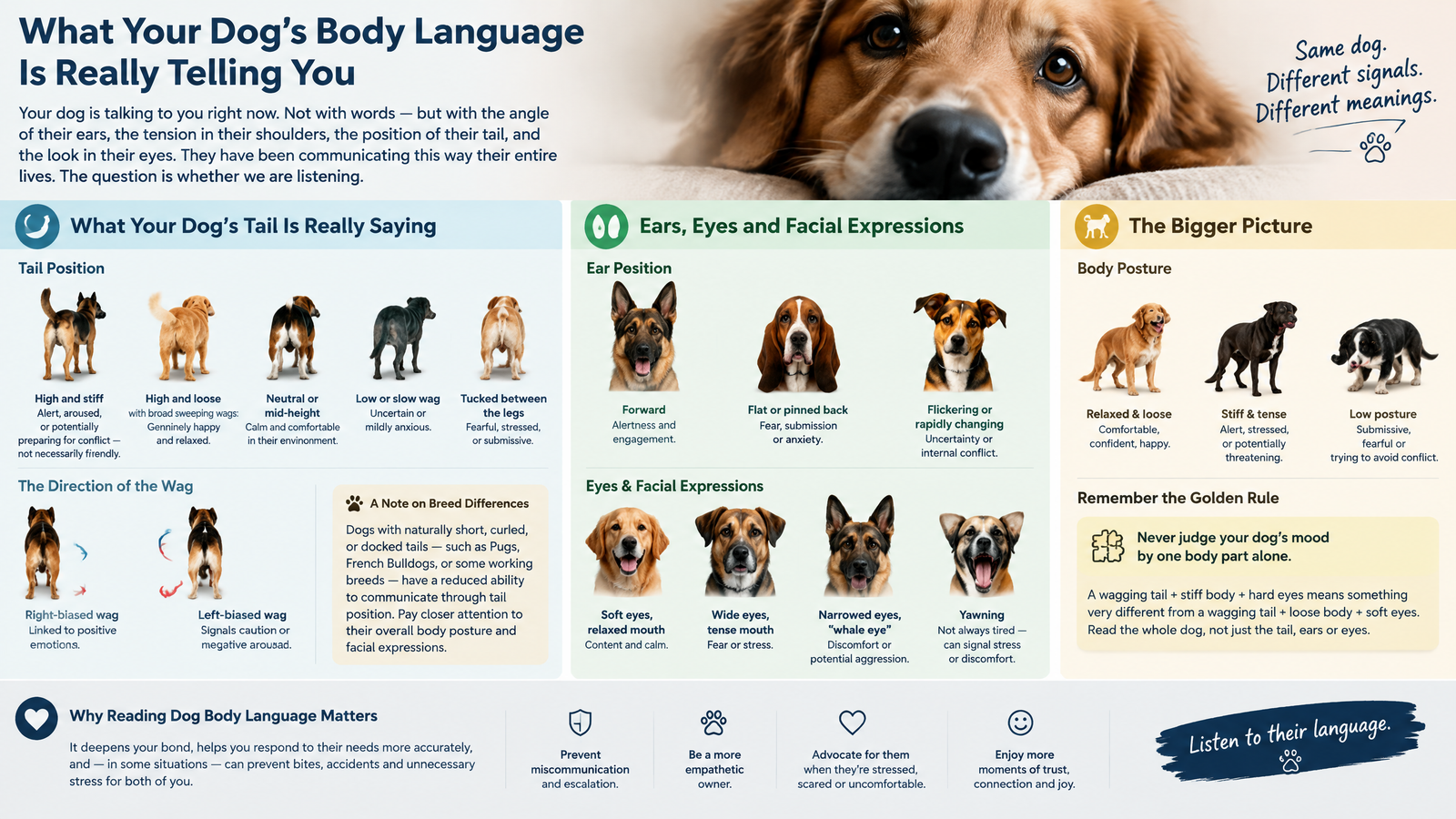
Did you know your furry friend is talking to you right this very moment? Even without words, they share so much through the subtle tilt of their ears, a gentle shift in their shoulders, the way their tail sways, or a soft glance from across the room. Pups have been using this wonderful language their whole lives—and taking a moment to listen can bring you both so much closer!
Many dog parents are amazed to discover just how much their dogs are softly communicating every day—and how easy it is to accidentally misinterpret those sweet cues. For example, a wagging tail doesn’t always mean pure joy, a tummy view isn’t always a request for belly rubs, and a big yawn doesn’t always mean it’s naptime!
Learning to understand your dog’s unique body language is one of the most rewarding gifts you can give your pet. It deepens your bond, helps you meet their needs with love and accuracy, and helps keep everyday interactions safe, calm, and happy for everyone.
Why Reading Dog Body Language Matters So Much
Our dogs have shared their lives with us for thousands of years, developing a truly beautiful visual language. While we rely on words, our pups speak through their bodies! The experts at Texas A&M University’s College of Veterinary Medicine share that learning basic dog body language gives us a heartwarming window into what our pups are thinking and feeling in any given moment.
Recognizing these signs helps us protect and comfort them. Veterinary behaviorists often hear owners say a dog reacted “out of nowhere,” but as Dogster notes, pups almost always offer subtle stress or fear signals first. Catching those early, quiet cues allows us to step in before our sweet friends feel overwhelmed.
Becoming fluent in your dog’s body language simply makes you a more thoughtful, empathetic companion. Whether it’s comforting them at the vet, giving them space when strangers approach, or simply celebrating moments when they are completely relaxed, listening closely builds a bond of pure trust.
The Golden Rule: Look at the Whole Picture!
Before exploring individual cues, here is the most important secret: try not to judge your dog’s mood by just one body part alone! As PetMD gently reminds us, a dog’s body language is best read as a whole picture. A high, stiff tail paired with a rigid body tells a very different story than a loose, full-body wag accompanied by happy, soft eyes!
Think of your pup’s body language like a sweet sentence:
- The tail is one word.
- The ears are another word.
- Their posture, eyes, and mouth complete the thought.
Reading the full sentence helps you catch their true message every time!
What Your Dog’s Tail Is Really Saying
The tail is often the first thing we look at, but it’s full of surprises! While we naturally link a wagging tail with a happy pup, the full story is lovely and nuanced.
Tail Position
Board-certified veterinary behaviorist Dr. Kelly C. Ballantyne (cited by Chewy) breaks down tail positions like this:
- High and stiff: Alert, extra-focused, or feeling intense—not necessarily a signal for play.
- High and loose, with wide sweeping wags: Pure, relaxed happiness!
- Neutral or mid-height: Calm, comfortable, and content.
- Low or slow wag: A little uncertain or mildly cautious.
- Tucked under: Feeling worried, shy, or seeking safety.
Which Way Is It Wagging?
Intriguing research shared by Ask A Vet shows that wag direction matters, too! A wag that favors the right side is tied to happy, positive feelings, while a wag favoring the left often means your pup is feeling a bit cautious.
A Quick Note on Different Breeds
Pups come in all shapes and sizes! Friends with short, curled, or docked tails (like Pugs or French Bulldogs) can’t express themselves through tail height as easily. If your pup has a cute little stubby tail, simply look a little closer at their soft facial expressions and general posture!
Ears, Eyes, and Sweet Facial Expressions
A dog’s face shows so much subtle emotion once you know what to look for!
Ear Position
While Basset Hound ears look very different from German Shepherd ears, the basic ideas are the same:
- Perked forward: Curious, engaged, and attentive.
- Held flat or pinned back: Feeling a bit shy, anxious, or uncertain.
- Flickering back and forth: Processing new sounds or weighing mixed feelings.
Eye Signals
Your pup’s eyes are a true window to their heart. Soft, slightly squinted eyes with relaxed eyelids mean total contentment! On the other hand, wide, unblinking eyes signal high intensity. According to NJ Dog, “whale eye”—where the white parts of the eye show as your dog turns their head away—is a clear request for comfort or space. If you notice this, simply pause what you’re doing, keep things quiet, and help give your pup a little extra room to relax.
Mouth & Facial Tension
A soft, open mouth with a floppy tongue usually means a happy pup! A tightly closed mouth shows focus or tension. Lip-licking (when food isn’t around) often means your dog is feeling a little unsure. And as the AKC explains, yawning is often a gentle “calming signal” dogs use to soothe themselves or diffuse tension. A big yawn during a tight hug or a vet visit usually means “I’m feeling a bit stressed,” rather than “I’m sleepy!”
Understanding Overall Posture
Looking at how your dog holds their whole body helps pull all these signals together.
Signs of a Happy, Relaxed Dog
According to BARK, a relaxed pup moves with ease. Their entire body—from nose to tail—looks loose and comfortable rather than stiff. You might notice a adorable “wiggle walk” where their whole body sways when greeting you. This is a dog who feels completely safe and cherished!
The Play Bow
One of the sweetest universal invitations is the play bow! Front legs stretched down, rear end up in the air, and a happily wagging tail. It’s a pup’s joyful way of saying, “Let’s play!” or reassuring a playmate that their bouncy games are all in good fun.
Signs of Stress or Worry
When a dog feels nervous, they often try to make themselves look smaller—crouching slightly, tucking their tail, and avoiding direct eye contact. They may also use subtle “calming signals” like yawning, licking their nose, looking away, or doing a full-body shake-off (as if they were wet!). These are your dog’s polite ways of asking for a gentle break.
Signs of High Arousal or Tension
When a dog feels threatened or highly defensive, they usually do the opposite: they try to look bigger! Their posture turns rigid, weight shifts forward, hackles along the spine might rise, and their gaze becomes fixed. As Stylla Care notes, behaviorists call this the “Ladder of Aggression.” Dogs almost always use subtle, quiet cues to ask for space first before resorting to a growl or snap.
Common Cues We Easily Misread
Even the most loving dog parents occasionally misinterpret a few common signals!
- The Tummy Roll: Rolling onto the back often invites tummy rubs, but it can also be a gentle request for space! Look at the whole body: a loose, floppy dog with soft eyes is asking for pats, while a tense dog with stiff limbs and an averted gaze is asking for a little breathing room.
- The “Guilty” Look: That sweet, low-headed look with flat ears isn’t actually a sign of guilt—it’s simply a reaction to a human’s serious tone or posture! Science shows dogs offer these soothing gestures to smooth things over whenever they sense tension, regardless of what actually happened.
- The Freeze: If a dog goes completely still during petting or play, treat it as a clear signal to stop. A sudden pause is your dog’s quiet way of saying, “I’m feeling overwhelmed right now.” Respecting that freeze builds immense trust!
Putting It Into Practice Every Day
Becoming fluent in your dog’s language is a sweet journey you take together day by day! Here are a few simple ways to practice:
- Observe Quiet Moments First: Learn what your pup looks like when they are completely relaxed. Everyone has their own unique baseline!
- Consider the Context: A yawn in bed means cozy tiredness; a yawn during a tight embrace might mean they need a bit of space.
- Share with the Family: Help children learn to spot happy, loose body language versus stiff postures—it creates safer, sweeter friendships between kids and pets!
- Honor What They Share: If your pup signals that they’re uncomfortable, kindly step in to help. Giving them space or removing a stressor reassures them that you’ve always got their back!
Learning your dog’s language connects naturally to how you train and play together. For more supportive advice, check out our guide on dog training tips every pet parent should know, or explore our fun indoor brain games to keep your pup’s mind happily engaged!
Final Thoughts
Your dog is one of the most expressive friends you will ever share your home with. They are always sharing their inner world—all it takes is a little loving attention to understand what they are saying. Every ear tilt, soft glance, gentle tail wag, or subtle pause is a little word in a lifelong conversation.
The more fluent you become, the richer and sweeter your bond will grow. You’ll move from simply reacting to your dog’s behaviors to truly understanding their heart. And that mutual trust is the most wonderful feeling in the world!