
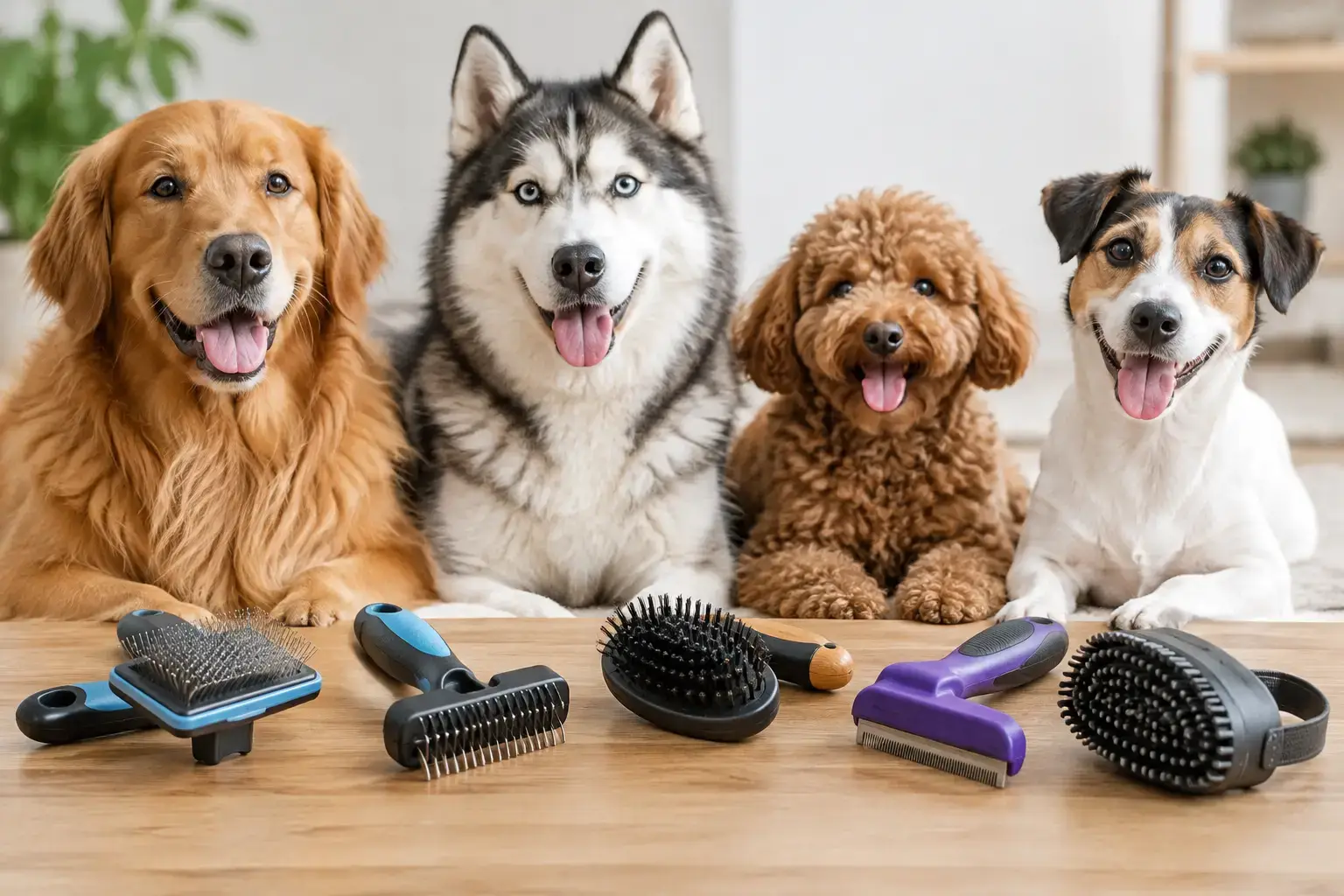
A good brush can make the difference between a quick, cozy bonding ritual and a grooming session your dog tries to escape. The best dog brushes for shedding are not necessarily the ones that pull out the most fur at once. They are the ones that suit your dog’s coat, reach loose hair without irritating skin, and help your furry best friend feel safe in your hands.
Shedding is normal for most dogs, even those with short coats. Seasonal changes, indoor heating, stress, diet, and a dog’s natural coat cycle can all affect how much fur ends up on your furniture. Regular, gentle brushing keeps loose hair from traveling through the house, but it also gives you a chance to check for tangles, dry skin, bumps, or sensitive spots.
How to Choose the Best Dog Brushes for Shedding
Start with your dog’s coat rather than the amount of fur on your floor. A Labrador’s dense double coat needs a very different tool from a Poodle’s curly hair or a Beagle’s smooth, short coat. Using a brush that is too harsh can scratch the skin or make a nervous dog dislike grooming. A brush that is too soft may feel pleasant but leave the undercoat untouched.
Consider coat length, thickness, and texture. Dogs with a double coat have a soft insulating undercoat beneath longer guard hairs. These dogs often shed heavily in spring and fall, and they benefit from tools that can lift out loose undercoat without cutting healthy hair. Dogs with curly, wiry, or continuously growing coats are more likely to tangle, so detangling and preventing mats matter as much as removing shed fur.
Your dog’s comfort matters just as much. Look for smooth pins, flexible bristles, or rounded teeth, and use light pressure. If your pup flinches, turns away, repeatedly licks their lips, or tries to leave, pause and make the next session shorter and easier. Brushing should build trust, not become a wrestling match.
Best Dog Brushes for Shedding: Match the Tool to the Coat
Slicker brushes for long, curly, and wavy coats
A slicker brush has a broad head covered with fine, bent wire pins. It is a helpful choice for dogs with medium-to-long hair, curly coats, or feathering on the legs, ears, and tail. It can lift loose hair and gently separate small tangles before they become mats.
Slickers are especially useful for breeds and mixes with Poodle-like, Doodle-like, Spaniel-like, or long-coated traits. Choose a flexible slicker with cushioned pins rather than a stiff, scratchy version. Brush in small sections, using short strokes from the ends of the hair toward the skin. Do not drag the pins through a knot. Hold the hair near the base to reduce pulling, then work the tangle apart gradually.
Undercoat rakes for thick double coats
An undercoat rake has long, widely spaced teeth designed to reach through a topcoat and collect loose undercoat. It is often one of the most effective choices for thick-coated shedders such as Huskies, Golden Retrievers, German Shepherds, Australian Shepherds, and many mixed-breed dogs.
The rake should glide through the coat without catching. Use it in the direction the hair grows and take your time around the belly, armpits, tail, and behind the ears, where friction can create tangles. A rake is not meant for a smooth short-haired dog, and it should not be forced through mats. If it snags repeatedly, switch to a gentler tool or ask a professional groomer for help.
Rubber curry brushes for short-haired dogs
For short, smooth coats, a rubber curry brush is often a wonderfully simple option. Its soft rubber nubs massage the skin and loosen surface hair while feeling more like a gentle rub than a traditional grooming tool. Many dogs enjoy it, especially during a calm outdoor brushing session where loose fur can drift away from the living room.
Rubber brushes work well for Beagles, Boxers, Pugs, Great Danes, and other short-coated pups. They are also handy for dogs who are still learning that grooming can be pleasant. They will not pull out deep undercoat as effectively as a rake, but they are a kind, practical everyday choice for regular maintenance.
Bristle brushes for finishing and shine
A bristle brush is usually best as a finishing tool. The clustered bristles smooth the topcoat, pick up light debris, and distribute natural oils for a healthy-looking shine. Soft bristles are a good match for short or fine coats, while firmer bristles can be useful for thicker fur after you have removed loose hair with another brush.
Do not expect a bristle brush alone to handle major shedding in a double-coated dog. Still, it has a valuable place in a gentle grooming routine. It can be the low-pressure brush you use daily to help a sensitive dog become comfortable with handling.
Pin brushes for medium and long coats
Pin brushes look similar to human hairbrushes, with longer metal pins set into a cushioned base. They are useful for fluffing and maintaining medium-to-long coats, especially when the hair is mostly free of mats. A pin brush can reach deeper than a bristle brush while being less intense than a slicker.
Choose pins with smooth, rounded tips and inspect the brush regularly. Bent pins can poke the skin. For a dog with dense undercoat, use a pin brush as part of a routine rather than relying on it as your only shedding tool.
Deshedding tools for seasonal coat blowouts
Bladed deshedding tools can remove a surprising amount of loose undercoat from double-coated dogs. They can be helpful during heavy seasonal shedding, but they require a gentle hand and moderation. Used too frequently or with too much pressure, they may break healthy guard hairs, irritate the skin, or leave the coat looking uneven.
Use a deshedding tool only on a clean, dry coat with no mats, and keep the session brief. A few light passes once in a while are usually more useful than repeated scraping. Never use one on a dog with skin irritation, open sores, or a coat that is already thin or patchy.
A Gentle Brushing Routine That Dogs Can Trust
For most dogs, several short sessions are easier than one long grooming marathon. Short-haired dogs may only need brushing once a week, while long-haired or double-coated dogs may need attention two to four times weekly. During a seasonal shed, you may brush more often if your dog is comfortable with it.
Begin in a quiet place with a few small treats nearby. Let your dog sniff the brush, then offer praise for calm curiosity. Start on an easy area such as the shoulder or back, avoiding the face, belly, tail, and legs until your dog relaxes. Pair a few gentle strokes with a treat or cheerful praise, then stop before your dog becomes restless. Ending while things are still positive helps your pup look forward to the next session.
Brush in the direction of hair growth unless you are carefully line-brushing a longer coat. Check common trouble spots: under the collar or harness, behind the ears, under the front legs, around the tail, and where long leg hair rubs together. These areas can hide small mats that become uncomfortable surprisingly quickly.
Bathing can help loosen dead hair, but only when followed by thorough drying and gentle brushing appropriate for your dog’s coat. Too many baths can dry the skin, so use a dog-safe shampoo and follow your veterinarian’s advice if your dog has allergies or frequent itching.
When Shedding Needs More Than a New Brush
A fuller brush is normal during seasonal changes. Sudden bald patches, red skin, dandruff, a strong odor, persistent scratching, or painful tangles are different. These signs can point to allergies, parasites, skin infection, hormonal conditions, or other health concerns that deserve veterinary guidance.
Mats also call for patience. Do not pull them apart with force or try to cut them out with household scissors, especially near the skin. A professional groomer can assess what is safe to brush out, and your veterinarian can help if the skin beneath a mat is irritated or sore.
The right brush will not stop your dog from shedding completely, and that is okay. With a calm routine, the right tool for their coat, and plenty of praise, grooming can become one more quiet way to care for the dog who shares your home and your heart.