
Every dog owner dreads that moment when something goes wrong with their beloved companion. Whether it’s a sudden illness, an unexpected injury, or a concerning behavior change, knowing how to respond during a dog emergency can make all the difference in your pup’s outcome. We’ve all been there-that heart-stopping second when you realize your furry friend needs help right now. The good news? With the right knowledge and preparation, you can confidently handle most urgent situations and get your dog the care they need quickly and safely.
Recognizing the Signs of a Dog Emergency
Understanding what constitutes a true dog emergency is the first critical step in protecting your companion. Not every unusual behavior requires a midnight dash to the emergency vet, but some situations demand immediate action.
Life-Threatening Symptoms That Require Immediate Attention
Watch for these urgent warning signs:
- Difficulty breathing, choking, or continuous coughing
- Severe bleeding that won’t stop with pressure
- Unconsciousness or unresponsiveness
- Seizures lasting more than two minutes
- Suspected poisoning or toxin ingestion
- Bloated, hard, or distended abdomen
- Inability to urinate or defecate despite straining
- Extreme pain or distress
- Eye injuries or sudden blindness
- Heatstroke symptoms (excessive panting, drooling, weakness)
The ASPCA’s emergency care guidance provides comprehensive information on recognizing critical situations. During a dog emergency, your pet may exhibit multiple symptoms simultaneously, making quick assessment essential.
Subtle Signs That Shouldn’t Be Ignored
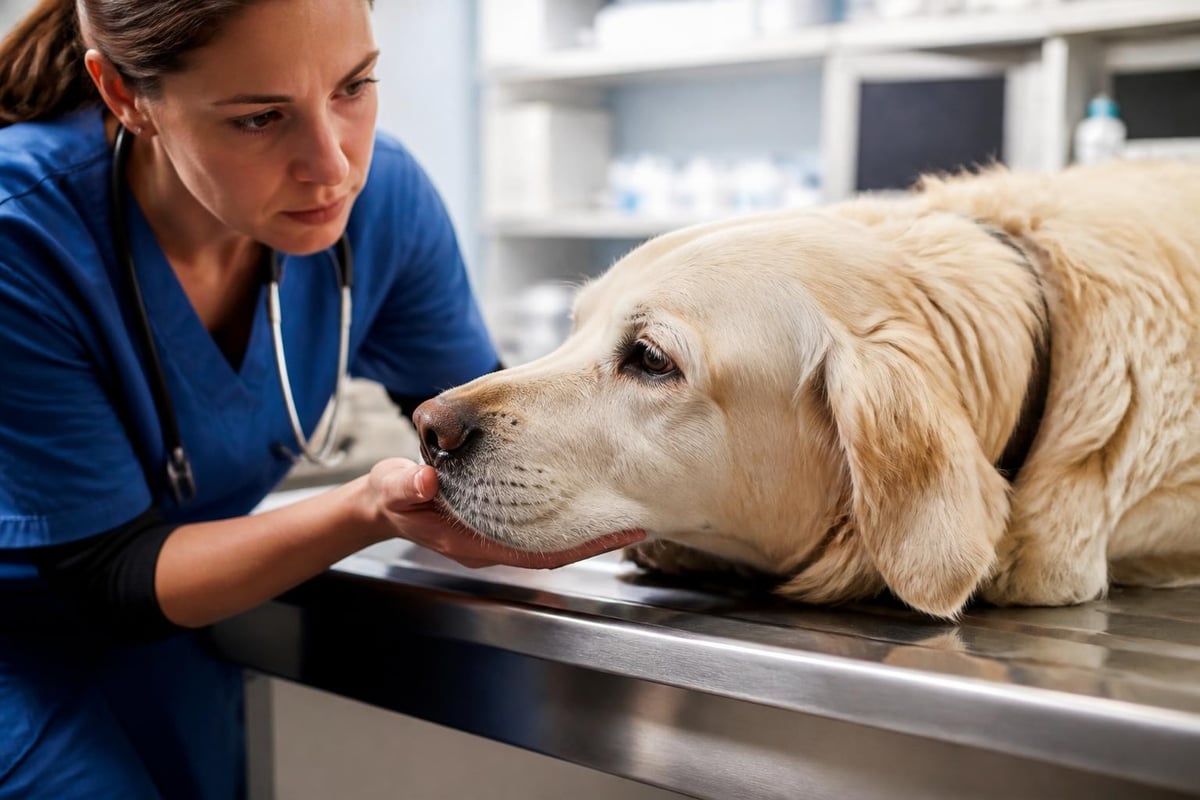
Some emergencies develop gradually. Pale gums can indicate shock or internal bleeding. Repeated vomiting or diarrhea within a few hours may signal poisoning or serious illness. Limping or inability to stand could point to fractures or neurological issues.
Changes in behavior often signal distress before physical symptoms appear. A normally energetic dog who suddenly becomes lethargic or hides may be experiencing significant discomfort.
Essential First Aid for Common Dog Emergencies
Knowing basic first aid can stabilize your dog while you’re getting professional help. The Merck Veterinary Manual’s first aid guidance emphasizes that your goal isn’t to replace veterinary care-it’s to keep your pet stable until experts can take over.
Bleeding and Wound Control
For severe bleeding, apply direct pressure using clean gauze or cloth. Don’t peek at the wound every few seconds-continuous pressure for at least three minutes gives blood time to clot. If blood soaks through, add more material on top rather than removing the original layer.
Elevate the injured area above the heart if possible. For limb injuries, this simple step reduces blood flow to the wound. Never use a tourniquet unless bleeding is uncontrollable and life-threatening-improper use causes more harm than good.
| Bleeding Type | First Aid Response | What NOT to Do |
|---|---|---|
| Minor cuts | Clean with water, apply pressure | Use hydrogen peroxide on deep wounds |
| Deep lacerations | Pressure bandage, elevate, rush to vet | Remove embedded objects |
| Nail injuries | Styptic powder or cornstarch, pressure | Pull off hanging nail yourself |
| Internal (suspected) | Keep calm, transport immediately | Give food or water |
Choking and Breathing Emergencies
If your dog is choking, first check their mouth for visible obstructions. Only attempt removal if you can clearly see and safely grasp the object. For small dogs, hold them upside down and give firm pats between the shoulder blades. For larger breeds, perform abdominal thrusts similar to the Heimlich maneuver.
Position your fist just behind the ribcage and thrust upward and forward five times. Check the mouth again. The RECOVER initiative’s CPR guidelines provide updated techniques that every owner should familiarize themselves with.
Poisoning Response
Time is everything in poisoning cases. If you suspect your dog ingested something toxic, contact the ASPCA Poison Control hotline immediately at (888) 426-4435. Have the product container handy to identify ingredients.
Common household toxins include chocolate, xylitol (artificial sweetener), grapes, raisins, certain medications, and household cleaners. The Pet Poison Helpline’s annual report details the most common canine poisonings and emergency protocols.
Never induce vomiting unless specifically instructed by a veterinarian or poison control expert. Some substances cause more damage coming back up, especially caustic chemicals or petroleum products.
Building Your Dog Emergency Kit
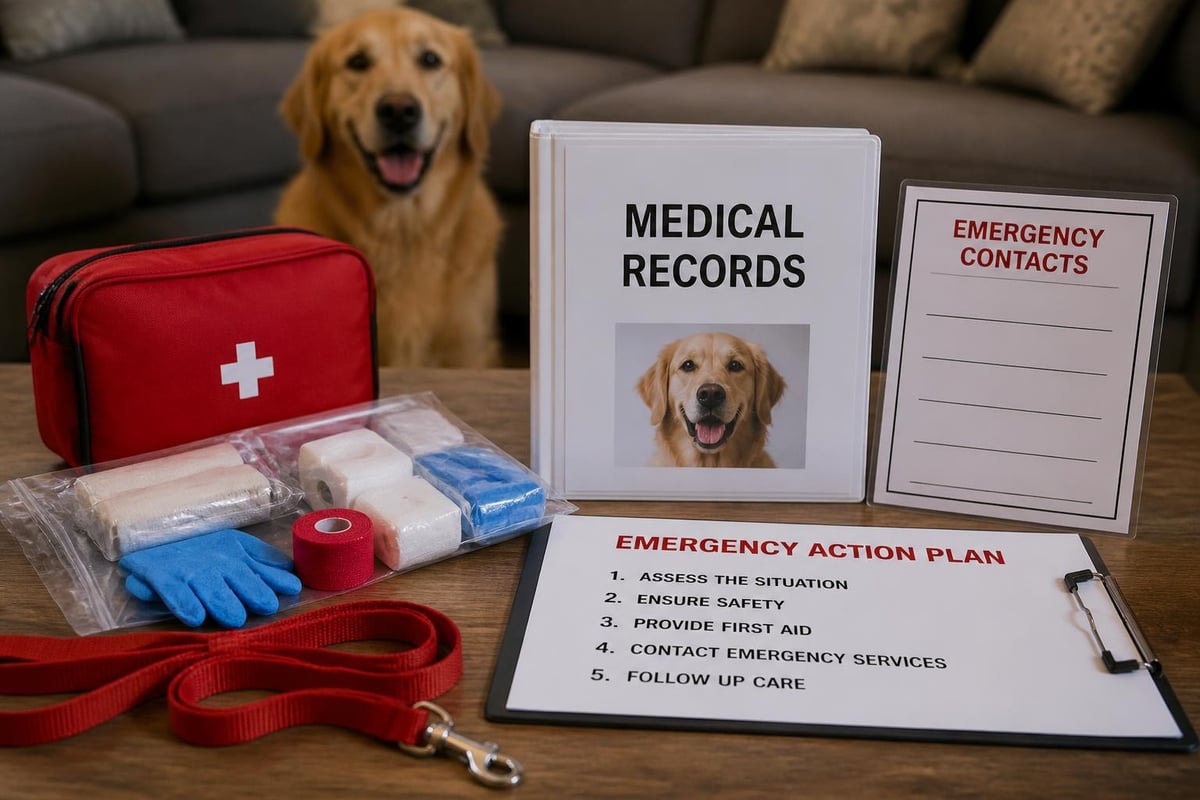
Preparation prevents panic. A well-stocked emergency kit keeps you ready to respond during a dog emergency without scrambling for supplies.
Essential items for your kit:
- Gauze pads and roll bandages (various sizes)
- Adhesive tape (medical grade)
- Scissors (blunt-tipped for safety)
- Digital thermometer (rectal for accuracy)
- Instant cold packs for swelling
- Styptic powder for nail bleeding
- Saline solution for eye/wound flushing
- Tweezers for tick or splinter removal
- Muzzle (even gentle dogs may bite when hurt)
- Emergency contact numbers (vet, emergency clinic, poison control)
The AVMA’s pet first aid brochure offers a comprehensive checklist and practical guidance for assembling your kit.
Store your emergency kit in an accessible location everyone in your household knows about. Check expiration dates on supplies every six months, and consider keeping a duplicate kit in your car for on-the-go emergencies.
When to Rush to the Emergency Vet vs. Call First
Not every urgent situation requires an immediate trip, but knowing the difference saves precious time during a genuine dog emergency.
Go Immediately Without Calling
Don’t waste time calling in these situations-drive straight to the emergency clinic:
- Active seizures or multiple seizures
- Unconsciousness or collapse
- Severe bleeding
- Difficulty breathing or blue/gray gums
- Bloated abdomen with restlessness (possible GDV/bloat)
- Major trauma (hit by car, serious fall)
- Heatstroke symptoms
- Suspected poisoning with visible symptoms
Have a household member call while you’re en route to alert the clinic you’re coming. This allows staff to prepare for your arrival.
Call First for Guidance
For concerning but less immediately critical situations, calling helps determine urgency. The veterinary team can advise whether your pet needs emergency care now, can wait for regular hours, or can be managed at home.
Examples where calling first makes sense:
- Mild vomiting or diarrhea (one or two episodes)
- Limping but still bearing some weight
- Minor cuts or scrapes
- Suspected ear infection
- Unusual behavior without other symptoms
Your regular veterinarian’s office typically has an after-hours emergency number. Keep this prominently displayed where you store your emergency kit.
Safely Transporting an Injured Dog
How you transport your dog during an emergency matters enormously. Improper handling can worsen injuries, especially spinal damage or fractures.
Immobilization Techniques
For suspected fractures or back injuries, minimize movement. Slide a rigid board (cutting board, shelf, or cardboard) under your dog if possible. Secure them gently with towels or soft restraints, but avoid pressure on injured areas.
Small dogs can be placed in a box or carrier cushioned with towels. Large dogs require two people-one supporting the chest, one supporting the hindquarters. Avoid bending the spine.
Keeping Your Dog Calm During Transport
Stress amplifies pain and can worsen shock. Speak in soothing, calm tones even if you’re terrified inside. Dogs pick up on our emotions-your steady voice provides comfort.
Cover your dog with a blanket for warmth and security. Shock causes body temperature to drop, and hypothermia complicates recovery. Keep the car climate comfortable, avoiding extremes.
If your dog is aggressive due to pain, use a makeshift muzzle from gauze or a soft cloth. Loop it around the muzzle, tie under the jaw, then behind the ears. Never muzzle a dog with breathing difficulties or vomiting.
Understanding Emergency Veterinary Care
Knowing what happens when you arrive at an emergency clinic helps reduce anxiety during an already stressful situation.
The Triage Process
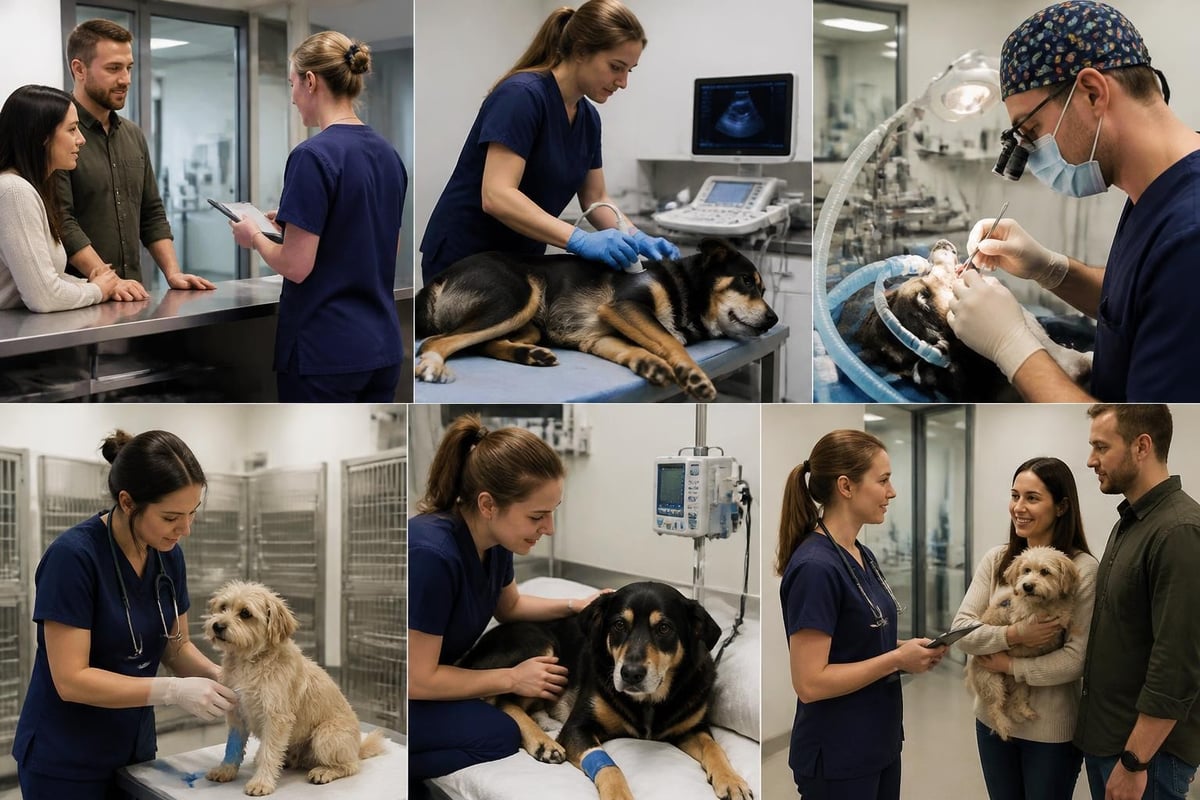
Emergency veterinary hospitals use triage protocols similar to human ERs. The veterinary triage guidelines prioritize patients by severity-life-threatening conditions receive immediate attention, while stable patients may wait.
This doesn’t mean your concern isn’t valid if you’re asked to wait. It means other pets are in more critical condition at that moment.
| Triage Category | Description | Typical Wait Time |
|---|---|---|
| Critical | Cardiac arrest, severe trauma, respiratory distress | Immediate |
| Urgent | Severe pain, moderate bleeding, suspected toxicity | 15-30 minutes |
| Semi-urgent | Vomiting/diarrhea, minor injuries, lameness | 30-60 minutes |
| Non-urgent | Follow-up care, mild symptoms | 1-2 hours |
What to Expect During Emergency Treatment
Staff will quickly assess vital signs-heart rate, respiratory rate, temperature, and mucous membrane color. They’ll ask focused questions about the incident, symptoms, and your dog’s medical history.
Be prepared with information about medications, pre-existing conditions, and recent activities. This context helps veterinarians diagnose and treat efficiently during a dog emergency.
The VECCS facility certification guidelines outline standards for emergency veterinary care, including equipment, staffing, and protocols that certified facilities maintain.
Preventing Common Dog Emergencies
While you can’t prevent every crisis, many dog emergencies are avoidable with simple precautions and awareness.
Toxin prevention starts at home. Store medications, cleaning products, and chemicals in secured cabinets. Keep human food containing dangerous ingredients (chocolate, xylitol, grapes, onions) completely out of reach. Many breeds explored at Dog Care Guide have specific sensitivities you should know.
Secure your environment. Check fencing regularly for escape routes. Keep garage chemicals locked away. Prevent access to trash cans containing cooked bones or spoiled food.
Monitor during play and exercise. Overexertion causes heatstroke, especially in brachycephalic breeds. Provide shade and fresh water during outdoor activities. Learn about breed-specific health concerns-our guides on French Bulldogs and German Shepherds highlight emergency risks unique to these breeds.
Gradual dietary changes prevent gastrointestinal emergencies. When switching your dog’s food, transition slowly over seven to ten days to avoid vomiting and diarrhea that could escalate into dehydration.
Special Considerations for Puppies and Senior Dogs
Age affects both emergency risks and response approaches.
Puppy-Specific Emergencies
Puppies face unique risks including hypoglycemia (low blood sugar), especially in toy breeds. Symptoms include weakness, trembling, and seizures. Rub corn syrup or honey on gums and get immediate veterinary care.
Parvovirus causes severe, bloody diarrhea and vomiting in unvaccinated puppies-a true emergency requiring hospitalization. Puppies also chew everything, increasing foreign body obstruction risk.
Crate training helps prevent many puppy emergencies by limiting unsupervised access to dangerous items.
Senior Dog Considerations
Older dogs experience different emergencies. Vestibular disease causes sudden loss of balance that looks alarming but often isn’t life-threatening. Heart failure may manifest as sudden weakness or collapse.
Senior dogs deteriorate faster during emergencies due to reduced organ reserve. Don’t delay seeking care hoping symptoms will pass-earlier intervention dramatically improves outcomes in older pets.
Frequently Asked Questions
What should I do first in a dog emergency?
Stay calm, assess the situation quickly, and ensure your own safety before approaching. Check if your dog is breathing and conscious. If facing life-threatening symptoms (severe bleeding, breathing difficulty, unconsciousness), administer appropriate first aid while someone calls the emergency vet or drives you there immediately.
How can I tell if my dog is in shock?
Shock symptoms include pale or white gums, rapid heart rate, weak pulse, shallow breathing, cold extremities, and lethargy or confusion. Keep your dog warm with blankets, avoid giving food or water, and transport to emergency care immediately-shock is life-threatening and requires professional intervention.
Should I induce vomiting if my dog ate something toxic?
Never induce vomiting without guidance from a veterinarian or poison control hotline. Some substances cause more damage when vomited, including caustic chemicals, petroleum products, and sharp objects. Call poison control first-they’ll advise whether inducing vomiting is safe based on what your dog ingested.
What’s the difference between an emergency vet and my regular vet?
Emergency veterinary hospitals provide 24/7 critical care with specialized equipment and staff trained in urgent situations. Regular veterinarians handle routine care and scheduled appointments. For after-hours emergencies, nights, weekends, or holidays, emergency clinics are your resource. Some regular practices have emergency numbers connecting to on-call vets.
How much does emergency veterinary care typically cost?
Emergency vet visits typically range from $200-$500 for the initial exam and basic treatment, with costs rising to $1,000-$5,000+ for serious conditions requiring hospitalization, surgery, or intensive care. Many emergency clinics require payment at time of service. Consider pet insurance or establishing an emergency fund to ensure you can afford critical care when needed.
Can I give my dog human medications during an emergency?
Generally no-many human medications are toxic to dogs, and incorrect dosing can be fatal. Never give ibuprofen, acetaminophen, or aspirin without veterinary guidance. The only relatively safe over-the-counter option is diphenhydramine (Benadryl) for allergic reactions, at 1mg per pound, but always call your vet first to confirm appropriateness and dosing.
What information should I have ready when calling about a dog emergency?
Prepare your dog’s age, weight, breed, current medications, pre-existing conditions, and vaccination status. Describe symptoms clearly including when they started, severity, and any changes. If poisoning is suspected, have the product container with ingredient list ready. Note your dog’s normal behavior to help identify significant changes.
Being prepared for a dog emergency means having knowledge, supplies, and a clear action plan before crisis strikes. By recognizing warning signs, maintaining a well-stocked first aid kit, and knowing when to seek immediate veterinary care, you’re already equipped to protect your furry companion when seconds count. For more practical guidance on keeping your dog healthy, safe, and happy through every life stage, visit Dog Care Guide, where we provide cheerful, comprehensive resources covering everything from nutrition and training to breed-specific health insights that help you be the best pet parent possible.