French Bulldog Dog Breed: Temperament, Health & Care Guide
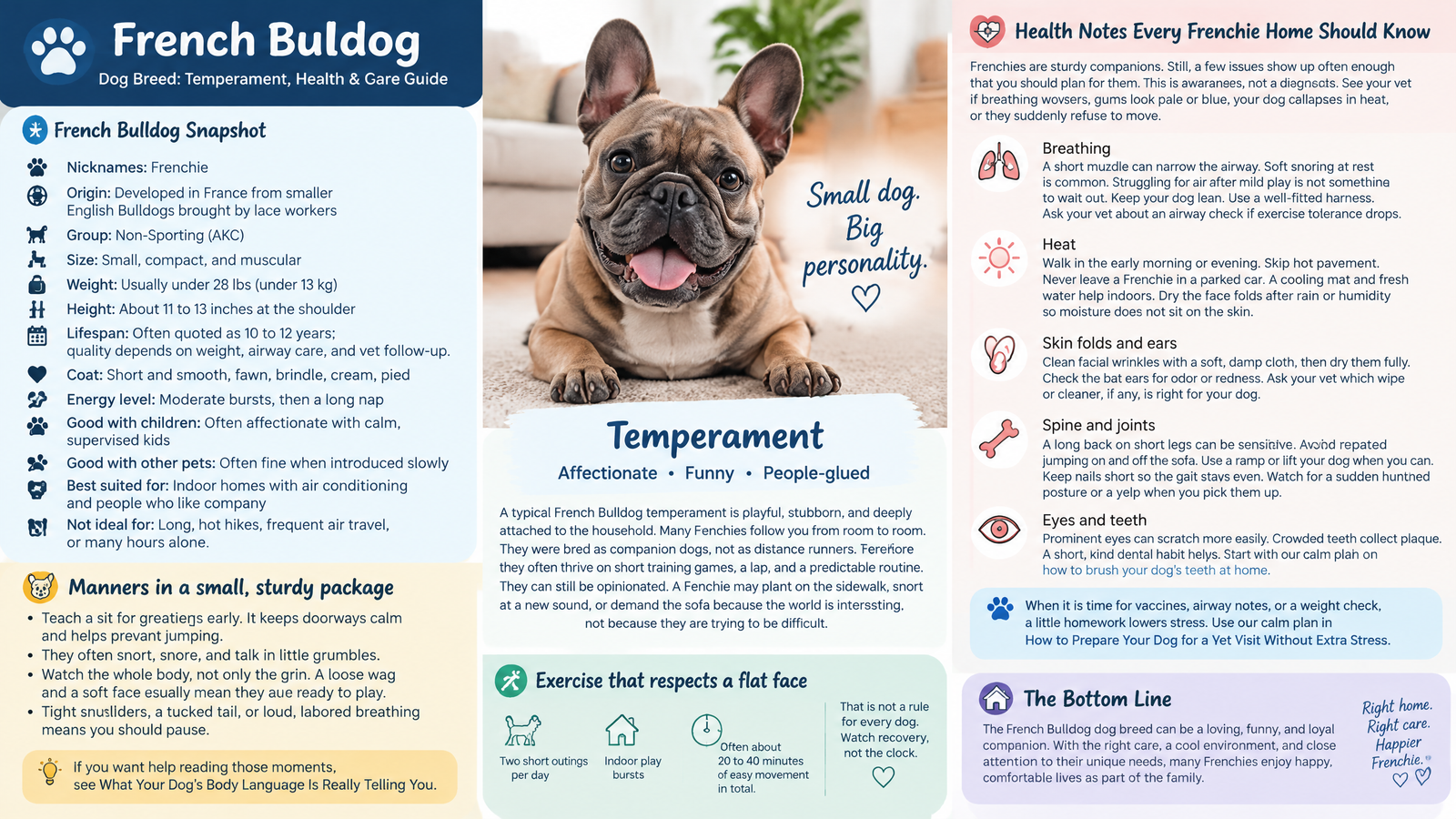
A French Bulldog is a companion who wants to be on your feet, in a body that does not cool well and does not always breathe quietly. The funny part is real. So is the vet budget.
This will not match every Frenchie. Use it to see if the breed fits a house you can keep cool.
Snapshot
Developed in France from smaller English Bulldogs brought over by lace workers
AKC group: Non-Sporting
Usually under 28 lb, about 11 to 13 inches at the shoulder
Lifespan often quoted as 10 to 12 years, and the quality of those years tracks weight and airway
Short coat: fawn, brindle, cream, pied, and others
Energy: a burst, then a nap
Poor fit: hot hikes, frequent flying, long days alone, a house with no air conditioning
Temperament
Typical Frenchies are playful, stubborn, and glued to the household. They were bred as companions, not distance runners. A plant on the sidewalk or a snort at a new sound is common. It is not a training emergency by itself.
They are small and solid. A happy leap still knocks a toddler. Teach a sit for greetings. The same pause as in stopping jumping keeps the door calmer.
Snoring and grumbles are ordinary. Harsh breathing after mild play is not. Cool the dog down. If it does not ease, call the vet. A loose face is play. Tight shoulders or a tucked tail means pause. Body language is worth more than the grin.
Health you should budget for
Frenchies are a brachycephalic breed. A short muzzle can mean a narrower airway. Soft snoring at rest is common. Struggling after a short game is not something to wait out. Keep the dog lean. Use a harness, not a collar on the throat. Ask for an airway check if exercise tolerance drops.
Heat is the everyday risk. Walk early or late. Skip hot pavement. Never leave one in a car. A cooling mat helps indoors. After rain, dry the face folds so moisture does not sit in the wrinkle. The mat routine in after a rainy walk works for this breed without changes.
Wipe facial folds and dry them. Check the ears for odor. The long back on short legs does not love repeated jumps off the sofa. A ramp or a lift saves you a disc problem later. Keep nails short. Prominent eyes scratch more easily. Crowded teeth need a brush. Start with home tooth brushing.
Pale or blue gums, collapse in heat, or a dog who suddenly will not move is an emergency, not a blog problem. For routine visits, prep the handling so airway checks are not a fight.
Exercise and care
Many adults do fine on two short outings and a little indoor play, often 20 to 40 minutes of easy movement in total. Watch recovery, not the clock. Breathing should settle within a few minutes of rest. Skip midday heat and hills. A shaded sniff around the block spends the brain without pushing the lungs. Puppies need even less. Five minutes, then sleep.
Weekly brushing with a rubber tool is enough for the coat. Bath when they smell, every month or two unless the vet says otherwise. Dog shampoo. Fold care is wipe, dry, stop. Do not pack products into the wrinkles unless you were told to.
Weight is the lever you control. Extra pounds make breathing and the spine harder. Measure meals. You should feel ribs. A shallow bowl helps some flat-faced dogs who make a mess of a deep dish. Ask before you add supplements.
Training sessions stay short. Name, a settle on a mat, a sit for guests, a harness walk that does not haul the neck. If you are comparing family dogs, the Lab guide is the mileage version of this decision. Labs need more running. Frenchies need more heat management.
The fit
Choose one if you want a close companion, can keep the house cool, and can pay for skin and airway care over a lifetime. Wait if you need a jogging partner or you are gone from dawn to night.
Meet adults, not only puppies. An adult shows you the breathing on a warm day and the real attitude about stairs. This week, measure the food or swap the collar for a harness. One of those will tell you more than another evening of research.

 A French Bulldog is a companion who wants to be on your feet, in a body that does not cool well and does not always breathe quietly. The funny part is real. So is the vet budget.
This will not match every Frenchie. Use it to see if the breed fits a house you can keep cool.
A French Bulldog is a companion who wants to be on your feet, in a body that does not cool well and does not always breathe quietly. The funny part is real. So is the vet budget.
This will not match every Frenchie. Use it to see if the breed fits a house you can keep cool.