The walk in the rain is usually the easy part. The hard part is the three seconds after the door opens, when a wet dog shakes in the hallway and the grit from the sidewalk is now on the rug.
You need a mat and a towel you are willing to ruin. You do not need a bath every time the sky opens. If the dog is shivering hard, limping, or licking a paw raw, that is a clinic call, not a better towel technique.
Set the spot before you leave
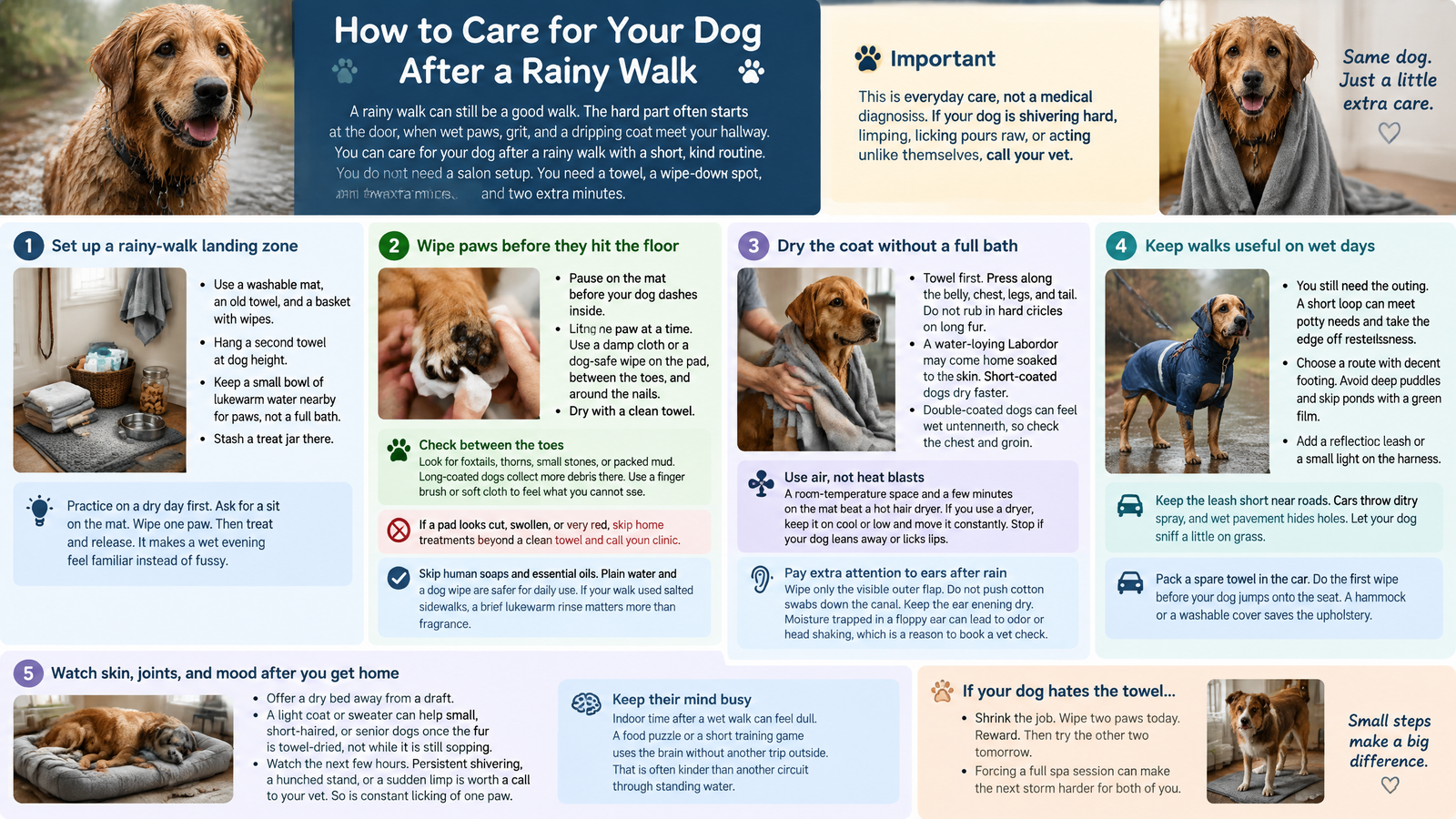
Pick one patch by the door. Washable mat, old towel on a hook at dog height, wipes in a basket, a few treats. A bowl of lukewarm water for paws is enough. A full tub is how this routine dies on a weeknight.
Practice once on a dry day. Sit on the mat, wipe one paw, treat, release. A wet evening is a bad time to invent the rule.
Paws first
Salt, mud, and small stones ride home between the toes. Pause on the mat before the dog is allowed to finish the zoom to the couch. Lift one paw. Damp cloth or a dog wipe on the pad and between the toes, then a dry towel. Do not scrub broken skin.
Long coats hide more. Feel for packed mud and grass seeds. A cut, a swell, or a pad that looks angry gets a clean towel and a phone call, not an oil you found online. The same paw handling shows up when you get a dog ready for the vet, which is a reason to keep the habit even when the week is dry.
Skip human soap and essential oils on paws. If the sidewalk was salted, a lukewarm rinse matters more than a scented wipe.
Coat
Press the towel along the chest, belly, legs, and tail. Rubbing in circles on long fur makes mats. Press, lift, move to a dry part of the towel. A Lab who treats puddles as the point of the walk will be wet to the skin. The notes on Labradors are relevant here mostly because the coat lies and looks drier than it is. Check the chest and groin on double-coated dogs too. The top can feel fine while the underside drips on the sofa an hour later.
A hot dryer in the face makes this worse. Room air, or a dryer on cool kept moving, is enough. If the dog leans away or licks their lips, stop. Those are in the body language piece for a reason.
Wipe the outer ear flap. Do not send a cotton swab down the canal. Moisture in a floppy ear is how a rainy week becomes a head-shaking week.
The walk itself
You still need the outing. It does not have to be the fair-weather mileage. Skip puddles you cannot see the bottom of, and ponds with a film. A light on the harness helps on dark wet streets. Keep the leash shorter near the road. Spray from cars is filthy, and wet pavement hides holes.
A few sniff stops on grass are fine. The pace in the sniff walk guide is a better model for a short rainy loop than trying to hit the usual route at a run. If you drive to a park, wipe the dog before the car seat. A cover is cheaper than the second cleanup.
After you are inside
Some dogs shake and sleep. Small, thin-coated, and older dogs get cold once the fur is damp. Dry them, then offer a sweater if they still tuck up. A coat on a sopping dog just holds the water.
Call the vet for shivering that does not stop, a hunched stand, a new limp, or one paw that gets licked for an hour. A puzzle or a short training game is a better second activity than another loop through standing water.
If the dog hates the towel, do two paws and quit. A forced spa night makes the next storm harder.
Same order every time: paws, belly, ears, treat, release. Write it on a note if more than one person walks the dog. A sloppy wipe that happens is worth more than a bath you keep postponing. Hang the wet towels. A pile of them smells like the walk by morning.
 The walk in the rain is usually the easy part. The hard part is the three seconds after the door opens, when a wet dog shakes in the hallway and the grit from the sidewalk is now on the rug.
You need a mat and a towel you are willing to ruin. You do not need a bath every time the sky opens. If the dog is shivering hard, limping, or licking a paw raw, that is a clinic call, not a better towel technique.
The walk in the rain is usually the easy part. The hard part is the three seconds after the door opens, when a wet dog shakes in the hallway and the grit from the sidewalk is now on the rug.
You need a mat and a towel you are willing to ruin. You do not need a bath every time the sky opens. If the dog is shivering hard, limping, or licking a paw raw, that is a clinic call, not a better towel technique.