How to Prepare Your Dog for a Vet Visit Without Extra Stress
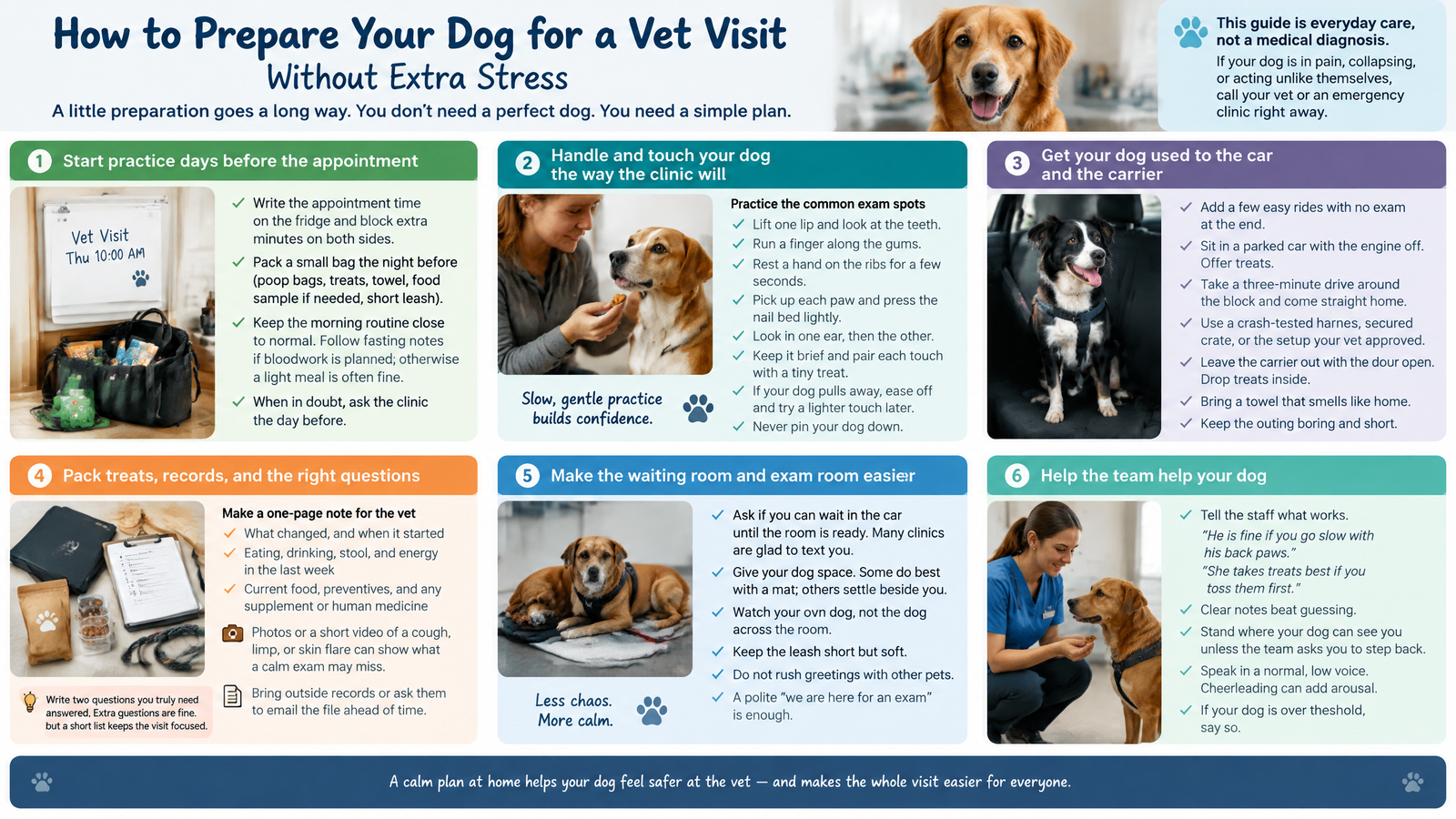
The clinic is a stack of small weird things: the car, the floor smell, a stranger lifting a lip. You cannot make that ordinary. You can make the pieces familiar before the appointment, which is most of what “a good vet dog” actually is.
If the dog is collapsing, struggling to breathe, or in obvious pain, skip the practice plan and call the clinic or an emergency hospital.
Two days out, not the morning of
Put the time on the fridge and leave a buffer. Jogging across the parking lot with a tight leash is how a routine vaccine becomes a scene.
Pack the night before. Bags, a towel from the dog’s bed, the leash you already use, and treats the dog does not get on walks. If the clinic asked you to fast for bloodwork, follow that. Otherwise a light breakfast is usually fine. Ask the day before if you are unsure. A skipped meal plus a skipped walk makes a nervous dog worse.
Handling
Sit on the floor for two minutes. Touch an ear, treat. Lift a lip, treat. Rest a hand on the ribs, treat. Stop while the dog is still taking food.
The lip lift is the same skill as tooth brushing. The paw hold is the same skill as nail trims. You do not need a separate program for each. One second of looking in an ear is enough. If the dog pulls away, you went too far for today.
Pinning a dog to “get the paw” teaches them that the clinic will be the same fight. Slow looks inefficient. It is the method that still works on visit three.
The car
A dog who only rides to the vet learns what the car means. Sit in the parked car with the engine off and hand out treats. Another day, drive around the block and come home. No exam at the end.
Use a crate or a crash-tested harness. A loose dog in a moving car is a separate problem from nerves. If the carrier only appears on appointment morning, you already lost. Leave it out with the door open during the week. The slow version in crate training applies to carriers too. A towel that smells like the couch, under the dog in the car or on the scale, helps more than a speech.
What to hand the vet
Three lines on a phone note beat a story you reconstruct in the exam room.
What changed, and the day it started
Eating, drinking, stool, energy this week
Food, preventives, and anything else that goes in the mouth, including human medicine
A ten-second video of the cough or the limp is worth more than a description. If another clinic has records, have them sent ahead. Write two questions you actually need answered. You can ask more. A list keeps the visit from wandering while the dog cooks on the table.
Waiting room
Ask if you can wait in the car. A lot of clinics will text when the room is open. That one request prevents a lobby full of stares.
Tell the tech what works. “Back paws are the hard ones.” “Toss the treat before you reach.” Stand where the dog can see you unless they ask you to move. Cheerleading adds noise. A normal voice is better.
If the dog is over threshold, say so. A break, a different room, or a muzzle is not a failed visit. If you think you will need a basket muzzle, introduce it at home with treats for seconds at a time, weeks before you need it. A muzzle that appears as a punishment gets ripped off or feared.
After
Water, then a quiet hour if the dog looks spent. Set up the cone or the new pill before dinner, not at 9 p.m. when everyone is worse at instructions. Call back for vomiting, swelling at a sample site, or a dog who cannot settle. Log the next due date the same afternoon. That is the part people skip, and the reason the next visit is rushed.
If the last appointment went badly, say that when you book. Clinics can often change the time of day or the handling plan. They cannot fix a surprise.

 The clinic is a stack of small weird things: the car, the floor smell, a stranger lifting a lip. You cannot make that ordinary. You can make the pieces familiar before the appointment, which is most of what “a good vet dog” actually is.
If the dog is collapsing, struggling to breathe, or in obvious pain, skip the practice plan and call the clinic or an emergency hospital.
The clinic is a stack of small weird things: the car, the floor smell, a stranger lifting a lip. You cannot make that ordinary. You can make the pieces familiar before the appointment, which is most of what “a good vet dog” actually is.
If the dog is collapsing, struggling to breathe, or in obvious pain, skip the practice plan and call the clinic or an emergency hospital.