
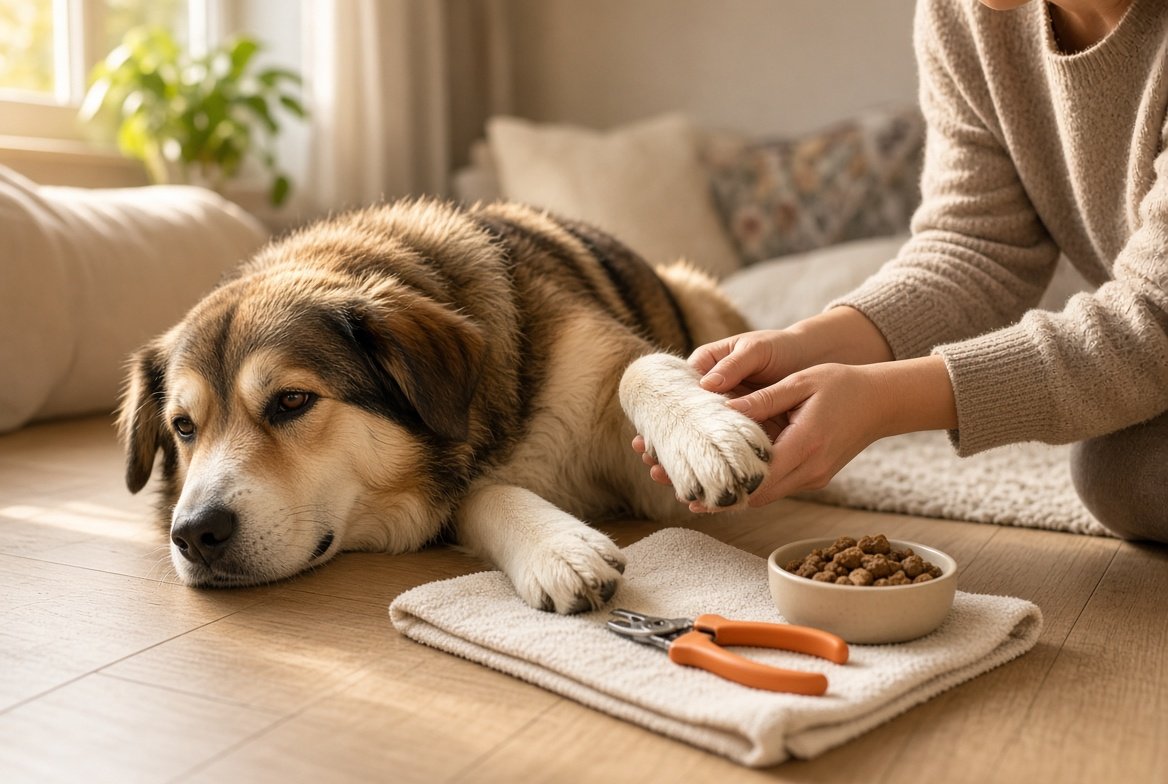
If you can hear your dog’s nails clicking on the kitchen floor, you are not behind as a pet parent. You are simply hearing a clear reminder that it is time for a trim. Long nails change how your dog stands, and a regular, gentle habit at home is kinder than waiting until a groomer has a lot of length to take off.
This guide shows you how to trim your dog’s nails at home without turning the evening into a wrestling match. You will learn how often to trim, how to spot the quick on light and dark nails, and how to stop if someone nicks a nail. It is not a medical diagnosis. If a nail is split, swollen, or your dog will not let anyone near a paw, call your veterinarian.
Why long nails are more than a clicking sound
Nails that touch the floor on every step push the toes back. Over weeks that can splay the feet, strain joints, and make hard floors feel slippery. A nail that grows in a hook can also catch on carpet or a crate grate and tear.
You do not need a perfect salon length. You want the nail to clear the ground when your dog stands square, with a little extra room so walking does not grind the tip raw. Dewclaws, the extra nails higher on the leg, never wear down on walks, so they need a look every time you do a trim.
A short check after wet weather helps too. Mud hides cracks and packed debris between the pads. The same landing-zone habit in how to care for your dog after a rainy walk makes paw care easier to keep up.
How often to trim your dog’s nails at home
Most household dogs need a trim about every three to four weeks. City dogs that walk daily on rough pavement may last a little longer. Soft-grass dogs, seniors, and small breeds with fast-growing nails often need a weekly peek.
Use your ears and eyes, not only the calendar. Clicking on tile usually means the tips are too long. If the nail curves toward the pad, do not wait for the next month. Take a tiny amount off sooner rather than a big cut later.
Puppies can start with paw handling in the first weeks at home. One nail and a treat is enough. Seniors may need more frequent trims because they move less. If your older dog suddenly limps after a trim, pause and ask your vet to look at the paw.
Gather a simple nail-trim kit
You do not need a salon cart. You need sharp tools, good light, and a plan for a nick.
- Sharp scissor-style dog nail clippers that fit your dog’s nail size
- Optional nail grinder if your dog accepts a quiet hum
- Styptic powder, or cornstarch in a pinch
- High-value treats cut into tiny pieces
- A towel and a non-slip mat
- A flashlight for dark nails
Dull clippers crush the nail instead of cutting it, which stings. If the blades look shiny and rounded, replace them. Keep the kit in one basket so you are not hunting for powder while a nail is bleeding.
Skip human nail clippers. They are the wrong shape and can split a dog nail. A well-fitted harness for walks also helps the feet, because a collar yank can make a dog brace and slip. Pair trims with other calm handling, the same way you would brush your dog’s teeth at home in short, paid sessions.
Teach your dog that paws are safe
Most nail drama is not about the clip. It is about a hand grabbing a foot with no warm-up. Spend a few days on handling before you cut anything.
Sit on the floor. Touch a paw, feed a treat, and let the paw go. Repeat until the shoulders stay soft. Then hold the paw for one second. Then hold and press a toe. Then show the closed clippers and feed. Stop while your dog still wants more.
Watch the whole body. Loose tail, soft mouth, and easy weight on the other three feet usually mean you can continue. A tucked tail, whale eye, or a freeze means you went too far. For extra help reading those signals, see What Your Dog’s Body Language Is Really Telling You.
If your dog leaps at guests when tools come out, keep the room quiet and ask people to wait. The same polite pause you use when you stop your dog from jumping on people keeps the trim from turning into a party.
How to trim your dog’s nails at home, one small cut at a time
Work in a well-lit room on a mat so your dog does not slide. Many dogs settle better standing with a helper offering treats at nose height. Others lie on their side. Pick the position your dog already uses for cuddles.
Hold the paw the way you would hold a friend’s hand, firm and kind, not a squeeze. Isolate one nail. Look at the underside. On a light nail you can often see the pink quick. Leave about two millimeters of nail beyond that pink. On a dark nail you cannot see the pink, so take off only the hook-like tip.
Place the clipper so the cut follows the natural curve, often about a 45-degree angle from underneath. Make one clean snip of one to two millimeters. Do not saw. Praise and treat. Then look at the cut surface. A pale, chalky center is still safe. A gray-to-pink oval means stop on that nail.
Do one or two nails if that is all your dog can give you. Four good nails today beat eight sloppy nails and a frightened dog. Come back tomorrow for the rest. Include dewclaws so they do not curl into the skin.
If you prefer a grinder, let your dog hear it in another room first, then touch it to a treat pouch, then to one nail for one second. Grind in short bursts so the nail does not heat up. Round the sharp edge after a clip if your dog will allow it.
Black nails, nicks, and when to stop
Dark nails make everyone nervous. That is normal. Use a flashlight from behind the nail if you can. Take thin slices and stop when you see a small dark or pink dot in the center of the cut. That dot is your warning, not a target.
If you nick the quick, stay calm out loud. Press styptic powder or a pinch of cornstarch onto the tip for thirty seconds. Do not keep clipping that nail. Most nicks look dramatic and then settle. If bleeding soaks a towel, the nail is split, or your dog cries and will not bear weight, call your vet or an emergency clinic.
Never punish a pull-away. End the session, scatter a few treats on the floor, and try a smaller goal next time. A groomer or vet tech can finish the job while you keep practicing handling at home.
Book extra help before a checkup if paws are a hard topic. Our calm plan in How to Prepare Your Dog for a Vet Visit Without Extra Stress works well when you know nails will be on the list.
A simple weekly paw routine
Pair nail care with the rest of your dog’s body check so it feels ordinary. After a walk, wipe the pads, look between the toes, and run a finger along each nail. Note any heat, odor, or a nail that sits at a new angle.
Keep your dog at a healthy weight. Extra pounds load the toes the same way long nails do. Short-faced companions such as the French Bulldog often need help on stairs and slick floors, so shorter nails matter even more. Active breeds like the Labrador Retriever wear some length on pavement, but dewclaws and indoor days still add up.
If you only remember one rule, remember this: small cuts, frequent sessions, and a treat after every nail. That is how you trim your dog’s nails at home without stress becoming the family story.
A calm next step
You do not need a full pedicure tonight. Tonight, touch one paw and pay your dog. Tomorrow, clip one tip. By next week the kit will feel like the toothbrush, not like a battle.
If a nail looks infected, a dewclaw is grown into the skin, or your dog screams at the first touch, skip the home project and call your veterinarian. You know your dog. A short question now is better than a long guess later.
