The doorbell is a starting gun in a lot of houses. The dog is being friendly. The guest is wearing a pale coat. Both things can be true.
Jumping pays. Eye contact, a shove, a laugh, even “down” said while you look at the dog, all count as attention. Labs and other social breeds rehearse it more because people keep reacting. A small dog can still scare a child. Size is not the rule. The rule is what the paws earn.
A loose wiggle is a hello. A stiff body with the jump is a different problem. If you are unsure, use body language before you run drills. Snapping, freezing, or a jump that started with a yelp needs a vet or a behavior pro, not a door protocol.
Fix the door before you fix the dog
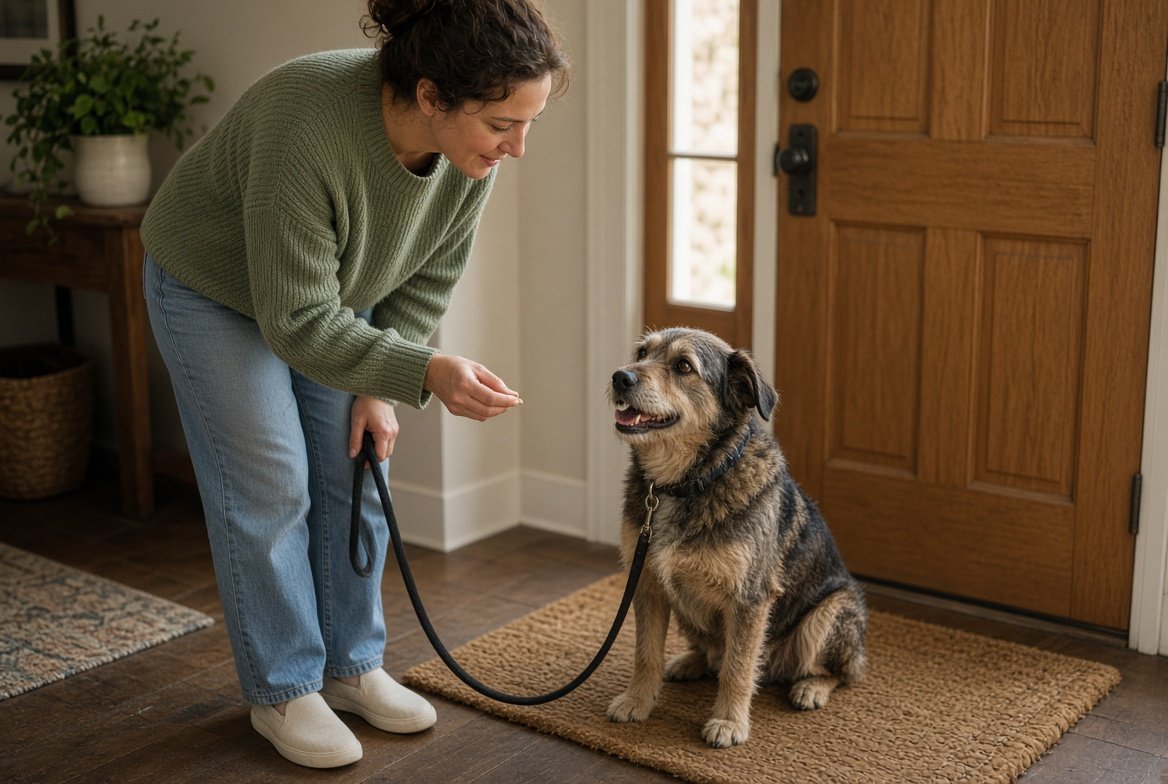
Training fails when every visitor rewards the leap by accident. Leash on a hook. Clip it before you open the door. A baby gate gives you a buffer so the dog can see people without landing on them.
Ask guests to wait a few seconds. Put the treats by the door so you are not in the kitchen while the paws are already up. Practice with nobody coming: coat on, hand on the knob, sit, treat, coat off. The door is often the trigger. The guest is extra.
Four paws down
Pick sit, or a stand with all four feet on the floor. A dog cannot sit and jump in the same second.
In a quiet room, mark the moment the feet stay down and pay at knee height or on the floor. Step toward the dog. If they jump, turn your side and wait. Pay when the paws land. Two minutes, a couple of times a day. Soft treats they can swallow fast.
Crossed arms and no eye contact are clearer than a knee in the chest. Kneeing and collar grabs still count as contact. Some dogs find that scary. Others find it interesting. Quiet withdrawal is easier to repeat.
If they bounce off your legs, greet through the gate. Success with a barrier is still success.
Real people
Borrow one patient friend. Leash on. Friend knocks, steps in, does not reach. Sit holds, treat on the floor, quiet hello. Sit breaks, friend turns away for a few seconds. Repeat until the sit is the fast path to the guest. Then change one thing. A second person, or a looser leash. Not both.
On walks, ask for the sit before the neighbor reaches down. A foot on the leash, not a yank, keeps a jump off a face. “One sit, then you can say hi” works on most people.
You can still let the dog sniff after the hello. A short greeting and then nose time is kinder than a long messy hug. That pace is the same idea as a sniff walk, just at the curb.
Why it comes back
One person in the house still scoops the dog up. The jump still pays. Agree on one greeting.
Do not start this at a party. One visitor on a Tuesday is the class. Groups are the test.
Expect a burst of extra jumping when you first ignore it. That extinction spike is normal. Pay the first clean sit like you mean it.
A dog with no outlet jumps harder. A short game before guests is fair. That is not the same list as boredom signs, but an empty afternoon makes the door worse. If the dog is too amped to chew a treat, scatter three on the mat. Head down, jump loses its target.
Sudden jumping, a yelp on landing, or stiffness after play is a vet visit. The handling in vet-visit prep keeps that appointment from becoming a second fight. Older dogs and tiny dogs still deserve the sit. A jump that used to look cute is how backs get hurt.
Wet arrivals make it messier. Reset on the mat from the rainy-walk routine before anyone gets hugged with muddy paws.
Tonight, one arrival. Leash, sit, treat the sit as the whole greeting. Tomorrow, the same arrival. That is the training.

 The doorbell is a starting gun in a lot of houses. The dog is being friendly. The guest is wearing a pale coat. Both things can be true.
Jumping pays. Eye contact, a shove, a laugh, even “down” said while you look at the dog, all count as attention. Labs and other social breeds rehearse it more because people keep reacting. A small dog can still scare a child. Size is not the rule. The rule is what the paws earn.
A loose wiggle is a hello. A stiff body with the jump is a different problem. If you are unsure, use body language before you run drills. Snapping, freezing, or a jump that started with a yelp needs a vet or a behavior pro, not a door protocol.
The doorbell is a starting gun in a lot of houses. The dog is being friendly. The guest is wearing a pale coat. Both things can be true.
Jumping pays. Eye contact, a shove, a laugh, even “down” said while you look at the dog, all count as attention. Labs and other social breeds rehearse it more because people keep reacting. A small dog can still scare a child. Size is not the rule. The rule is what the paws earn.
A loose wiggle is a hello. A stiff body with the jump is a different problem. If you are unsure, use body language before you run drills. Snapping, freezing, or a jump that started with a yelp needs a vet or a behavior pro, not a door protocol.