How to Crate Train a Puppy Without Tears or Sleepless Nights
The crate gets blamed for a lot of 2 a.m. noise that is really a size problem, a location problem, or a puppy who was locked in before they had any reason to like the box.
Used slowly, a crate is a den and a house-training tool. Used as a penalty, it is a box the dog argues with. The difference is mostly what happens in the first week, in daylight.
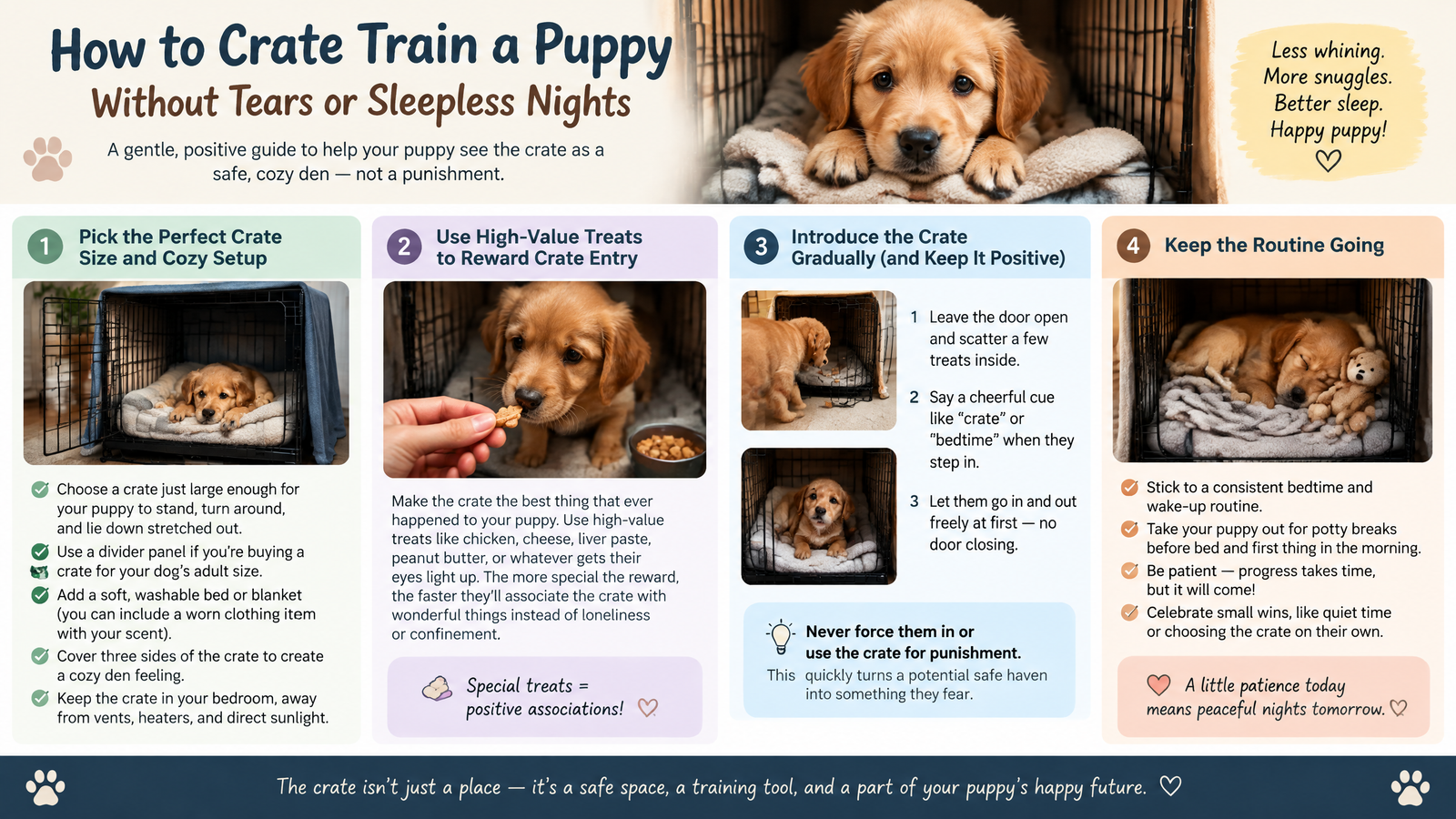
Size
Too big, and a puppy will sleep at one end and toilet at the other. Too small, and they cannot turn around, which is how you get a dog who hates the crate for years. You want stand, turn, and lie stretched.
Buy the adult size and use a divider. Replacing crates every eight weeks is how this gets expensive.
Setup
A bare tray feels like storage. A washable pad, or a blanket that already smells like the house, is enough. Skip the plush bed until you know the puppy does not eat stuffing. Strings and buttoned shirts are a bad idea for the same reason. If chewing is already a theme, the boredom list is worth a look before you add toys to the crate.
A cover on the back and sides helps some puppies. Leave the front open to the room. The crate should be the best nap spot, not a closet.
For the first month, put it where the puppy can hear you sleep. A crate in a far laundry room asks a social animal to be fine alone on night one. Keep it off the heater vent. Moving it every day makes the location feel random.
Daytime, before you ever close the door
Door open. Toss something better than kibble in. Chicken, cheese, a dab of peanut butter if xylitol is not in the jar. Let the puppy go in and come out. Do not push them in. Do not shut the door on a puppy who only went in because you herded them.
Say one word when they step in, if you want a cue. “Crate” is fine. “Bedtime” is fine. Do not collect five phrases.
When they go in on their own, sit beside the crate and close the latch for a few seconds. Feed through the bars. A stuffed Kong helps. Open the door on a quiet beat, not on a scream. Opening during the noise is how barking becomes the key.
Then leave the room for ten seconds. Come back before the panic. Build from there. A tired puppy who already knows the crate settles at night. A puppy whose first closed-door experience is bedtime does not.
Night
Same order every evening. Last toilet, a short calm fuss, water up about an hour before bed, crate, one good treat. Skip the wrestle at 10 p.m. An earlier sniff walk spends more of the evening than another game of tug in the kitchen.
Whining is the hard part. Wait for a short quiet stretch before you speak. Rushing in at the first sound teaches the sound. A fan or a clock helps some puppies. A heartbeat toy helps others, if they will not shred it.
Night potty trips should be dull. Carry them out, wait, crate. No party in the yard. A rough guide is about one hour of hold time per month of age, so a 10-week-old often still needs a middle-of-the-night trip. Some last longer. Yours will tell you, usually by crying at a consistent time.
The crate can stay by the bed at first. Move it a few feet every several days if you want it elsewhere later. A hand on the bars for the first nights is allowed. You are not ruining the dog.
How long is fair
An eight-week-old cannot do a full night, and should not sit in a crate all afternoon. Two or three hours is a reasonable daytime cap early on. If you have to be gone longer, use a pen with the crate inside it, plus water and a toilet spot, so the crate does not mean “gone for eight hours.”
By six months many puppies sleep through. Daytime stretches of four or five hours become normal for a lot of dogs. If stress climbs, shorten the time and check whether you are missing worry signals. Body language is more useful here than a stricter schedule.
The aim is a dog who can rest in a crate, not a dog who lives in one. Some adults keep using it as a bedroom. Some stop needing it. Both are fine.
Hard nights are part of the first two weeks. They are not proof you bought the wrong puppy.

 The crate gets blamed for a lot of 2 a.m. noise that is really a size problem, a location problem, or a puppy who was locked in before they had any reason to like the box.
Used slowly, a crate is a den and a house-training tool. Used as a penalty, it is a box the dog argues with. The difference is mostly what happens in the first week, in daylight.
The crate gets blamed for a lot of 2 a.m. noise that is really a size problem, a location problem, or a puppy who was locked in before they had any reason to like the box.
Used slowly, a crate is a den and a house-training tool. Used as a penalty, it is a box the dog argues with. The difference is mostly what happens in the first week, in daylight.