
German Shepherds are among the most beloved dog breeds in America, known for their intelligence, loyalty, and striking appearance. These magnificent dogs bring tremendous joy to families, but they also require dedicated attention to thrive. Whether you're bringing home your first shepherd or you're a seasoned owner looking to refine your approach, understanding the complete picture of german shepherd care will help you give your furry companion the best life possible. From puppyhood through their senior years, these remarkable dogs need thoughtful nutrition, consistent training, regular grooming, and proactive health management to stay happy and healthy.
Understanding Your German Shepherd's Unique Needs
German Shepherds aren't just another large breed. They were originally developed as working dogs, and that heritage shows in everything they do. Their energy levels, intelligence, and drive mean they need more than basic food and shelter to truly flourish.
These dogs form incredibly strong bonds with their families. They want to be involved in your daily activities and can become anxious or develop behavioral issues if left alone too frequently. Mental stimulation is just as important as physical exercise for this bright breed.
Key characteristics that shape care requirements:
- High energy levels requiring 1-2 hours of daily exercise
- Double coat that sheds year-round with seasonal peaks
- Working heritage creating a need for mental challenges
- Loyalty that can translate to protective behavior without proper socialization
- Large size requiring space and sturdy equipment
Understanding these traits helps you create a care routine that meets your shepherd's needs rather than fighting against their nature. The American Kennel Club’s German Shepherd profile offers detailed insights into breed standards and temperament.
Nutrition and Feeding for Optimal Health
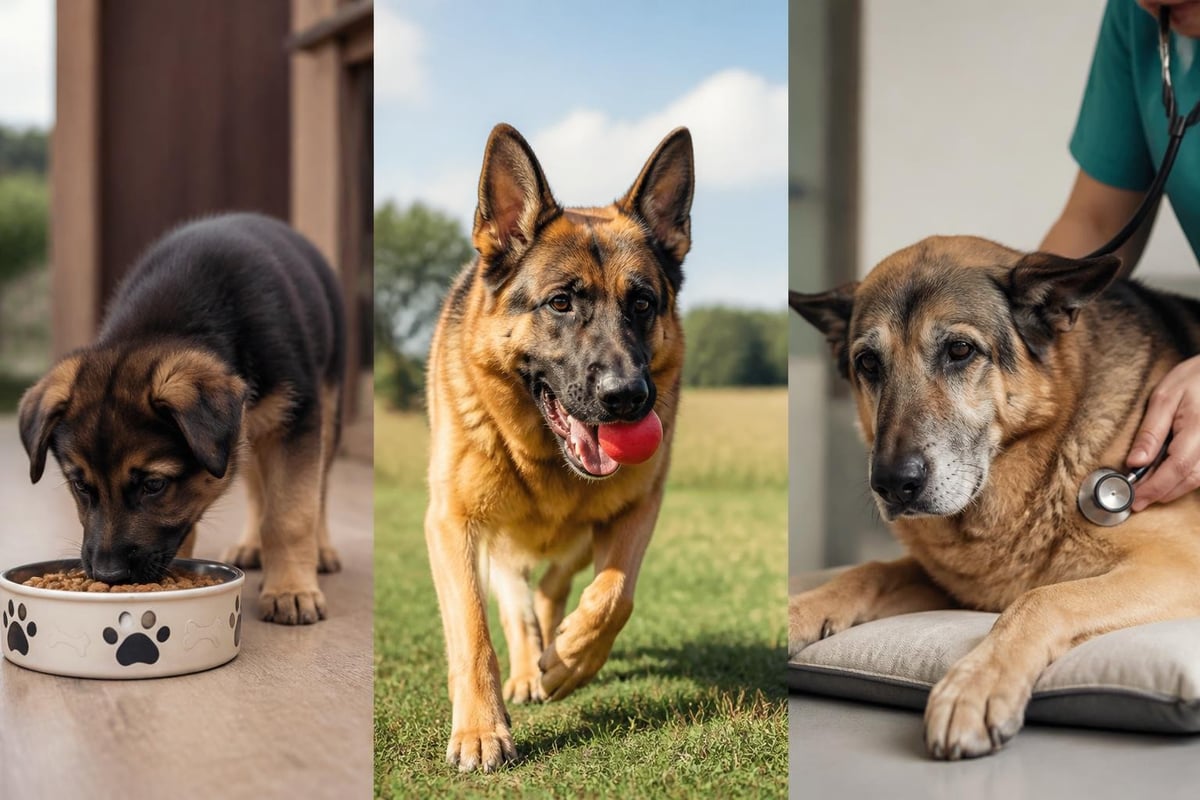
Proper german shepherd care starts with the food bowl. These large, active dogs have specific nutritional requirements that change throughout their lives. Getting nutrition right supports everything from joint health to coat quality to energy levels.
Puppy Feeding Guidelines
German Shepherd puppies grow rapidly, but you actually need to be careful not to let them grow too quickly. Fast growth in large breeds increases the risk of developmental orthopedic issues.
Choose a puppy food specifically formulated for large breeds. These formulas have controlled calcium and phosphorus levels to support steady, healthy growth. The WSAVA Global Nutrition Guidelines provide veterinary-backed recommendations for feeding growing dogs.
Puppy feeding schedule:
- 8-12 weeks: Four meals per day, measuring total daily amount
- 3-6 months: Three meals per day with gradual portion increases
- 6-12 months: Two meals per day, transitioning to adult food around 12 months
- Monitor body condition weekly, adjusting portions as needed
Never free-feed a German Shepherd puppy. Scheduled meals help with housetraining and prevent overeating.
Adult and Senior Nutrition
Once your shepherd reaches maturity, their nutritional needs stabilize but remain substantial. A typical adult German Shepherd needs 1,500 to 2,500 calories daily, depending on activity level, age, and metabolism.
| Life Stage | Protein | Fat | Special Considerations |
|---|---|---|---|
| Adult (1-7 years) | 22-26% | 12-15% | Joint support supplements beneficial |
| Senior (7+ years) | 20-24% | 10-12% | Lower calories, higher fiber, joint support essential |
| High Activity | 26-30% | 15-18% | Working dogs need performance formulas |
Quality matters more than quantity. Look for named meat proteins (chicken, beef, lamb) as the first ingredients. Whole grains or wholesome carbohydrates provide energy, while omega fatty acids support skin and coat health.
German Shepherds can have sensitive stomachs. If you need to change foods, our guide on how to switch your dog’s food without an upset stomach walks through the proper transition process.
Exercise and Mental Stimulation Requirements
A tired German Shepherd is a well-behaved German Shepherd. These dogs were bred to work all day, and that energy doesn't disappear just because they're now family pets. Adequate exercise is absolutely essential for proper german shepherd care.
Physical activity prevents obesity, maintains joint health, and provides an outlet for their natural drive. But don't overlook mental exercise, which can be just as tiring as a long walk.
Daily exercise minimum:
- 60-120 minutes of physical activity
- Mix of walks, runs, play sessions, and training
- Mental challenges through puzzle toys, training, or nose work
- Age-appropriate intensity (easier for puppies and seniors)
Walking alone rarely satisfies a German Shepherd. They need variety. Try hiking, jogging, swimming, fetch, agility courses, or rally obedience. Many shepherds excel at dog sports that combine physical and mental challenges.
Without sufficient exercise, German Shepherds may develop destructive behaviors, excessive barking, or anxiety. These aren't signs of a "bad dog" but rather a dog whose needs aren't being met.
Mental Enrichment Activities
Your shepherd's brain needs exercise too. These intelligent dogs can become bored easily, leading to problem behaviors.
Rotate through different mental activities to keep things interesting. Hide treats around the house for scavenger hunts. Practice new training commands. Offer puzzle feeders at mealtime. Teach your dog the names of different toys and play "find it" games.
Even 15 minutes of focused training can mentally tire your shepherd as much as a 30-minute walk would physically.
Training and Socialization Essentials
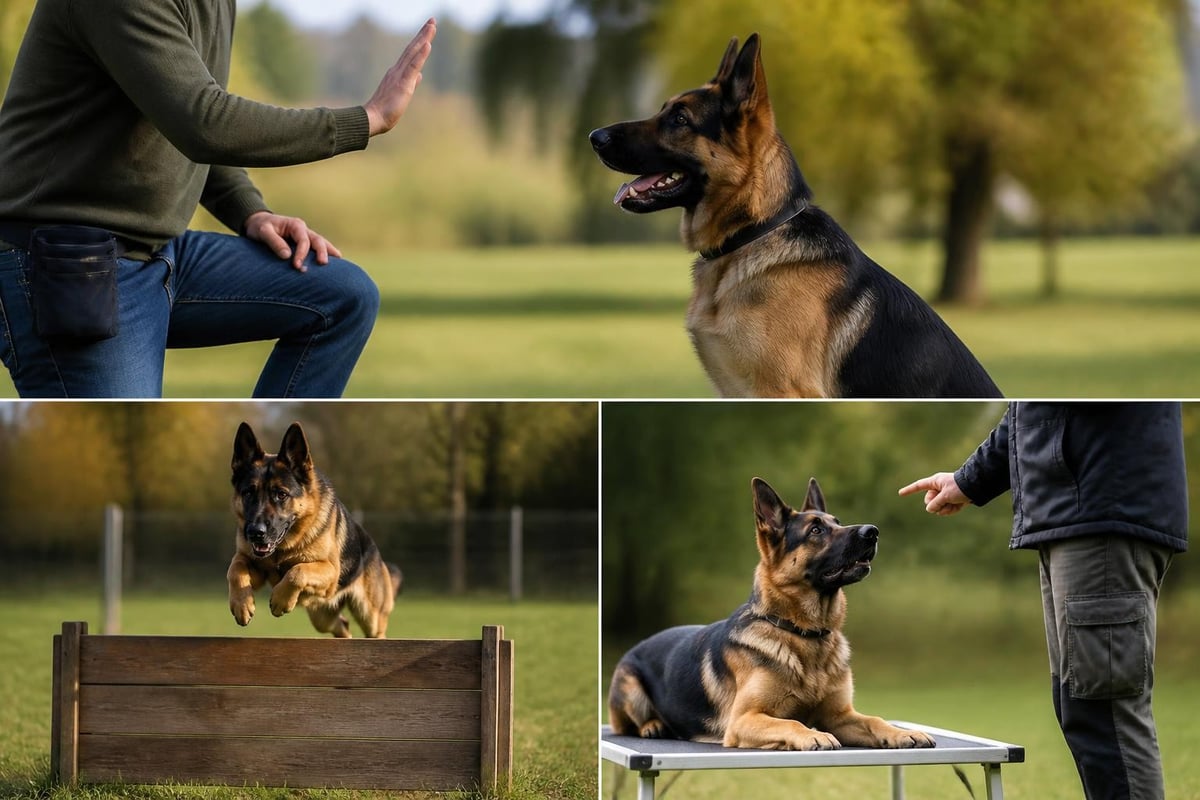
German Shepherds are incredibly trainable, but their intelligence means they need consistent, thoughtful training from day one. This isn't a breed that does well with unclear rules or inconsistent boundaries. Effective training is a cornerstone of complete german shepherd care.
Starting Early With Puppies
Begin training the day you bring your puppy home. German Shepherds are quick learners who pick up both good and bad habits rapidly. Crate training a puppy creates a foundation for housetraining and provides your dog with a safe space.
Core puppy training priorities:
- Housetraining with consistent schedule and positive reinforcement
- Basic commands (sit, down, stay, come, leave it)
- Loose-leash walking to prevent pulling issues
- Bite inhibition and appropriate play behavior
- Handling exercises for grooming and vet visits
Socialization is equally critical. Expose your puppy to different people, animals, environments, sounds, and experiences between 8 and 16 weeks of age. This window is crucial for developing a confident, well-adjusted adult dog.
German Shepherds can be naturally protective, so early socialization prevents fearfulness or overprotectiveness later. Your goal is a dog who is confident and calm in new situations, not reactive or anxious.
Positive Reinforcement Methods
Modern german shepherd care emphasizes positive training methods that build on the breed's eagerness to please. The Association of Professional Dog Trainers outlines science-based approaches that work beautifully with this intelligent breed.
Reward desired behaviors with treats, praise, play, or whatever motivates your individual dog. German Shepherds typically love food rewards and enthusiastic praise. They also respond well to clicker training for precise communication.
Avoid harsh corrections or punishment-based methods. These can damage your relationship with your shepherd and may trigger defensive behaviors in a protective breed. Focus on teaching what you want rather than punishing what you don't want.
Consistency across all family members is essential. If one person allows jumping while another corrects it, your confused shepherd won't know what's actually expected.
For comprehensive guidance tailored to this breed, explore our detailed German Shepherd breed temperament and care guide.
Grooming and Coat Maintenance
German Shepherds have a beautiful double coat that keeps them comfortable in various weather conditions. That same coat also sheds constantly and requires regular attention. Grooming isn't just about appearance; it's an important health practice that's central to german shepherd care.
Brushing and Shedding Management
Plan to brush your German Shepherd at least three to four times weekly. During spring and fall shedding seasons (often called "blowing coat"), daily brushing becomes necessary.
Use an undercoat rake or deshedding tool to reach through the outer coat and remove loose undercoat. Follow with a slicker brush for the topcoat. A good grooming session takes 10-15 minutes and dramatically reduces the amount of fur tumbling through your home.
Grooming toolkit essentials:
- Undercoat rake for deep brushing
- Slicker brush for topcoat smoothing
- Metal comb for checking thoroughness
- Nail clippers or grinder
- Dog-specific shampoo for occasional baths
- Ear cleaning solution and cotton balls
Regular brushing distributes natural oils, prevents matting, and gives you a chance to check for skin issues, lumps, or parasites. The ASPCA’s grooming guidance offers practical tips for maintaining a healthy coat.
Bathing, Nails, and Ears
German Shepherds don't need frequent baths. Every 6-8 weeks is typically sufficient unless your dog gets particularly dirty. Overbathing strips natural oils and can dry out skin.
Trim nails every 3-4 weeks. If you hear clicking on hard floors, they're too long. Long nails affect gait and can cause joint problems over time. Start nail care young so your dog accepts it calmly.
Check ears weekly for dirt, redness, or odor. German Shepherds' upright ears allow good air circulation, reducing infection risk compared to floppy-eared breeds, but they still need regular checks and gentle cleaning when dirty.
Health Monitoring and Common Concerns
Proactive health management is perhaps the most critical aspect of german shepherd care. This breed faces certain genetic health challenges that responsible owners need to understand and monitor.
Hip and Elbow Dysplasia
German Shepherds are prone to hip dysplasia, a developmental condition where the hip joint doesn't form properly. Hip dysplasia screening through organizations like the Orthopedic Foundation for Animals helps identify at-risk dogs.
If you're getting a puppy, ask breeders for OFA or PennHIP certifications on parents. While this doesn't guarantee your puppy won't develop issues, it significantly reduces risk.
Signs of joint problems:
- Difficulty rising from lying down
- Reluctance to climb stairs or jump
- Bunny-hopping gait
- Decreased activity or playfulness
- Stiffness after rest
Early intervention makes a huge difference. Cornell University’s canine hip dysplasia resource explains treatment options ranging from weight management and physical therapy to surgical interventions.
Maintaining a healthy weight is one of the most important things you can do for joint health. Every extra pound adds stress to already vulnerable joints.
Degenerative Myelopathy and Neurological Health
Degenerative myelopathy (DM) is a progressive spinal cord disease affecting German Shepherds more than most breeds. Unfortunately, there's no cure, but genetic testing can identify carriers.
Watch for hind limb weakness, coordination problems, or dragging of the back feet. These symptoms usually appear in senior dogs. While DM itself isn't painful, it progressively affects mobility.
Bloat and Emergency Awareness
Large, deep-chested breeds like German Shepherds face increased risk of gastric dilatation-volvulus (bloat), a life-threatening emergency where the stomach fills with gas and twists.
| Warning Signs of Bloat | Immediate Action Required |
|---|---|
| Distended, hard abdomen | Rush to emergency vet |
| Unsuccessful vomiting attempts | Every minute counts |
| Restlessness, pacing | This is not "wait and see" |
| Rapid breathing, weakness | Call ahead while traveling |
Feed multiple smaller meals rather than one large meal. Avoid vigorous exercise right before or after eating. Some owners choose preventive gastropexy surgery, especially if they've lost a dog to bloat previously.
The AVMA’s emergency care resources help owners prepare for urgent situations. Know where your nearest emergency veterinary hospital is located before you need it.
Preventive Veterinary Care
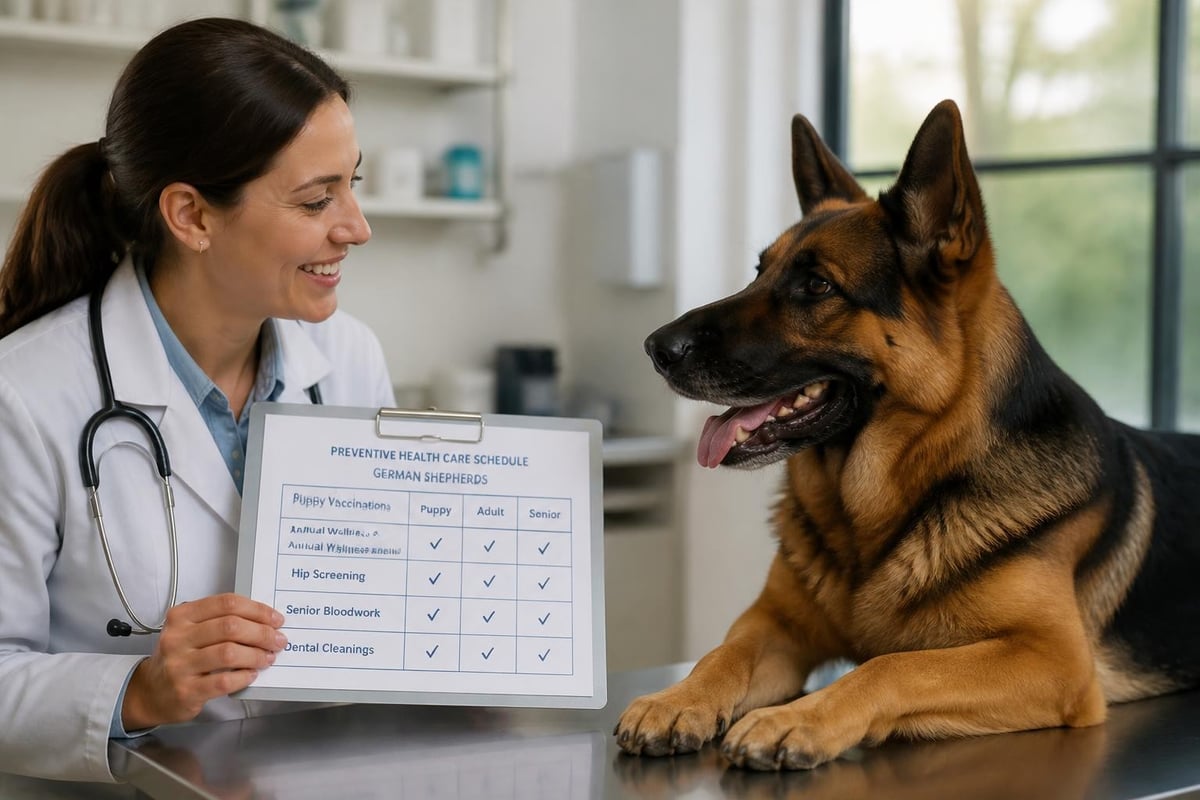
Regular veterinary visits catch problems early when they're most treatable. Don't skip wellness exams just because your dog seems healthy. German shepherd care includes partnering with a good veterinarian who understands the breed.
Vaccination and Parasite Prevention
Follow your veterinarian's recommended vaccination schedule. Core vaccines protect against distemper, parvovirus, adenovirus, and rabies. Depending on your location and lifestyle, your vet may recommend additional vaccines for leptospirosis, Bordetella, or Lyme disease.
Year-round parasite prevention protects against heartworms, fleas, ticks, and intestinal parasites. Many products combine multiple protections in one convenient monthly treatment.
Routine preventive care schedule:
- Puppy exams and vaccines (8, 12, 16 weeks)
- Annual wellness exams for adults
- Bi-annual exams for seniors (7+ years)
- Dental cleanings as recommended
- Bloodwork baseline at maturity, then annually for seniors
Dental Health
Dental disease affects more than just teeth. Bacteria from infected gums enter the bloodstream and can damage heart, liver, and kidneys. Brush your German Shepherd's teeth several times weekly using dog-specific toothpaste.
Dental chews, appropriate chew toys, and professional cleanings supplement home care. By age three, most dogs show signs of dental disease without preventive care.
Frequently Asked Questions About German Shepherd Care
How much does it cost to care for a German Shepherd annually?
Annual german shepherd care typically costs $1,500-$2,500, including quality food ($500-$800), routine veterinary care ($300-$600), preventive medications ($200-$400), grooming supplies ($100-$200), and training or activities ($200-$500). Budget extra for unexpected veterinary expenses or joint supplements.
Are German Shepherds good for first-time dog owners?
German Shepherds can work for dedicated first-time owners willing to invest time in training, exercise, and socialization. However, their size, energy, and intelligence create challenges. Research thoroughly and consider whether your lifestyle truly matches this breed's needs. Exploring different dog breed temperaments helps you make an informed decision.
How long do German Shepherds typically live?
German Shepherds generally live 9-13 years. Genetics, diet, exercise, weight management, and preventive veterinary care all influence lifespan. Dogs from health-tested parents and those maintained at healthy weights often live longer, healthier lives.
What's the best way to manage German Shepherd shedding?
Regular brushing (3-4 times weekly, daily during shedding seasons) is the most effective shedding management strategy. A high-quality diet with omega fatty acids supports coat health. Professional deshedding treatments during peak seasons can help. Accept that some shedding is simply part of life with this double-coated breed.
Do German Shepherds need a yard, or can they live in apartments?
German Shepherds can adapt to apartment living if their exercise and mental stimulation needs are fully met through multiple daily walks, training sessions, and activities. A yard provides convenience but doesn't replace dedicated exercise time. What matters most is committed daily activity, not yard size.
When should I switch my German Shepherd from puppy to adult food?
Most German Shepherds transition to adult food around 12 months of age. Large-breed puppy formulas support proper growth rates during that first year. Some owners transition gradually between 10-14 months. Consult your veterinarian about timing based on your individual dog's growth and body condition.
Raising a German Shepherd is both a joy and a responsibility that requires dedication to their physical, mental, and emotional wellbeing. From selecting the right nutrition and establishing consistent training to monitoring breed-specific health concerns and maintaining that beautiful coat, every aspect of german shepherd care contributes to a happy, healthy companion. If you're looking for more practical guidance to help your shepherd thrive, Dog Care Guide offers cheerful, expert-backed advice on everything from grooming routines to training techniques, helping you pamper and protect your loyal friend through every life stage.