
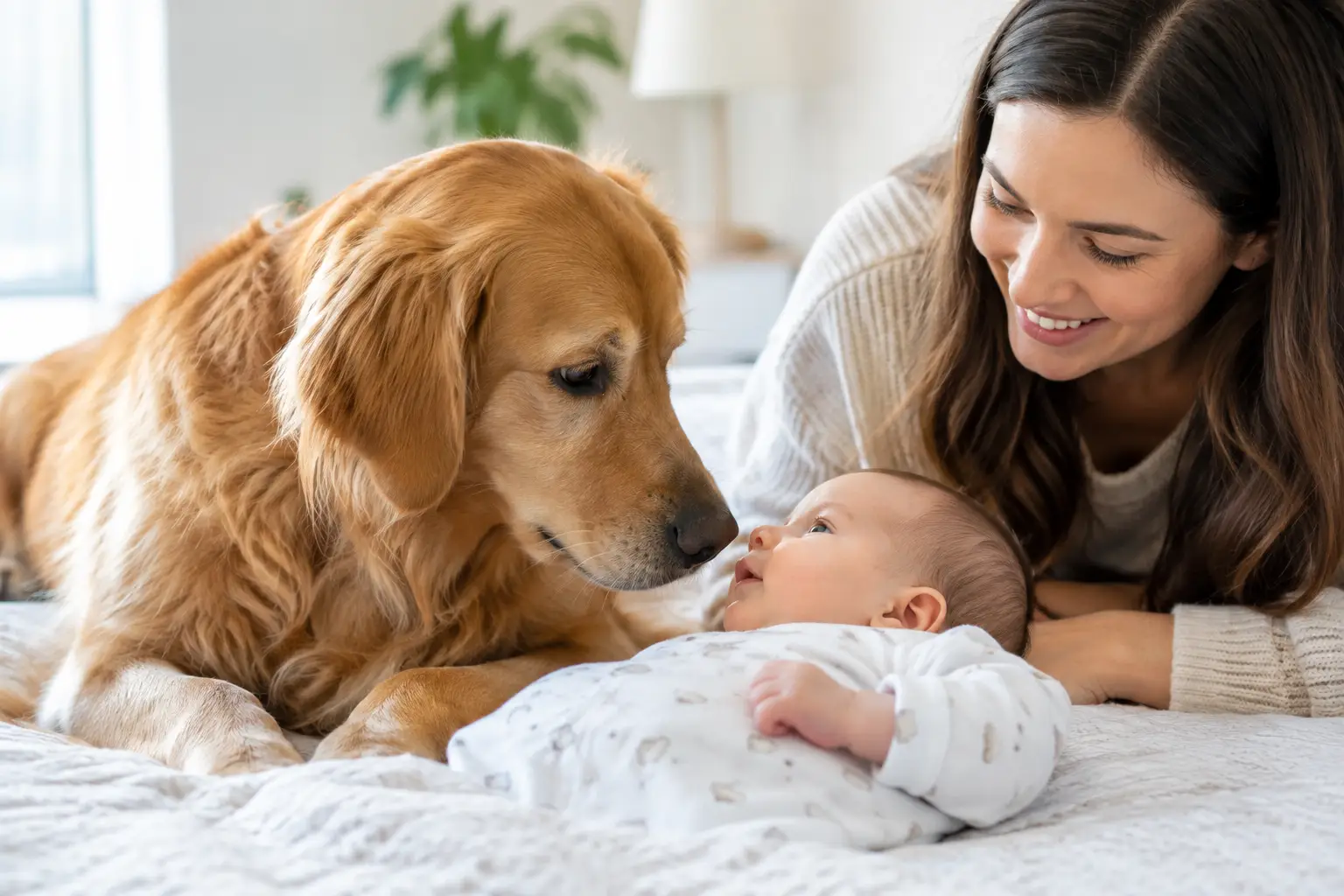
Your dog has been your baby for years, so bringing home a newborn can feel exciting, tender, and a little nerve-racking. Learning how to introduce dog to baby is less about creating one picture-perfect first meeting and more about preparing your furry best friend for a major change with patience, calm routines, and plenty of positive reinforcement.
A loving dog is not automatically prepared for the unpredictable sounds, movements, and scents of an infant. Even the gentlest pup may feel confused, worried, or overly curious at first. With thoughtful preparation and close supervision, you can help your dog and baby begin their relationship safely and at a pace that feels comfortable for everyone.
Start Preparing Your Dog Before Baby Arrives
The most helpful introductions begin weeks before the baby comes home. Dogs notice changes in schedules, furniture, household energy, and their people’s attention. Preparing early gives your dog time to adjust without linking every new experience directly to the baby.
Begin by strengthening a few everyday cues using treats, praise, or a favorite toy. “Sit,” “down,” “stay,” “leave it,” and “go to your place” are especially useful. A reliable “place” cue gives your dog a cozy, predictable spot to settle when you need your hands free for feeding, diaper changes, or visitors.
Practice these skills in short, cheerful sessions. If your dog is still learning, lower the difficulty rather than repeating commands in a frustrated voice. For example, reward a three-second stay before expecting a longer one. Gentle training helps your pup feel successful and builds the trust you will need during a busy transition.
It also helps to adjust your dog’s routine gradually. If walks will move from early morning to later in the day, make that change ahead of time. If the dog will no longer sleep in your room or jump on the couch, introduce new sleeping arrangements and house rules well before the baby arrives. Sudden restrictions after the newborn comes home can feel confusing or punishing to a dog.
Introduce Baby Sounds and Equipment Gently
Baby cries, swings, strollers, monitors, and rocking chairs can be startling. Let your dog investigate new equipment while it is still and quiet. Reward calm sniffing, then slowly add movement or sound at a low intensity.
You might play recordings of baby noises softly while offering a lick mat, meal, or treats. Keep sessions brief and pleasant. If your dog paces, barks, tucks their tail, pants heavily, or tries to leave, the sound is too intense. Turn it down and try again later. The goal is not to make your dog tolerate distress. It is to create a calm, positive association.
Set Up Safe Spaces for Both Dog and Baby
Management is a loving safety tool, not a sign that you do not trust your dog. Baby gates, exercise pens, closed doors, and crates can prevent stressful situations before they happen. They also give your dog a chance to rest away from constant activity.
Create a dog-only retreat in a quiet area with a comfortable bed, water, and a safe chew. Teach your dog that this is a happy place by regularly offering treats and calm downtime there. Never use the space as punishment or force your dog into it when they are frightened.
Your baby needs protected spaces, too. Keep dogs out of the crib, bassinet, and changing table area. A dog may be curious about a baby’s scent, but infants should never be left within reach of a dog without an attentive adult present. That includes sleeping babies, even if your dog has always been patient and affectionate.
How to Introduce Dog to Baby on the First Day
When the baby arrives home, try not to make the doorway reunion a high-energy event. If possible, one adult can greet the dog first while another brings the baby inside calmly. Give your dog a chance to burn off a little energy with a walk or backyard potty break before the introduction.
You can offer your dog a blanket or clothing item carrying the baby’s scent before the face-to-face meeting. Let them sniff briefly without pressure, then praise calm behavior. Avoid pushing the item toward your dog’s nose or scolding them for cautious reactions.
For the first visual introduction, keep your dog on a loose leash and at a comfortable distance while the baby is securely held by an adult. Another adult should focus fully on the dog. Reward soft body language: a relaxed mouth, loose tail, gentle sniffing, looking away, or choosing to settle. Calmly guide your dog away for a break if they become intensely focused, jumpy, vocal, or tense.
Do not insist that your dog sniff the baby. Many dogs do best when they can observe from several feet away, then approach only when calm. A brief, gentle sniff of the baby’s feet is plenty if your dog is relaxed and an adult can safely control the situation. Keep the first interaction short, then return to normal, peaceful household activity.
Read Your Dog’s Body Language
A wagging tail does not always mean a dog is comfortable. Tail movement can also signal excitement or stress, so look at the whole body. A loose, wiggly posture and soft eyes usually suggest your dog feels at ease. Repeated lip licking, yawning when tiredness is unlikely, turning away, freezing, a tucked tail, pinned-back ears, growling, or showing the whites of the eyes can signal discomfort.
Growling deserves special care. It is communication, not bad behavior to punish. If you scold a growl, you may teach your dog to skip the warning next time. Instead, calmly increase distance, secure the dog behind a gate or in their safe area, and consider what caused the stress. Your dog may need slower exposure, more rest, or professional support.
Some dogs are naturally social and adapt quickly. Others need weeks or months to feel settled around the new sounds and routines. Age, past experiences, energy level, pain, and temperament all matter. A senior dog with arthritis, for instance, may be less tolerant of accidental bumps than they once were, while a young, energetic dog may need extra outlets for exercise and enrichment.
Protect Your Dog’s Routine and Emotional Needs
Newborn life is demanding, and perfect balance is not realistic every day. Still, small moments of connection can help your dog feel secure. Aim for predictable meals, bathroom breaks, and regular exercise that matches your dog’s needs. A sniff-focused walk, food puzzle, or five minutes of reward-based training can make a meaningful difference when longer outings are hard to manage.
Whenever possible, pair baby-related moments with good things for your dog. When you sit down to feed the baby, offer your dog a chew on their bed. When the baby cries, scatter a few treats at a comfortable distance if your dog is relaxed enough to eat. This teaches your dog that baby activity can predict pleasant, calm experiences.
Avoid giving attention only when your dog is worried or demanding it. Instead, notice and reward the behaviors you want more of: settling quietly, choosing their bed, walking past the baby gate calmly, or looking at the baby and then back at you. These little wins add up.
Keep Boundaries Clear as Baby Grows
The newborn stage is only the beginning. As babies become mobile, the relationship needs even more thoughtful management. Crawling, squealing, grabbing, and dropped food can overwhelm even a patient dog. Teach children as they grow to avoid hugging, climbing on, chasing, cornering, or disturbing a dog while eating, sleeping, chewing, or resting.
Adults should always supervise interactions closely enough to step in immediately. “Supervision” does not mean being in the same room while looking at a phone or preparing dinner. It means actively watching body language and guiding both child and dog before either gets overwhelmed.
If your dog has a history of biting, guarding food or toys, intense fear, or aggression, do not attempt a casual introduction plan on your own. Contact your veterinarian to rule out pain or medical changes, then ask for help from a qualified reward-based trainer or veterinary behavior professional. Early support is a caring choice for your dog and your child.
Your dog does not need to become your baby’s best friend overnight. What matters most is a home where your pup feels safe, your baby is protected, and every calm interaction is allowed to grow into trust.