Personalized Dog Nutrition: The Rise of Fresh, Raw, and Customized Meal Plans
Kibble won because it is shelf-stable, complete on the label, and easy at 6 a.m. It is still a reasonable default. The new pitch is that your dog needs a plan built around age, job, and stomach, delivered fresh or raw. Sometimes that is true. Sometimes it is a subscription with better photography.
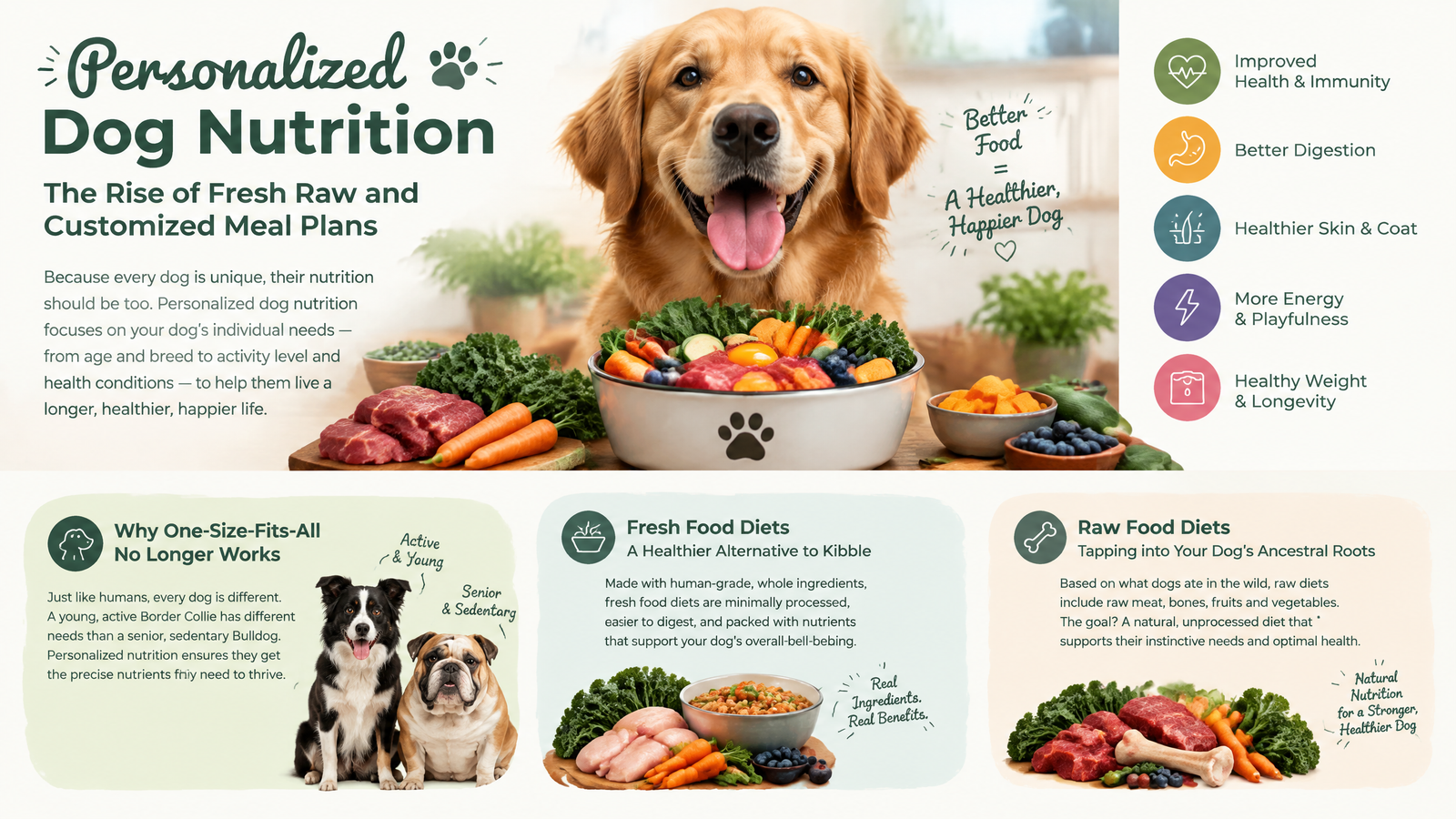
The American Animal Hospital Association’s nutrition guidelines say there is no single best food for every dog. That part is solid. A young Border Collie working sheep and a 10-year-old Bulldog with a bad knee do not need the same bowl. What they both need is a diet that is complete, fed in the right amount, and tolerated.
What “personalized” usually means
Companies ask for weight, breed, age, and a few health boxes, then portion a recipe. That is customization of amount and, sometimes, protein. It is not the same as a board-certified veterinary nutritionist writing a diet for kidney disease. If your dog has a diagnosis, start with the clinic, not a quiz.
Allergies are the common reason people leave a grocery bag. A real food trial is boring on purpose: one protein, no scraps, no flavored chews, for weeks. A “sensitive skin” marketing line is not that trial.
Fresh cooked
Fresh diets are gently cooked ingredients, often human-grade, portioned for the dog. Owners report smaller stools and a coat that looks better after a month. Some of that is higher digestibility. Some of it is finally measuring the food.
A few studies, including work indexed by the National Institutes of Health, have found different gut-bacteria patterns on minimally processed diets versus kibble. That is not proof that every fresh plan is healthier. It is a reason the category is not nonsense. Check that the company formulates to AAFCO nutrient profiles, or that a nutritionist did, and that the food is handled like meat, because it is meat.
Raw
Raw feeding, including BARF-style mixes of meat, bone, organ, and plants, has a loud fan base and a real safety problem. People report clean teeth, good stools, and bright dogs. The American Veterinary Medical Association still warns that raw meat can carry Salmonella and E. coli, which matters for the dog and for the kitchen, especially with kids or anyone immunocompromised.
Homemade raw is easy to unbalance. Too much liver, not enough calcium, bones that do not match the dog. If you go this way, use a recipe from a veterinary nutritionist or a commercial raw diet that publishes its analysis. Wipe the bowl. Do not rinse raw dishes in the same sink as the salad and call it done.
Chews are not a dental plan. If teeth are the reason you are looking at raw, start with brushing. Diet changes the film on the teeth. A brush removes it.
The delivery plans
The convenience is the product. You answer the form, a box arrives, you stop guessing. That helps picky dogs and people who will not measure kibble. It costs more. Joint claims and “ancestral” claims on the box are advertising until your vet sees a reason to change the diet.
Weight loss is the unglamorous win. A measured fresh plan can work because the portions are pre-set. You can get the same result with a kitchen scale and the bag you already buy.
Switching
A full bowl of new food tonight is how people get diarrhea by Thursday. Use the slower mix in how to switch dog food. If the dog is already vomiting or passing blood, skip the experiment and call the clinic.
Bring the question to a vet visit before you throw out the old bag. A short note for the appointment helps: current food, amount, stool quality, and what you want to change. The American College of Veterinary Nutrition directory is the right place if you need a specialist, not a forum thread.
Fresh and raw can be a good fit. They can also be an expensive way to feed a dog who was fine. Change the food for a reason you can name, keep the transition dull, and judge it by stool, weight, and itch over a month, not by the unboxing.

 Kibble won because it is shelf-stable, complete on the label, and easy at 6 a.m. It is still a reasonable default. The new pitch is that your dog needs a plan built around age, job, and stomach, delivered fresh or raw. Sometimes that is true. Sometimes it is a subscription with better photography.
The American Animal Hospital Association’s nutrition guidelines say there is no single best food for every dog. That part is solid. A young Border Collie working sheep and a 10-year-old Bulldog with a bad knee do not need the same bowl. What they both need is a diet that is complete, fed in the right amount, and tolerated.
Kibble won because it is shelf-stable, complete on the label, and easy at 6 a.m. It is still a reasonable default. The new pitch is that your dog needs a plan built around age, job, and stomach, delivered fresh or raw. Sometimes that is true. Sometimes it is a subscription with better photography.
The American Animal Hospital Association’s nutrition guidelines say there is no single best food for every dog. That part is solid. A young Border Collie working sheep and a 10-year-old Bulldog with a bad knee do not need the same bowl. What they both need is a diet that is complete, fed in the right amount, and tolerated.