How to Switch Your Dog’s Food Without an Upset Stomach
The new bag looks better. The old bag is nearly gone. People pour a full bowl of the new food and hope. By morning the floor explains the mistake. The gut can handle a new recipe. It handles a surprise swap worse.
If the dog is already vomiting, refusing food, or passing blood, skip the home transition and call the vet.
Why the sudden swap backfires
Enzymes and gut bacteria settle around one recipe. A new protein, a higher fat level, or a different fiber can be perfectly adequate and still loosen stools if it arrives all at once. Chicken to fish is a bigger jump than two chicken formulas. Texture matters too. A picky dog may refuse a new shape. A food-motivated Lab may clean the bowl and pay for it later.
Treats and scraps on top of a new diet make the cause impossible to read.
When a switch is worth it
A vet-recommended recipe, a discontinued bag, a puppy food the dog has outgrown, a senior formula that matches the real activity level. Itch, weight gain, or a dull coat can lead to a change, after a vet visit. Food is one variable.
Do not switch during a stomach bug, after surgery, or in the same week you add five new chews. Keep the old bag until you are done. Running out midweek is how the sudden swap happens. If you are looking at fresh or raw plans, read personalized diets before you change format and brand at once.
Seven days, unless the dog says otherwise
Healthy adults often do fine in a week. Sensitive dogs, seniors, and puppies often need ten to fourteen. Write the ratio on the bag. Use the same total amount the dog already eats, unless the vet set a new calorie target.
Days 1 to 2: 75 percent old, 25 percent new
Days 3 to 4: half and half
Days 5 to 6: 25 percent old, 75 percent new
Day 7: all new
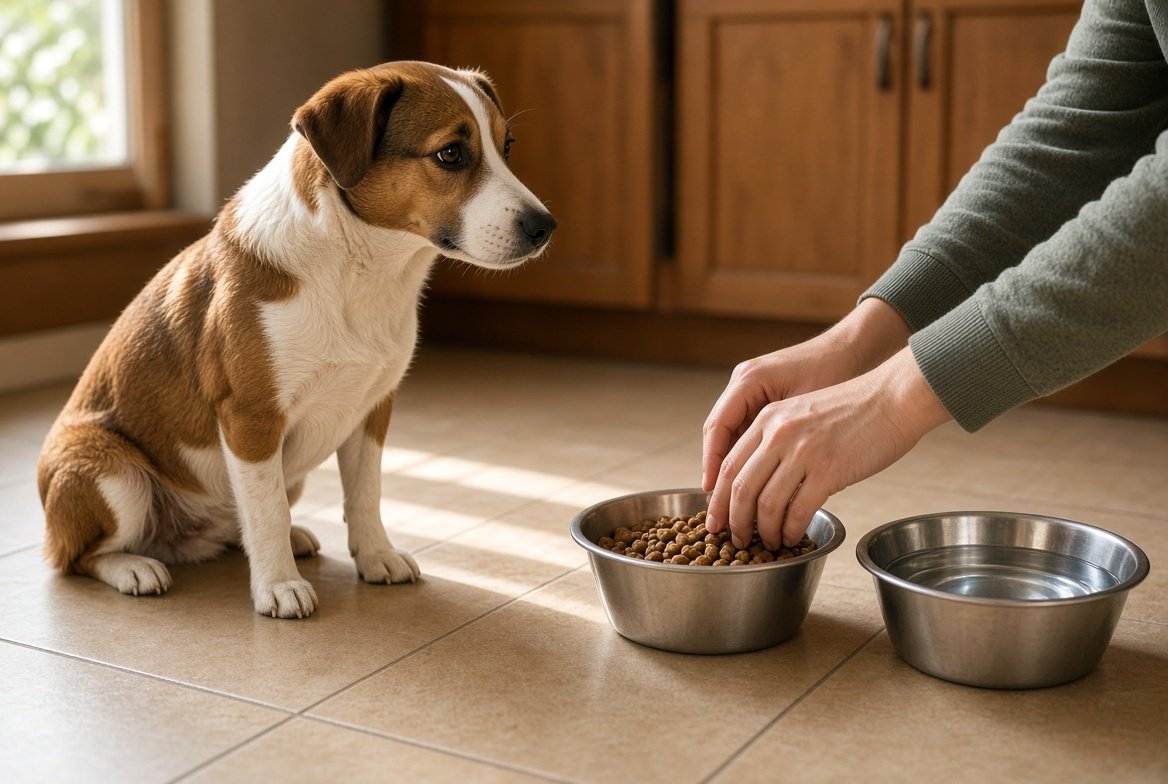
Mix in the bowl so the dog cannot eat around the new pieces. Same ratio at both meals. If you add water, keep adding water, so moisture is not a second change. Soft stools mean hold the current ratio for two extra days. Stepping back is the plan, not a failure.
Picky dogs: warm the mix with a little water, offer it for 15 or 20 minutes, pick it up. Do not build a new topper every night. One familiar extra is enough. A rotating buffet hides whether the recipe itself is the problem.
What to watch
Appetite in the bowl, stools in the yard, for the whole week. Formed and easy to pick up is the goal. Soft-serve means slow down. Watery stools, repeated vomiting, a swollen belly, or straining with nothing produced is a phone call.
A day of extra gas can happen. Hiding, panting at rest, or refusing to settle after meals should be logged: what you fed, how much, what the stool looked like. That note helps at the clinic. Visit prep is mostly this list plus paw handling. Extra thirst with house accidents, especially in a senior, is worth mentioning.
The rest of the day
The meals are careful and the chews wreck it. No new dental sticks or table scraps until stools look normal on the new food alone. If you already brush teeth, keep the paste you know. Do not debut a new flavor and a new diet on Tuesday. Treats count toward the day’s calories. A richer food plus a handful of training bites undoes a careful mix.
Puppies have less margin. Stretch to ten days if stools soften, and do not jump from a growth diet to a weight-loss diet without the vet. Seniors may need more time. Watch constipation as well as loose stool. A Frenchie often does better with a shallow dish and a slightly wet mix, so the new kibble does not get inhaled.
A known allergy or a prescription diet changes only when the prescribing vet agrees. A grocery “sensitive stomach” bag is not an elimination trial.
Stop and call
Repeated vomiting, black or bloody stool, a painful belly, sudden weight loss, or a dog who will not drink. Puppies and toy dogs decline faster than they look. Also call if a slow two-week mix still produces daily soft stools. Bring both labels, or photos of them, and the ratios you used.
Tonight: three-quarter scoop of the old food, one-quarter of the new, stirred. Tomorrow, check the yard before you change the numbers.

 The new bag looks better. The old bag is nearly gone. People pour a full bowl of the new food and hope. By morning the floor explains the mistake. The gut can handle a new recipe. It handles a surprise swap worse.
If the dog is already vomiting, refusing food, or passing blood, skip the home transition and call the vet.
The new bag looks better. The old bag is nearly gone. People pour a full bowl of the new food and hope. By morning the floor explains the mistake. The gut can handle a new recipe. It handles a surprise swap worse.
If the dog is already vomiting, refusing food, or passing blood, skip the home transition and call the vet.