
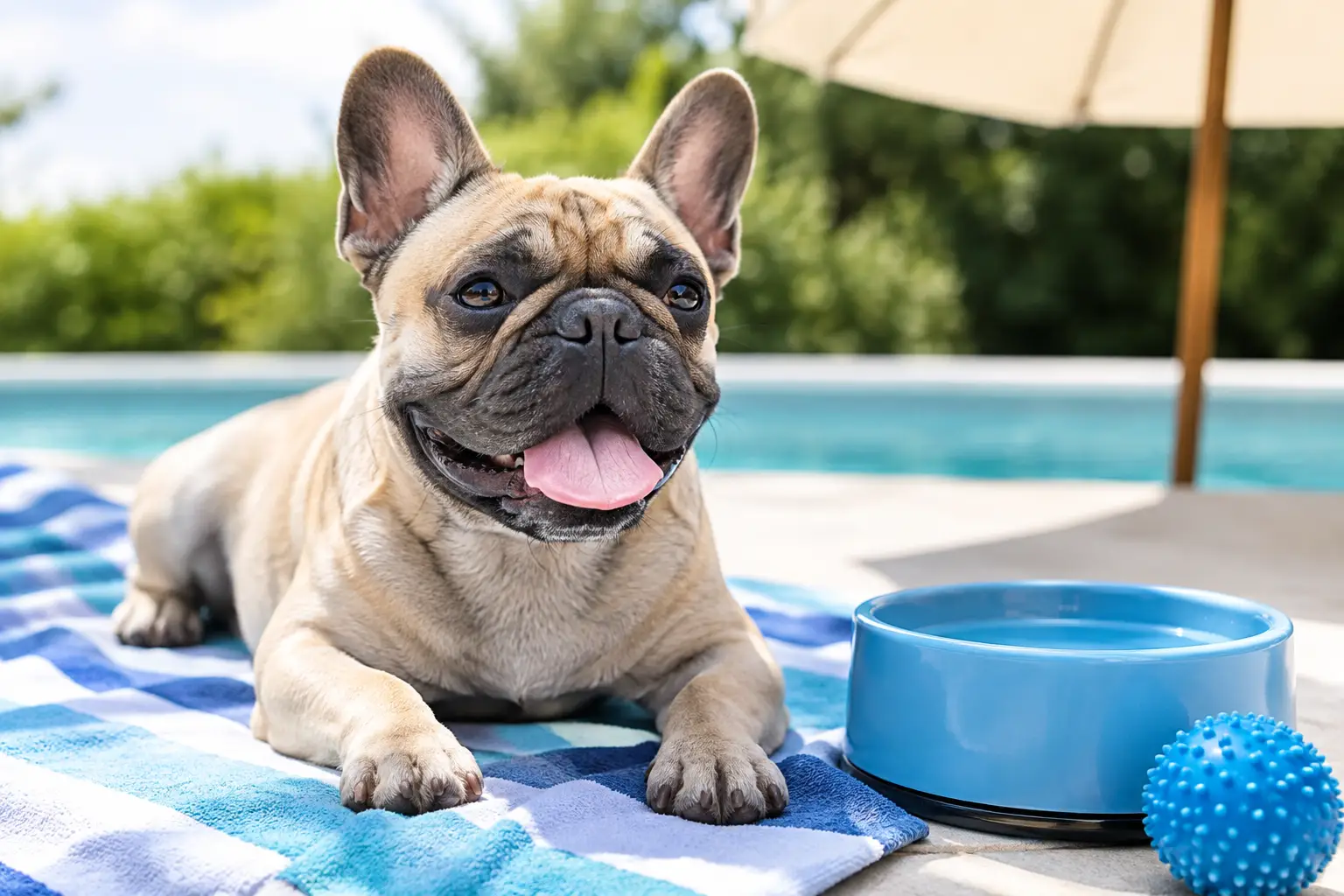
A Frenchie can go from happily sniffing the sidewalk to dangerously overheated much faster than many owners expect. Learning how to keep French bulldog cool is not just about making summer more comfortable for your furry best friend. Because of their short noses and compact airways, French Bulldogs can struggle to release body heat, even on days that do not feel extreme to you.
The good news is that a few calm, thoughtful habits can make a big difference. With smart timing, a cool home setup, and a close eye on your pup’s breathing, you can help your Frenchie enjoy warm weather safely.
Why French Bulldogs Overheat So Easily
Dogs primarily cool themselves by panting. French Bulldogs, like Pugs and English Bulldogs, are brachycephalic breeds, meaning they have shortened skulls and flatter faces. Their narrow nostrils, soft palate, and compact upper airways can make panting less efficient.
That does not mean every Frenchie will have the same level of difficulty. A healthy, lean adult may tolerate a brief early-morning walk better than an older dog, a puppy, or a dog carrying extra weight. Still, every French Bulldog deserves more heat caution than a long-nosed breed.
Humidity adds another challenge. When the air is muggy, moisture does not evaporate as easily from the tongue and respiratory tract, so panting offers less relief. Hot pavement, direct sun, excited play, and car rides can all raise your dog’s body temperature quickly.
How to Keep French Bulldog Cool at Home
Your home should be your Frenchie’s reliable cool-down zone. Air conditioning is the safest choice during hot spells, especially for dogs who snore heavily, have breathing concerns, or become warm with very little activity. If your home is not air-conditioned, use fans to circulate air, close blinds against direct afternoon sun, and offer access to the coolest room available.
Fans can improve comfort, but they do not replace air conditioning or active cooling when a dog is overheating. Dogs do not sweat across their skin the way people do, so simply placing a fan near a panting Frenchie may not lower their body temperature enough on a very hot day.
Give your pup a cool, comfortable place to rest. A cooling mat can be helpful if your dog enjoys it, though some Frenchies prefer cool tile, hardwood, or a damp towel laid flat on the floor. Always make sure your dog can move away from any cooling surface. Comfort should be a choice, not something that leaves them chilled or confined.
Fresh water should be available in more than one spot, particularly in a multi-level home. Wash bowls regularly and refresh the water often. Some dogs are encouraged to drink when a few ice cubes are added, while others prefer plain cool water. Either is fine as long as your pup drinks normally and comfortably.
Gentle treats for warm afternoons
A small frozen treat can be a fun way to add hydration and enrichment. You might freeze a dog-safe puree or plain, xylitol-free yogurt in a toy or silicone mold. Keep portions modest, since rich treats can upset sensitive stomachs.
Avoid offering large chunks of ice to a dog that gulps food or chews forcefully. Small ice cubes are usually fine for many dogs, but cool water and supervised frozen enrichment are more dependable choices.
Plan Walks Around the Weather, Not the Clock
For Frenchies, the safest summer walk is often the one taken at sunrise or after the evening heat has faded. Check both the temperature and humidity before heading out. If the weather feels sticky or the sun is intense, shorten the outing or skip it in favor of indoor enrichment.
Before walking, touch the pavement with the back of your hand for several seconds. If it is too hot for your skin, it is too hot for your dog’s paws. Grass, shaded paths, and cooler trails may be safer, but they do not remove the risk of overheating.
Keep walks relaxed. This is not the season to ask a Frenchie to jog beside you, chase a ball for 20 minutes, or greet every exciting dog in the park. A gentle sniff walk is plenty. Bring water, stay close to home, and head back at the first sign your dog is working too hard to breathe.
A well-fitted harness is usually a kinder option than a collar for a French Bulldog, since pressure around the neck can make breathing more difficult. Choose one that allows full shoulder movement and does not rub behind the front legs.
Never Leave Your Frenchie in a Parked Car
A parked car can become dangerously hot in minutes, even with the windows cracked or the day feeling only moderately warm. French Bulldogs are especially vulnerable because they may not be able to pant effectively enough to compensate.
If your pup cannot come inside with you, leave them safely at home. For road trips, plan pet-friendly stops, keep the air conditioning running while you travel, and never depend on a battery-powered fan or cracked window as protection from heat.
Know the Early Signs of Overheating
Frenchies can be noisy breathers under normal circumstances, which makes it especially important to know what is different for your individual dog. Watch for changes that appear suddenly, worsen during activity, or do not improve after a few minutes of quiet rest in a cool area.
Common warning signs include:
- Heavy, frantic, or unusually loud panting
- Thick drool, foaming saliva, or dry-looking gums
- Bright red, pale, bluish, or gray gums and tongue
- Weakness, stumbling, vomiting, diarrhea, or collapse
- Distress, panic, confusion, or refusal to keep walking
Heat exhaustion can progress to heatstroke, a life-threatening emergency. Do not wait to see whether a severely distressed dog will recover on their own.
What to Do If Your Frenchie Gets Too Hot
Move your dog immediately into air conditioning or deep shade. Offer small amounts of cool water, but do not force them to drink. Apply cool, not ice-cold, water to the belly, inner thighs, and paws, then allow air to circulate around them.
Do not place your Frenchie in an ice bath or cover them in heavy wet towels. Extreme cold can constrict blood vessels and may interfere with the body’s ability to release heat. The goal is gradual cooling while you get professional help.
Call your veterinarian or an emergency veterinary clinic right away if your dog has labored breathing, weakness, vomiting, collapse, unusual gum color, or any sign of confusion. Even if your pup seems better after cooling down, a veterinarian can advise whether an exam is needed. Heat illness can affect internal organs after the immediate crisis appears to pass.
Keep Summer Fun Low-Key and Kind
French Bulldogs still need connection, movement, and mental activity when the weather is hot. The answer is not to make their world smaller. It is to shift the fun indoors or into the cooler parts of the day.
Try short reward-based training sessions, scent games with kibble, a food puzzle, or a gentle game of hide-and-seek around the house. These activities give your pup a chance to use their brain without asking their body to cope with dangerous heat. If your Frenchie enjoys water, a shallow splash in a supervised kiddie pool may be pleasant, but never assume they can swim well. Their top-heavy build and short legs can make swimming difficult.
Grooming also matters. Brush your Frenchie regularly to remove loose hair and keep their skin folds clean and dry, but do not shave their coat to prevent overheating. A Frenchie’s short coat offers some protection from sun exposure, and shaving can increase the risk of irritation and sunburn.
Your Frenchie does not need to prove they can keep up with bigger, more heat-tolerant dogs. A quiet nap in a cool room, a cheerful indoor game, and a short sunset stroll can be a wonderful summer day. By following your pup’s breathing, energy, and comfort level, you are giving them the gentle care that helps them feel safe, loved, and ready for more happy days beside you.