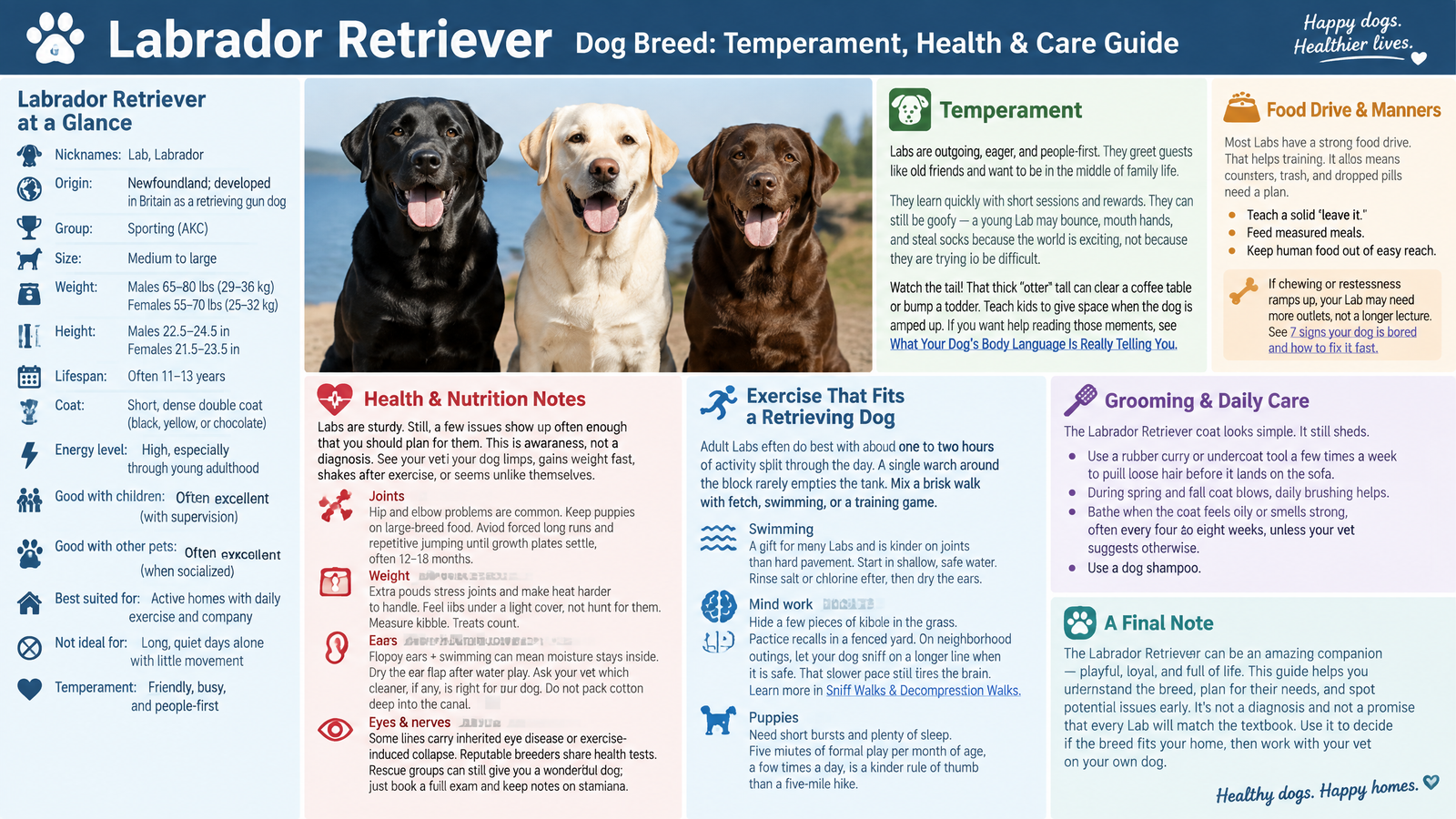
The Labrador Retriever dog breed is famous for a reason. You get a friendly partner who wants to be in the middle of family life. You also get a strong, food-motivated athlete who needs a plan, not just a cute photo.
This guide is for everyday pet parents who want clear, kind steps. It is not a diagnosis and it is not a promise that every Lab will match the textbook. Use it to decide if the breed fits your home, then work with your vet on your own dog.
Labrador Retriever dog breed snapshot
- Nicknames: Lab, Labrador
- Origin: Newfoundland; developed in Britain as a retrieving gun dog
- Group: Sporting (AKC)
- Size: Medium to large
- Weight: Males about 65 to 80 lbs (29 to 36 kg); females about 55 to 70 lbs (25 to 32 kg)
- Height: Males about 22.5 to 24.5 inches; females about 21.5 to 23.5 inches
- Lifespan: Often 11 to 13 years
- Coat: Short, dense double coat in black, yellow, or chocolate
- Energy level: High, especially through young adulthood
- Good with children: Often excellent with supervision
- Good with other pets: Often excellent when socialized
- Best suited for: Active homes that can offer daily exercise and company
- Not ideal for: Long, quiet days alone with little movement
Temperament: friendly, busy, and people-first
A typical Labrador Retriever temperament is outgoing, eager, and soft-mouthed. Many Labs greet guests like old friends. That warmth is lovely. It also means this is a poor guard dog and a great roommate if you like company in every room.
Labs were bred to work with people. Therefore they often learn quickly when you keep sessions short and pay well with food or a toy. They can still be goofy. A young Lab may bounce, mouth hands, and steal socks because the world is exciting, not because they are trying to be difficult.
Watch the tail. That thick "otter" tail can clear a coffee table or bump a toddler. Teach kids to give space when the dog is amped up. If you want help reading those moments, see What Your Dog’s Body Language Is Really Telling You.
Food drive and manners
Most Labs have a strong food drive. That helps training. It also means counters, trash, and dropped pills need a plan. Teach a solid "leave it," feed measured meals, and keep human food out of easy reach.
If chewing or restlessness ramps up, your Lab may need more outlets, not a longer lecture. Our notes on 7 signs your dog is bored and how to fix it fast can help you spot that early.
Health and nutrition notes for Labs
Labs are sturdy. Still, a few issues show up often enough that you should plan for them. This is awareness, not a diagnosis. See your vet if your dog limps, gains weight fast, shakes after exercise, or seems unlike themselves.
Joints. Hip and elbow problems are common in the Labrador Retriever dog breed. Keep growing puppies on large-breed food. Avoid forced long runs and repetitive jumping until a vet says the growth plates have settled, often around 12 to 18 months.
Weight. Extra pounds stress joints and make heat harder to handle. Use a body-condition check you can see from above: you should feel ribs under a light cover, not hunt for them. Measure kibble. Treats count in the daily total.
Ears. Floppy ears plus swimming can mean moisture stays inside. Dry the ear flap after water play. Ask your vet which cleaner, if any, is right for your dog. Do not pack cotton deep into the canal.
Eyes and nerves. Some lines carry inherited eye disease or exercise-induced collapse. Reputable breeders share health tests. Rescue groups can still give you a wonderful dog; just book a full exam and keep notes on stamina.
When it is time for vaccines, labs, or a joint check, a little homework lowers stress. Use our calm plan in How to Prepare Your Dog for a Vet Visit Without Extra Stress.
Exercise that fits a retrieving dog
Adult Labs often do best with about one to two hours of activity split through the day. A single march around the block rarely empties the tank. Mix a brisk walk with fetch, swimming, or a training game.
Swimming is a gift for many Labs and is kinder on joints than hard pavement. Start in shallow, safe water. Rinse salt or chlorine after, then dry the ears.
Mind work counts. Hide a few pieces of kibble in the grass. Practice recalls in a fenced yard. On neighborhood outings, let your dog sniff on a longer line when it is safe. That slower pace still tires the brain. Learn more in Sniff Walks & Decompression Walks.
Puppies need short bursts and plenty of sleep. Five minutes of formal play per month of age, a few times a day, is a kinder rule of thumb than a five-mile hike.
Grooming and daily care
The Labrador Retriever coat looks simple. It still sheds. A rubber curry or undercoat tool a few times a week pulls loose hair before it lands on the sofa. During spring and fall coat blows, daily brushing helps.
Bathe when the coat feels oily or smells strong, often every four to eight weeks, unless your vet suggests otherwise. Use a dog shampoo. Human products can dry the skin.
Trim nails every few weeks so they do not click hard on the floor. Long nails change how a heavy dog stands. Check paws after rough ground. Brush teeth as often as you can, even if that starts as a two-second smear of dog toothpaste.
Grooming is also a health scan. Run your hands over ribs, armpits, and the tail base. New lumps, hot spots, or a sudden limp deserve a vet call.
Training that works with Lab energy
Keep sessions to a few minutes. Mark the behavior you want, then pay. End while your dog still wants more.
Priorities for most homes:
- Name recognition and a happy recall
- Loose-leash walking
- Sit or down for greetings so jumping fades
- Leave it and drop it, because Labs collect the world with their mouths
- Settling on a mat while you cook or work
Socialize with care. Pair new people, floors, and sounds with space and treats. Do not crowd a puppy "to get it over with." A good Labrador Retriever temperament still needs practice in the real world.
If you are comparing family sporting dogs, you may also like our Golden Retriever dog breed care guide. Goldens and Labs share heart and energy. Their coats and some health patterns differ, so read both before you choose.
Is a Labrador Retriever right for your home?
Choose this breed if you enjoy daily movement, can live with hair, and want a dog in the room with you. Pause if your weeks are packed with long absences and no backup walker. A bored Lab invents jobs, and those jobs often involve the trash can.
Meet adult dogs as well as puppies. An adult rescue can show you the true energy level without the mystery of a 16-week growth spurt. Ask about food stealing, recall, and how the dog acts after a rainy day indoors.
Budget for food, a good leash setup, training classes, and routine vet care. Large dogs cost more to feed and to treat when joints complain later.
A calm next step
You do not need a perfect schedule tomorrow. Pick one change this week. Measure the meals. Add a ten-minute fetch or sniff walk. Book the next wellness exam.
The Labrador Retriever dog breed rewards a steady routine. Give them a job, a meal plan, and time beside you, and they usually give back the easy joy that made them so popular in the first place.
If anything about appetite, gait, or energy worries you, call your veterinarian. You know your dog. A short question now is better than a long guess later.