
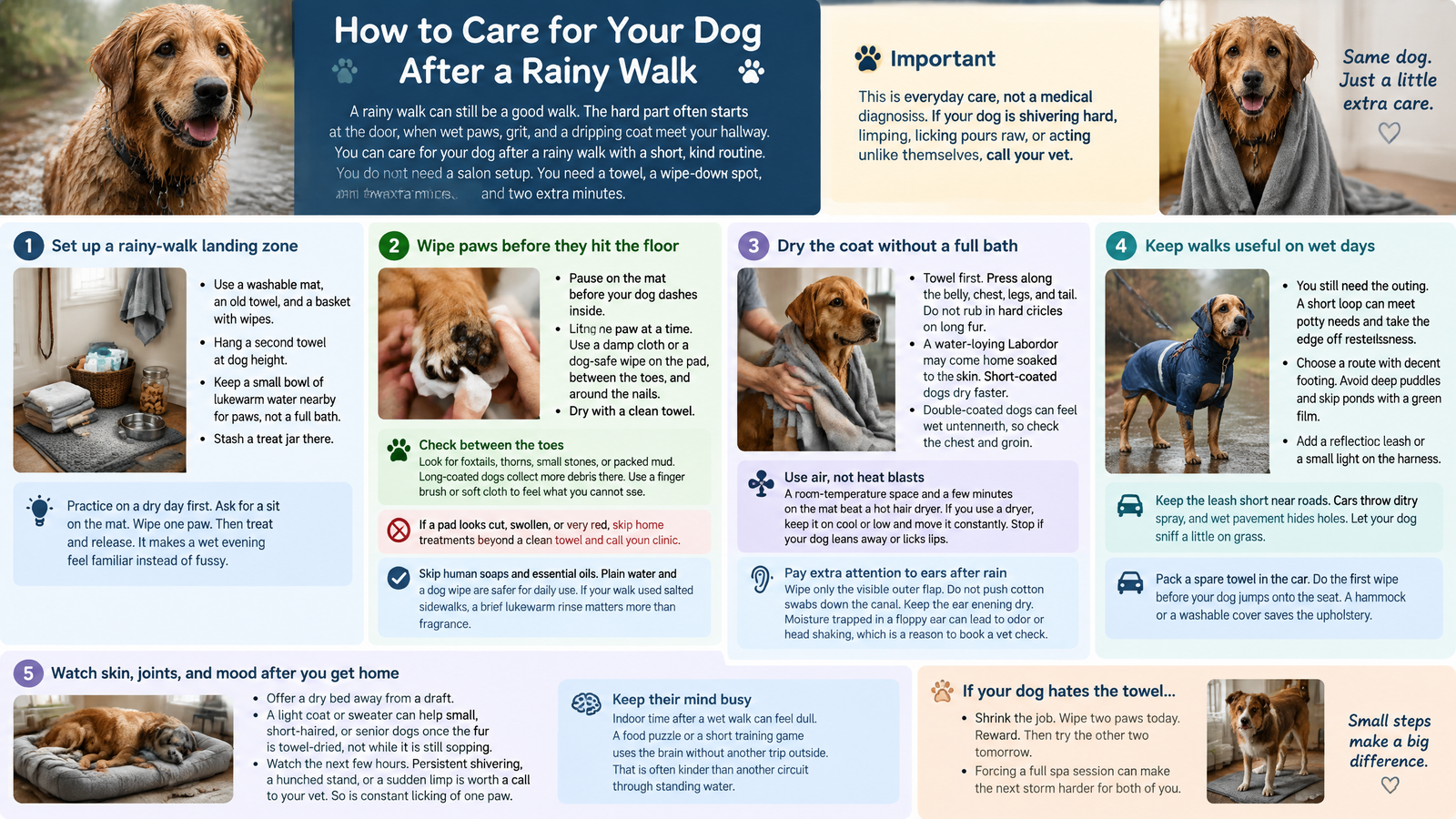
A rainy walk can still be a good walk. The hard part often starts at the door, when wet paws, grit, and a dripping coat meet your hallway. You can care for your dog after a rainy walk with a short, kind routine. You do not need a salon setup. You need a towel, a wipe-down spot, and two extra minutes.
This is everyday care, not a medical diagnosis. If your dog is shivering hard, limping, licking paws raw, or acting unlike themselves, call your vet.
Set up a rainy-walk landing zone
The easiest cleanup happens before you unclip the leash. Pick one small patch by the door and keep it ready. A washable mat, an old towel, and a basket with wipes will do.
Hang a second towel at dog height. Then keep a small bowl of lukewarm water nearby for paws, not a full bath. In addition, stash a treat jar there so your dog learns that the mat is a good place to stand.
Practice on a dry day first. Ask for a sit on the mat. Wipe one paw. Then treat and release. That tiny rehearsal makes a wet evening feel familiar instead of fussy.
Wipe paws before they hit the floor
Mud, salt, moldy leaves, and road grit ride home on paw pads. A quick wipe protects floors and skin. Therefore, pause on the mat before your dog dashes inside.
Lift one paw at a time. Use a damp cloth or a dog-safe wipe on the pad, between the toes, and around the nails. Then dry with a clean towel. Do not scrub raw skin. Gentle pressure is enough.
Check between the toes
Look for foxtails, thorns, small stones, or packed mud. Long-coated dogs collect more debris there. A finger brush or a soft cloth helps you feel what you cannot see.
If a pad looks cut, swollen, or very red, skip home treatments beyond a clean towel and call your clinic. You can also use the same calm handling later when you prepare your dog for a vet visit.
Skip human soaps and essential oils on paws. Plain water and a dog wipe are safer for daily use. If your walk used salted sidewalks, a brief lukewarm rinse matters more than fragrance.
Dry the coat without a full bath
Most rainy walks do not need shampoo. Extra baths can strip oils and leave skin itchy. Towel first. Then decide if anything else is required.
Press the towel along the belly, chest, legs, and tail. Do not rub in hard circles on long fur, which can tangle the coat. Press, lift, and move to a dry section of towel.
A water-loving Labrador Retriever may come home soaked to the skin. Short-coated dogs often dry faster. Double-coated dogs can feel wet underneath after the top layer looks fine, so check the chest and groin.
Use air, not heat blasts
A room-temperature space and a few minutes of standing on the mat beat a hot hair dryer aimed at the face. If you use a dryer, keep it on cool or low and move it constantly. Stop if your dog leans away or licks lips. Those signals are part of what your dog’s body language is really telling you.
Pay extra attention to ears after rain. Wipe only the visible outer flap. Do not push cotton swabs down the canal. Then keep the ear opening dry. Moisture trapped in a floppy ear can lead to odor or head shaking, which is a reason to book a vet check rather than guess.
Keep walks useful on wet days
You still need the outing. A short loop in the rain can meet potty needs and take the edge off restlessness. You do not have to log the same mileage you walk in fair weather.
Choose a route with decent footing. Avoid deep puddles you cannot see the bottom of, and skip ponds with a green film. Dark, wet evenings also make you and your dog harder to spot, so add a reflective leash or a small light on the harness.
Keep the leash short near roads. Cars throw dirty spray, and wet pavement hides holes. If your dog loves to investigate, you can still allow a few sniff stops on grass. A slower, shorter outing can be enough, much like the calmer pace described in our guide to sniff walks.
Pack a spare towel in the car if you drive to a park. Then do the first wipe before your dog jumps onto the seat. A hammock or a washable cover saves the upholstery and keeps the second cleanup smaller.
Watch skin, joints, and mood after you get home
Some dogs shake off rain and nap. Others get chilly or stiff. Offer a dry bed away from a draft. A light coat or sweater can help small, short-haired, or senior dogs once the fur is towel-dried, not while it is still sopping.
Watch the next few hours. Persistent shivering, a hunched stand, or a sudden limp is worth a call to your vet. So is constant licking of one paw. You are not overreacting. You are noticing a change.
Indoor time after a wet walk can feel dull. A food puzzle or a short training game uses the brain without another trip outside. That is often kinder than another circuit through standing water.
If your dog hates the towel, shrink the job. Wipe two paws today. Reward. Then try the other two tomorrow. Forcing a full spa session can make the next storm harder for both of you.
Build a two-minute habit you will actually keep
Systems beat willpower on a dark Tuesday. Lay the mat out before you leave. Keep wipes stocked. Then run the same order every time: paws, belly, ears, treat, release.
Write the order on a sticky note by the door if more than one person walks the dog. Consistency matters more than a perfect technique. A sloppy wipe that happens daily beats a fancy bath that never happens.
Replace soaked towels instead of leaving them in a heap. Damp fabric grows musty fast. A cheap second set of towels makes the routine easier to repeat.
A calm next step
You can care for your dog after a rainy walk without turning your entryway into a wash bay. Set the mat. Wipe the paws. Press the coat dry. Check the ears and toes. Then let your dog rest on a clean bed.
Start with one wet-day rehearsal this week, even if the sky is only gray. The goal is not a spotless dog. The goal is a comfortable dog, a cleaner floor, and a routine you can keep when the weather does not cooperate.