
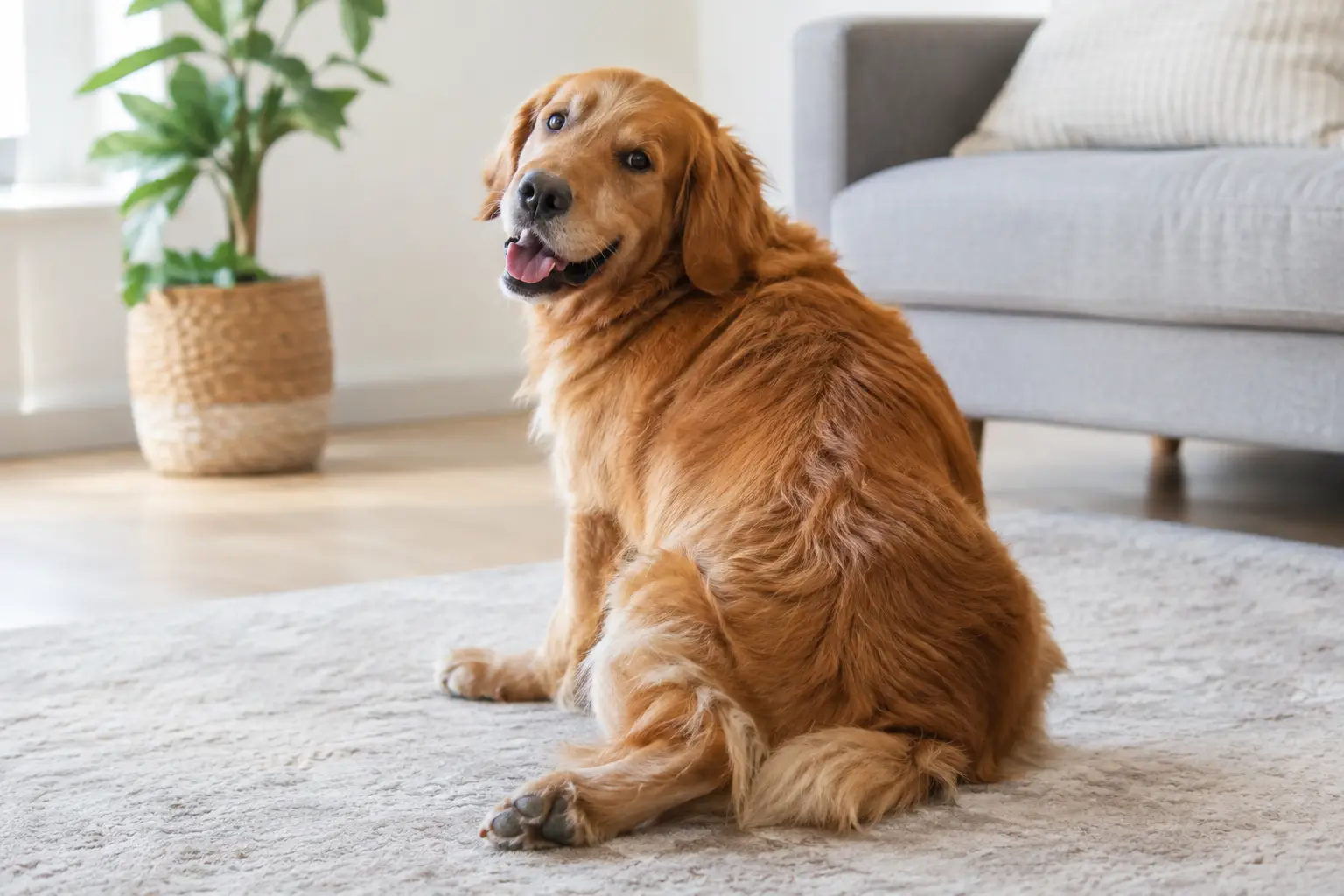
Your dog drops into a sit, stretches out their back legs, and drags their bottom across the rug. It can look funny for a second, but many owners quickly wonder why dog scoots and whether their furry best friend is uncomfortable. Scooting is usually your dog’s way of responding to irritation around the rear end. Sometimes the cause is minor and short-lived. Other times, it needs prompt veterinary care.
A calm look at the pattern can help you decide what to do next. Rather than scolding or trying to treat the problem yourself, focus on keeping your pup comfortable and noticing the clues their body is giving you.
Why Dog Scoots Across the Floor
The most common reason dogs scoot is discomfort around the anus. The area may be itchy, sore, damp, or feel full. Your dog cannot explain that sensation, so dragging their bottom on the carpet, grass, or floor may be an attempt to relieve it.
Full or irritated anal glands
Dogs have two small anal glands, sometimes called anal sacs, just inside the anus. These glands release a strong-smelling fluid during normal bowel movements and play a role in canine scent communication. In some dogs, especially small breeds or dogs with soft stools, the glands do not empty well on their own.
When anal glands become overly full, your dog may scoot, lick the area, suddenly turn to look at their rear end, or have a fishy odor. The area may also look swollen or red. A veterinarian or trained grooming professional may be able to express uncomplicated full glands, but a sore, swollen, leaking, or very painful area calls for a veterinary exam. An infected or abscessed anal gland can be quite painful and may need medication or additional treatment.
It is tempting to make gland expression a routine just because your dog scooted once. That is not always the best choice. Many dogs never need their glands manually expressed, and unnecessary squeezing can cause irritation. Let your veterinarian help determine whether anal glands are truly the recurring issue.
Something stuck in the fur
Long-haired dogs can collect bits of stool, litter, mud, or matted fur around the back end. Even a small amount of dried debris can pull on the skin and create enough discomfort to trigger scooting. This is especially common after loose stool or a messy bathroom break.
If your dog is calm and allows gentle handling, take a quick look in good lighting. You can use a warm, damp cloth to wipe away surface debris. Do not tug on tangled fur close to the skin. If you see a mat, ask a groomer or veterinary team for help removing it safely. A regular sanitary trim can make bathroom cleanup easier for some fluffy pups.
Allergies and skin irritation
Environmental allergies, food sensitivities, flea bites, and contact irritants can all make the skin around a dog’s rear end itchy. If scooting comes with frequent paw licking, ear irritation, red skin, or itching elsewhere on the body, allergies may be part of the picture.
Some dogs also react to scented wipes, fragranced shampoos, laundry products on bedding, or harsh cleaning products on floors. Switch to gentle, pet-safe products and avoid applying human creams, essential oils, or medicated products to the area without veterinary guidance. What soothes human skin can be unsafe if your dog licks it.
Parasites or digestive upset
Intestinal parasites, including tapeworms, can irritate the anal area. You might notice tiny, rice-like segments near your dog’s rear end, in their bedding, or in fresh stool. Diarrhea, constipation, or frequent soft stool can also leave the area irritated and may prevent normal anal-gland emptying.
Scooting alone does not confirm worms. Your veterinarian may recommend bringing in a fresh stool sample for testing. Keeping your dog on a veterinarian-recommended parasite prevention plan and promptly picking up waste are simple ways to protect your pup and your household.
Less common causes
A small cut, skin infection, growth, injury, urinary discomfort, or pain in the hips and lower back can occasionally look like scooting behavior. Senior dogs and dogs with mobility concerns may shift or rub their rear ends because getting comfortable is difficult. That is why a repeated pattern deserves attention instead of assumptions.
What to Do When Your Dog Starts Scooting
One brief scoot after a bowel movement may not be an emergency, especially if your dog is otherwise cheerful, eating normally, and has a clean rear end. Gently check the area, then observe them over the next day or two.
Start by noting when the behavior happens. Is it only after pooping? Is your dog also licking, straining, smelling fishy, or having loose stool? A short note on your phone can give your veterinarian useful details if the behavior continues.
Keep the rear end clean and dry with a soft cloth and plain warm water if needed. Offer normal access to fresh water and continue your dog’s usual balanced food unless your veterinarian tells you otherwise. Sudden diet changes can upset digestion, which may make the original problem worse.
Try to prevent repeated rubbing on rough carpet or concrete if the skin looks irritated. Calmly redirect your dog to a comfortable bed or engage them with a quiet activity. This is not a behavior problem to correct. Your pup is trying to manage a physical sensation, and gentle support protects trust between you.
When Scooting Needs a Vet Visit
Call your veterinarian promptly if scooting happens repeatedly, lasts more than a day or two, or returns often. Schedule a visit sooner if you notice a fishy smell, swelling, bleeding, pus, an open sore, a lump, or obvious pain when your dog sits or you approach their rear end.
Seek urgent veterinary care if your dog seems lethargic, refuses food, cries out, cannot pass stool, strains repeatedly, vomits, or has significant diarrhea. These signs can point to a problem beyond simple irritation.
A veterinary exam may include checking the anal glands, inspecting the skin, discussing diet and stool quality, and testing a stool sample for parasites. Depending on the cause, treatment may involve gland care, parasite medication, treatment for infection, allergy management, or a plan to improve digestive regularity. The right answer depends on your individual dog, not just the scooting itself.
Can You Prevent Scooting?
Not every episode is preventable, but consistent everyday care can lower the odds of recurring irritation. Healthy, well-formed stools are especially helpful because they support natural anal-gland emptying. Feed a complete diet that agrees with your dog, make food changes gradually, and talk with your veterinarian before adding fiber supplements or changing portions.
Stay current on parasite prevention, check long fur after bathroom breaks, and keep your dog’s grooming routine tailored to their coat. If your dog has known allergies, work with your veterinarian to identify likely triggers and build a manageable plan. Relief often comes from addressing the underlying itch, not simply cleaning the area.
For dogs with recurring anal-gland issues, your veterinarian can help you decide whether diet changes, weight management, regular monitoring, or professionally scheduled gland care makes sense. There is no one-size-fits-all timeline, and your dog’s comfort should guide the plan.
Your pup does not need you to diagnose every itch at home. They need your observant, loving attention. A clean check, a calm response, and a timely call to the veterinary team can turn an uncomfortable scoot into a quick step toward feeling better.