
You lift the lip, see a little yellow near the back teeth, and wonder if you missed the window. You did not. Most loving pet parents can learn how to brush your dog’s teeth at home with a few minutes, the right paste, and a lot of patience.
Brushing is everyday care, not a character test and not a diagnosis. Plaque forms fast. A short, kind routine still helps more than an occasional heroic scrub. If the mouth smells sudden and foul, the gums look swollen, or your dog yelps when you touch the face, pause and call your vet.
Why brushing your dog’s teeth matters
Soft plaque starts on the tooth within a day or two after a meal. If it stays, it hardens into tartar. Tartar sits along the gumline, where it can irritate the tissue and give bacteria a place to hide.
You cannot scrape hard tartar off at the kitchen table. Home brushing is for the soft film that has not set yet. That is why a few calm passes most days beat one long battle on Sunday.
Dental trouble is common in adult dogs. Small mouths and crowded teeth can collect more debris. Large, food-motivated breeds, including a young Labrador Retriever, may tolerate handling well and still need the same daily habit. Size does not replace the brush.
Watch the whole face, not only the smile. A loose, wiggly dog is usually ready. A stiff body, a tucked tail, or a hard stare means you should stop and try again later. Those clues live in what your dog’s body language is really telling you.
Gather a simple dog dental kit
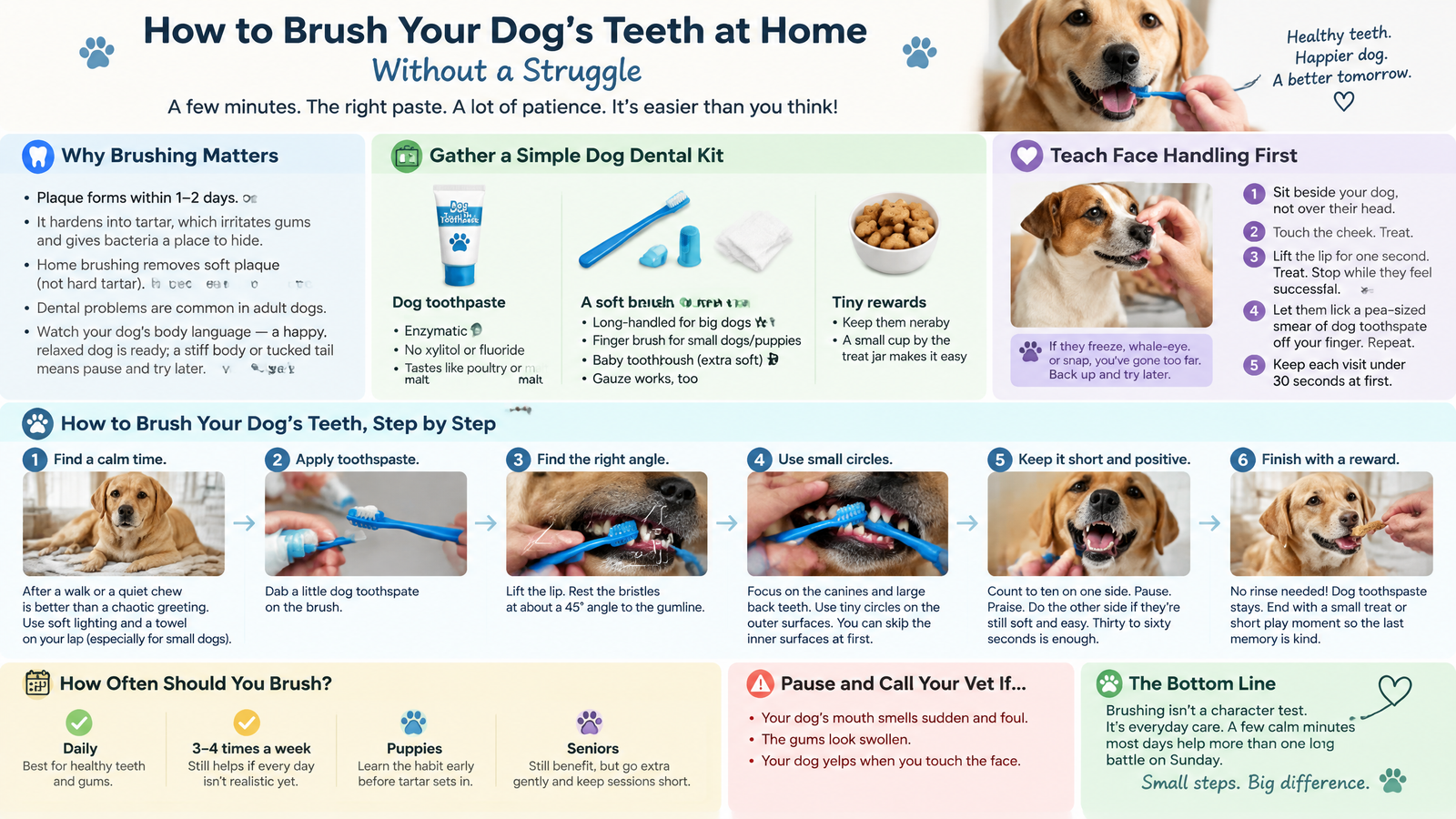
You need three things: toothpaste made for dogs, a soft brush that fits the mouth, and a handful of tiny rewards. That is enough to start how to brush dog teeth at home without turning the bathroom into a clinic.
Use enzymatic dog toothpaste. Never use human paste. Many people pastes contain xylitol or fluoride levels that are not safe if swallowed. Dog paste is meant to stay in the mouth. It often tastes like poultry or malt, which helps the first sessions feel like a treat.
Pick a brush that matches the jaw. A finger brush works well for puppies and small dogs. A long-handled pet brush reaches the big cheek teeth on a larger dog. A baby toothbrush can pinch-hit if the bristles are extra soft. Gauze wrapped around a finger is a fine first tool while your dog learns the feel.
Keep the kit in one spot. A small cup by the treat jar means you will actually use it. If you have to hunt the closet, the habit dies.
Teach face handling before the first real brush
Do not start with a full mouth. Start with permission. Sit beside your dog, not over their head. Touch the cheek. Treat. Lift the lip for one second. Treat. Stop while they still feel successful.
Do this for a few days. The goal is a dog who leans in instead of ducking away. If your dog already sits nicely for guests, use that same sit on a nonslip mat. The polite pause you use when you stop your dog from jumping on people is a handy starting point for dental work too.
Let them lick a pea-sized smear of dog toothpaste off your finger. Repeat until the flavor is a good thing. Then rub the paste along the outer front teeth with a finger or a bit of gauze. Keep each visit under thirty seconds.
If your dog freezes, whale-eyes, or snaps toward the hand, you have gone too far. Back up to a lighter touch. There is no prize for finishing the mouth on night one.
How to brush your dog’s teeth, step by step
Pick a calm window. After a walk or a quiet chew is better than right after a chaotic greeting. Soft lighting and a towel on your lap can help a small dog feel secure.
Dab a little dog toothpaste on the brush. Lift the lip on one side. Rest the bristles at about a forty-five degree angle to the gumline. That angle is the useful part of how to brush your dog’s teeth properly, because plaque gathers where tooth meets gum.
Use tiny circles on the outer surfaces. Focus on the canines and the large back teeth. Those spots collect the most film. You can skip a perfect pass on the inner surfaces at first. The tongue does some of that work, and forcing the jaws wide can sour the whole routine.
Count to ten on one side. Pause. Praise. Do the other side if your dog still looks soft and easy. Then stop. A solid thirty to sixty seconds beats a two-minute wrestling match. Over a week or two, you can build toward a minute per side.
You do not need to rinse. Dog toothpaste is made to stay. Finish with a small treat or a short play moment so the last memory is kind.
How often should you brush?
Daily is the gold standard because plaque returns quickly. Three or four days a week still helps if every day is not realistic yet. A missed morning is not a failure. Pick up the brush at the next calm moment.
Puppies can learn the habit before adult tartar sets in. Seniors still benefit, but go extra gently and keep sessions short. If gums bleed a little once, lighten your hand. If they bleed often, or the breath turns sharply sour, book a checkup instead of brushing harder.
What to add when brushing is not enough
Chews, water additives, and dental diets can support the routine. They do not replace the mechanical wipe of a brush. Look for products with a veterinary oral health seal when you can, and ask your vet which options fit your dog’s chewing style.
Skip cooked bones, hard antlers, and rock-like nylon that can fracture teeth. A chew should give slightly under pressure. If you would not want that item to hit your own molar at speed, do not offer it.
After a wet outing, wipe the muzzle and check the lips before you settle in. Damp fur and yard debris do not belong in a dental session. The same landing-zone idea in how to care for your dog after a rainy walk gives you a clean, quiet minute to peek at the teeth.
Food still matters. Sticky treats and constant grazing leave more film on the teeth. Keep training treats tiny. If you are already thinking about meals, stay with a complete, balanced food your vet is comfortable with rather than a sudden homemade experiment.
When home care should wait for the vet
Home brushing cannot fix a loose tooth, a broken crown, or an abscess. Do not pick at tartar with tools from a drawer. You can injure the gum and miss the real problem under the stone.
Call your clinic if you see drooling on one side, blood on toys, pawing at the mouth, swelling under the eye, or a sudden refusal of hard kibble. Those signs need a professional look. You can make the appointment easier with the same slow handling in how to prepare your dog for a vet visit.
Some dogs will never love a full brush. That is all right. A finger wipe plus a vet-guided cleaning plan is still care. Your job is progress, not perfection.
A calm next step
You now have a simple way to brush your dog’s teeth at home. Keep the kit out. Teach the face first. Use dog toothpaste, small circles, and a short session that ends on a win.
Tonight, lift the lip for one second and reward the stillness. Tomorrow, add a dab of paste. The day after, touch two teeth with the brush. That is how a struggle turns into a habit, one kind minute at a time.