
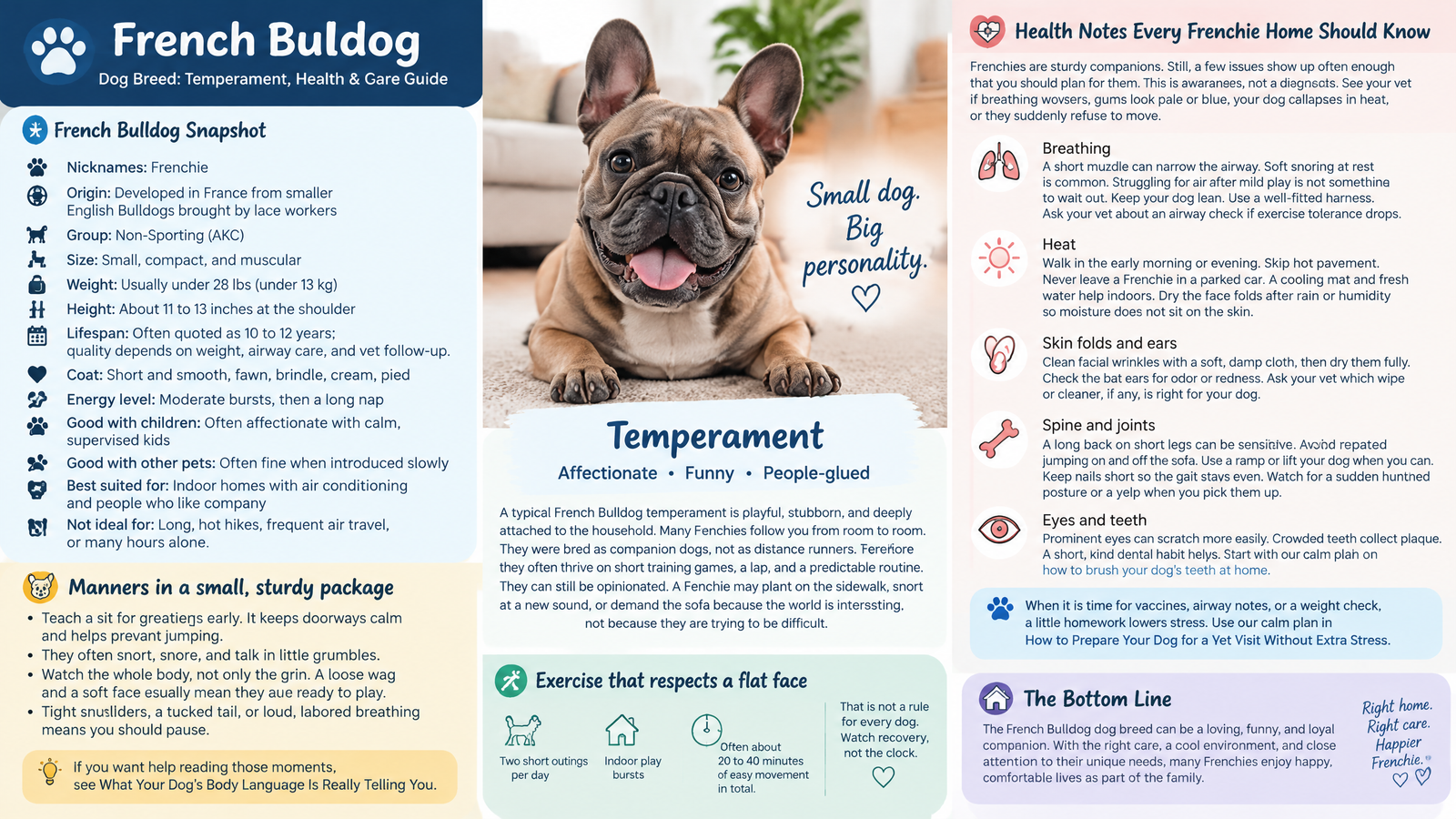
The French Bulldog dog breed looks like a pocket comedian with bat ears and a sturdy little frame. You get a loyal roommate who wants to sit on your feet. You also get a flat-faced companion who needs cooler walks, a harness, and a close eye on breathing.
This guide is for everyday pet parents who want clear, kind steps. It is not a diagnosis and it is not a promise that every Frenchie will match the textbook. Use it to decide if the breed fits your home, then work with your vet on your own dog.
French Bulldog dog breed snapshot
- Nicknames: Frenchie
- Origin: Developed in France from smaller English Bulldogs brought by lace workers
- Group: Non-Sporting (AKC)
- Size: Small, compact, and muscular
- Weight: Usually under 28 lbs (under 13 kg)
- Height: About 11 to 13 inches at the shoulder
- Lifespan: Often quoted as 10 to 12 years; quality of those years depends on weight, airway care, and vet follow-up
- Coat: Short and smooth; common colors include fawn, brindle, cream, and pied
- Energy level: Moderate bursts, then a long nap
- Good with children: Often affectionate with calm, supervised kids
- Good with other pets: Often fine when introduced slowly
- Best suited for: Indoor homes with air conditioning and people who like company
- Not ideal for: Long, hot hikes, frequent air travel, or many hours alone
Temperament: affectionate, funny, and people-glued
A typical French Bulldog temperament is playful, stubborn, and deeply attached to the household. Many Frenchies follow you from room to room. That closeness is the charm. It also means long workdays with no backup plan can feel hard on both of you.
They were bred as companion dogs, not as distance runners. Therefore they often thrive on short training games, a lap, and a predictable routine. They can still be opinionated. A Frenchie may plant on the sidewalk, snort at a new sound, or demand the sofa because the world is interesting, not because they are trying to be difficult.
Watch the whole body, not only the grin. A loose wag and a soft face usually mean they are ready to play. Tight shoulders, a tucked tail, or loud, labored breathing means you should pause. If you want help reading those moments, see What Your Dog’s Body Language Is Really Telling You.
Manners in a small, sturdy package
Frenchies are not huge, but they are solid. A happy leap can still startle a guest or knock a toddler off balance. Teach a sit for greetings early. The same polite pause you use when you stop your dog from jumping on people keeps doorways calm.
They often snort, snore, and talk in little grumbles. That is common in the French Bulldog dog breed. New or sudden distress sounds are different. If breathing turns harsh after play, or your dog cannot settle, stop and cool them down, then call your vet if it does not ease.
Health notes every Frenchie home should know
Frenchies are sturdy companions. Still, a few issues show up often enough that you should plan for them. This is awareness, not a diagnosis. See your vet if breathing worsens, gums look pale or blue, your dog collapses in heat, or they suddenly refuse to move.
Breathing. The French Bulldog is a brachycephalic breed. A short muzzle can narrow the airway. Soft snoring at rest is common. Struggling for air after mild play is not something to wait out. Keep your dog lean. Use a well-fitted harness instead of a collar that presses on the throat. Ask your vet about an airway check if exercise tolerance drops.
Heat. Flat faces make cooling less efficient. Walk in the early morning or evening. Skip hot pavement. Never leave a Frenchie in a parked car. A cooling mat and fresh water help indoors. If you come home from rain or humidity, dry the face folds so moisture does not sit on the skin. The same landing-zone habit in how to care for your dog after a rainy walk works well here.
Skin folds and ears. Clean facial wrinkles with a soft, damp cloth, then dry them fully. Leftover moisture invites irritation. Check the bat ears for odor or redness. Ask your vet which wipe or cleaner, if any, is right for your dog.
Spine and joints. A long back on short legs can be sensitive. Avoid repeated jumping on and off the sofa. Use a ramp or lift your dog when you can. Keep nails short so the gait stays even. Watch for a sudden hunched posture or a yelp when you pick them up.
Eyes and teeth. Prominent eyes can scratch more easily. Crowded teeth collect plaque. A short, kind dental habit helps. Start with our calm plan on how to brush your dog’s teeth at home.
When it is time for vaccines, airway notes, or a weight check, a little homework lowers stress. Use our calm plan in How to Prepare Your Dog for a Vet Visit Without Extra Stress.
Exercise that respects a flat face
Adult Frenchies often do well with two short outings and a few indoor play bursts, often about 20 to 40 minutes of easy movement in total. That is not a rule for every dog. Watch recovery, not the clock. Your dog should settle and breathe more easily within a few minutes of rest.
Skip midday heat and steep hills. A shaded sniff around the block can tire the brain without pushing the lungs. Fetch in a cool hallway or a short training session can fill the gap on a hot day.
Puppies need even shorter bursts and plenty of sleep. A French Bulldog puppy is not a jogging partner. Five minutes of gentle play at a time is kinder than a long park trip in warm weather.
If restlessness shows up as chewing or pacing, add a puzzle feeder or a short training game rather than more intense running. Keep the work easy on the airway.
Grooming and daily French Bulldog care
The coat looks simple. Weekly brushing with a soft rubber tool still lifts loose hair and lets you scan the skin. Bathe when the coat feels oily or smells strong, often every four to eight weeks, unless your vet suggests otherwise. Use a dog shampoo. Human products can dry already-folded skin.
Make fold care a tiny daily or every-other-day habit. Wipe, dry, and stop. Do not pack products into the wrinkles unless your vet asked you to. Check paws after rough ground. Trim nails before they click hard on the floor.
Grooming is also a health scan. Run your hands over the ribs, the spine, and under the tail. New lumps, red folds, cloudy eyes, or a sudden limp deserve a vet call.
Food, weight, and training that fit Frenchies
Weight is one of the few levers you fully control. Extra pounds make breathing and joints harder. Measure meals. Treats count in the daily total. You should feel ribs under a light cover, not hunt for them.
Feed a complete, balanced food that matches your dog’s life stage. If chewing or swallowing looks messy, a shallow or angled bowl can help some flat-faced dogs. Ask your vet before you change diets or add supplements.
Keep training sessions to a few minutes. Mark the behavior you want, then pay. End while your dog still wants more. Priorities for most homes include name recognition, a settle on a mat, a sit for greetings, and a harness walk that does not turn into a tug on the neck.
If you are comparing family companions, you may also like our Labrador Retriever dog breed care guide. Labs need more mileage. Frenchies need more heat and airway care. Read both before you choose.
Is a French Bulldog right for your home?
Choose this breed if you want a close companion, can keep the house cool, and can budget for thoughtful vet care. Pause if you need a running partner, live without reliable air conditioning in a hot climate, or are away from dawn to night with no helper.
Meet adult dogs as well as puppies. An adult rescue can show you the true energy level and breathing pattern without the mystery of a growth spurt. Ask how the dog handles warm days, stairs, and time alone.
Budget for food, a good harness, fold-care supplies, and routine vet visits. Some Frenchies need extra airway or skin support over a lifetime. That is not a reason to panic. It is a reason to plan.
A calm next step
You do not need a perfect schedule tomorrow. Pick one change this week. Measure the meals. Swap a collar for a harness. Wipe and dry the face folds after the evening walk.
The French Bulldog dog breed rewards a steady, cool routine. Give them company, a lean body, and short kind sessions, and they usually give back the easy humor that made them so popular in the first place.
If anything about breathing, appetite, or movement worries you, call your veterinarian. You know your dog. A short question now is better than a long guess later.