How to Brush Your Dog’s Teeth at Home Without a Struggle
Yellow at the back teeth does not mean you missed your chance. It means the soft film has been winning. Home brushing does not remove hard tartar. It slows the next layer. That is still worth doing.
A sudden foul smell, swollen gums, or a yelp when you touch the face is a vet visit, not a harder scrub.
What the brush is for
Plaque starts within a day or so of a meal. Left alone, it hardens along the gumline. You cannot chip that off at the kitchen table without hurting the dog. A few calm passes most days beat a Sunday wrestling match.
Small mouths collect debris faster. A food-motivated breed, including a young Lab, may tolerate handling and still need the brush. Size is not a dental plan.
If the body goes stiff or the tail tucks, stop. The signals in body language apply to mouths too.
Kit
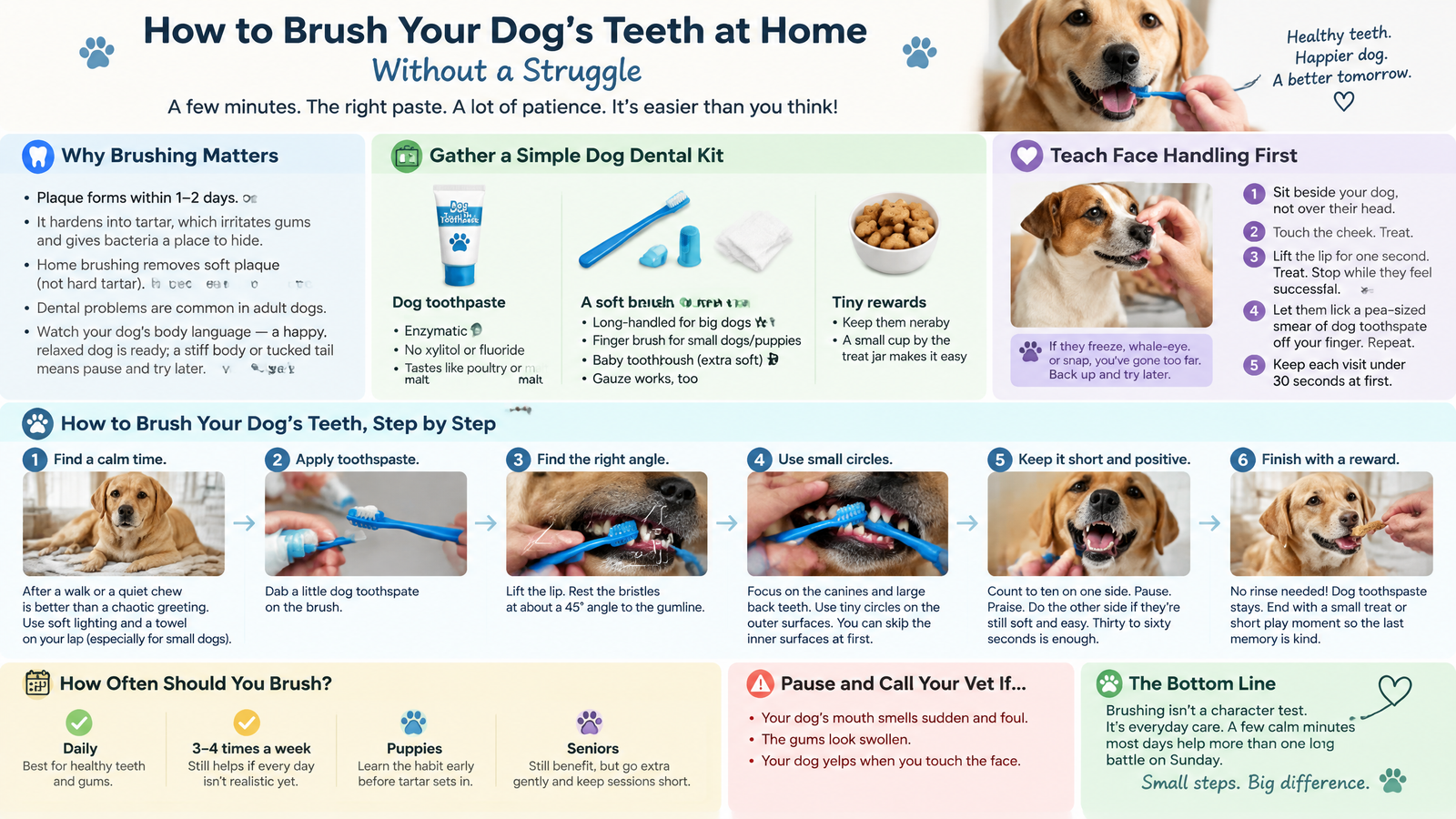
Dog toothpaste, a soft brush that fits the jaw, tiny treats. Enzymatic pet paste. Never human paste. Xylitol and fluoride levels meant for spitting are a bad idea in an animal who swallows.
Finger brushes suit puppies and small dogs. A long handle reaches the cheek teeth on a bigger dog. Gauze on a finger is a fair first tool. Keep the cup next to the treat jar. A kit in a closet does not get used.
Face before bristles
Sit beside the dog, not over the head. Touch the cheek, treat. Lift the lip for one second, treat. Do that for a few days. The sit you already use for guests, the one in jumping, is a fine place to start.
Let them lick a pea of dog paste off your finger. Then smear it on the outer front teeth with gauze. Under thirty seconds. A freeze or a snap means you went too far. There is no prize for finishing the mouth on night one.
The actual brush
After a walk is better than after a chaotic greeting. Paste on the brush. Lip up. Bristles at about 45 degrees to the gumline, small circles on the outer surfaces. Canines and the big back teeth collect the most film. Skip the inside surfaces at first. The tongue does some of that, and prying the jaw open can end the habit.
Count to ten on one side. Do the other side if the dog is still soft. Thirty to sixty seconds is a win. You do not rinse dog paste. End with a treat so the last second is not the brush.
Daily is the standard because plaque returns quickly. Three or four days a week still helps. A little blood once means a lighter hand. Blood often, or breath that turns sharply sour, means stop and book a cleaning consult.
What does not replace the brush
Dental chews and water additives can support the routine. They do not wipe the gumline. Look for a veterinary oral-health seal and ask which chew fits this dog. Skip antlers and hard nylon that can slab-fracture a tooth. If you would not want it to hit your molar, do not offer it.
After a wet walk, wipe the muzzle before a dental session. The landing spot in rainy-walk care is a good place for that look. Sticky treats and all-day grazing leave more film. Keep training treats small.
Do not pick at tartar with a dental tool from a drawer. Drooling on one side, blood on toys, pawing at the mouth, or swelling under the eye needs a clinic. Visit prep makes that appointment less of a fight. Some dogs never accept a full brush. A finger wipe plus a professional cleaning is still care.
Tonight, one lip lift and a treat. Tomorrow, paste on a finger. The day after, two teeth. That is the whole method.
 Yellow at the back teeth does not mean you missed your chance. It means the soft film has been winning. Home brushing does not remove hard tartar. It slows the next layer. That is still worth doing.
A sudden foul smell, swollen gums, or a yelp when you touch the face is a vet visit, not a harder scrub.
Yellow at the back teeth does not mean you missed your chance. It means the soft film has been winning. Home brushing does not remove hard tartar. It slows the next layer. That is still worth doing.
A sudden foul smell, swollen gums, or a yelp when you touch the face is a vet visit, not a harder scrub.