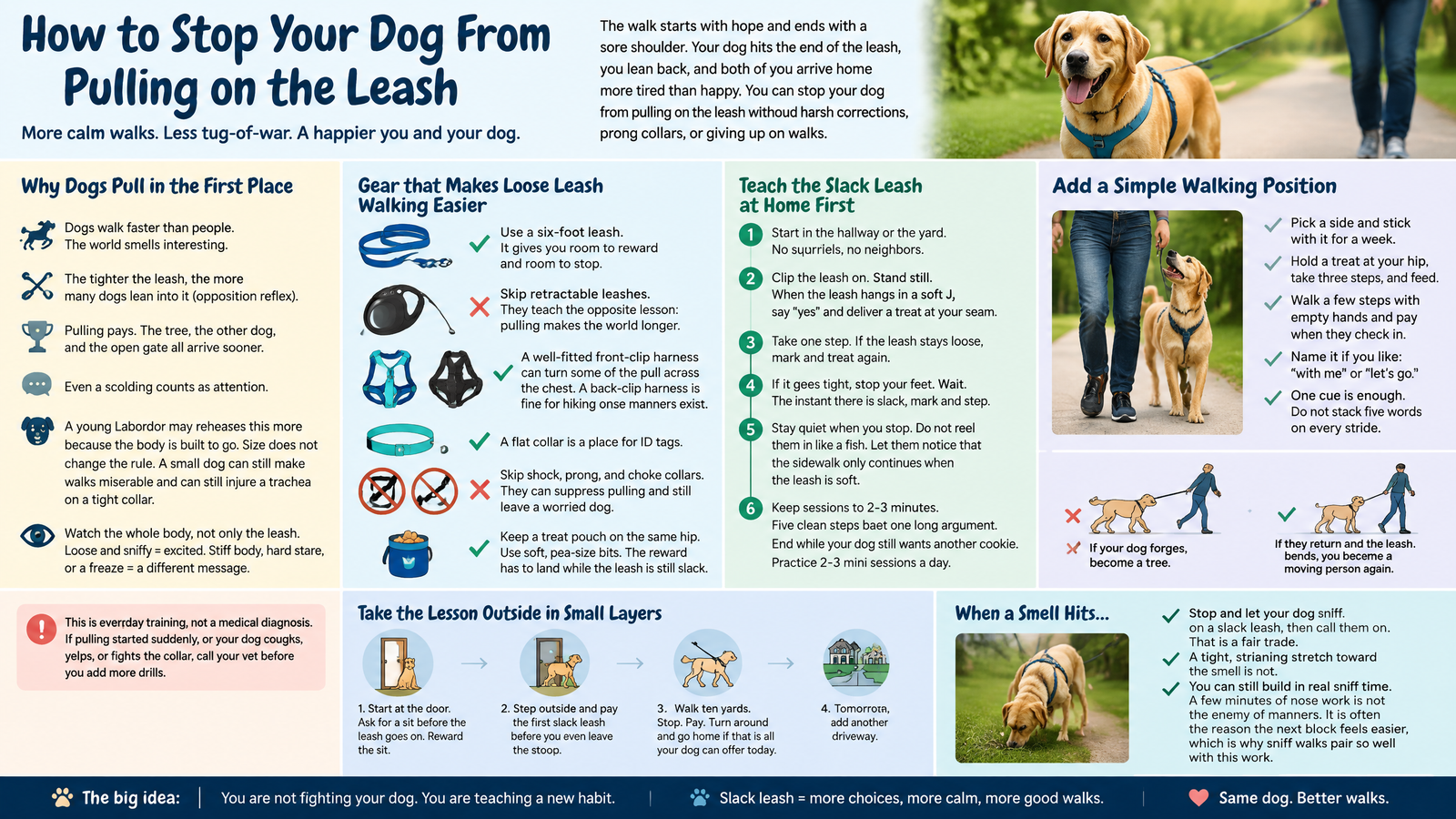
The walk starts fine and ends with a sore shoulder. Pulling is not a personality. It is a skill the dog has practiced, because forward motion is the reward. Change what a tight leash earns and the walk changes. You do not need a prong collar to do that.
If pulling started suddenly, or the dog coughs, yelps, or fights the collar, call the vet before you add drills.
Why it works for them
Dogs walk faster than we do, and the smells are better at the end of the leash. Pressure on the neck or chest often makes a dog lean harder. Opposition reflex is the dull name for it. The tree, the other dog, and the gate all arrive sooner when they tow you. A scolding still counts as attention.
A young Lab rehearses this a lot because the body wants to go. A small dog can make the walk miserable and can injure a trachea on a tight collar. A loose, sniffy forge is excitement. A stiff body or a hard stare is something else. Those details are in body language.
Gear
A six-foot leash. Retractables teach the opposite lesson: pulling makes the world longer. Save a long line for a field, not a sidewalk. A front-clip harness turns some of the pull across the chest. A back-clip is fine later, on a trail, once the dog can walk. A flat collar is for tags. Gasping or a honk when the leash tightens means get the clip off the neck and talk to the vet.
Skip shock, prong, and choke collars. They can shut the pulling down and leave you with a worried dog. Treats in a pouch on the same hip. Pea-size, so the reward lands while the leash is still slack.
Hallway first
Clip on. Stand still. The moment the leash hangs in a soft J, mark and treat at your leg. One step. Slack, mark. Tight, stop your feet. Wait. Slack, mark, step. Do not reel the dog in. Let them notice the sidewalk only continues when the leash is soft.
Two or three minutes. Five clean steps beat a lap of arguing. End while they still want the food. Pick a side for the week. You do not need a formal heel. Three steps with a treat at your hip, then a few steps with empty hands and a pay when they check in. One cue, if you want one. “With me” is enough.
Outside, in short pieces
The front walk is a new room. Sit before the leash goes on, the same pause as door greetings. Pay the first slack leash on the stoop. Ten yards, stop, pay, go home if that is all you get. Tomorrow, another driveway.
A smell can be a fair trade if the leash stays loose. A straining stretch toward it is not. Built-in sniff time makes the next block easier, which is why sniff walks belong on a different outing, not as a reward for towing you there. Change one thing at a time. New street, or a dog across the road, or a dropped treat. Not all three.
Habits that keep it alive
If you allow a drag to the park and demand a heel on the way home, pulling still opens the good part. Use one standard for the whole outing, including when you are late. A quiet Tuesday sidewalk is a better class than a Saturday group walk.
Expect extra pulling for a few days after you start stopping. Pay the first clean stretch. If the dog only pulls when they have had no outlet, play or train before you clip on. Restlessness is not identical to the patterns in boredom, but an empty afternoon makes the leash worse. Too amped to chew? Scatter three treats in the grass beside you, then walk again.
Rain is when people let the rule go. The mat in rainy-walk care is a place to reset before the hallway pull starts.
When to get help
Pulling with lunging, growling, or a hard stare at other dogs is not a manners project. Book a vet if it started overnight, if they cough after walks, or if the neck seems sore. Visit prep keeps that from becoming a handling fight. A certified trainer or a veterinary behaviorist is the next call if weeks of home practice stall, or if anyone feels unsafe.
Seniors and tiny dogs get a soft leash and shorter sessions. An adult who has towed people for years needs more quiet repetitions, not a louder cue.
Tonight, three soft steps in the hallway. Tomorrow, those steps on the sidewalk, then home while it is still working.

 The walk starts fine and ends with a sore shoulder. Pulling is not a personality. It is a skill the dog has practiced, because forward motion is the reward. Change what a tight leash earns and the walk changes. You do not need a prong collar to do that.
If pulling started suddenly, or the dog coughs, yelps, or fights the collar, call the vet before you add drills.